By Jemimah Wellington, JKNewsMedia Correpondent
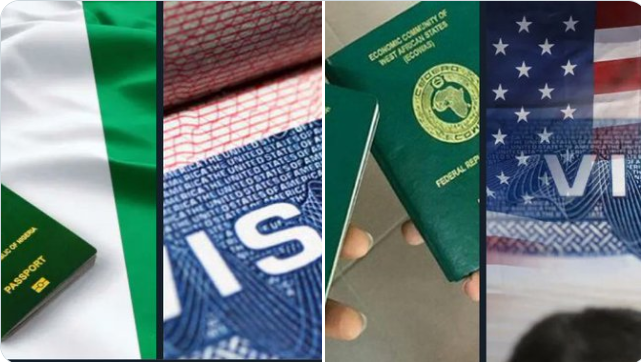
NIGERIANS APPLYING for United States (US) visas will now be required to provide details of their social media accounts from the past five years, according to a new directive by the US Mission in Nigeria.
The mission confirmed the updated policy in a statement issued on Monday, noting that the requirement applies to all non-immigrant visa applicants.
The US embassy explained that the usernames or handles of every social media platform used within the five-year period must be disclosed on the DS-160 visa application form.
The statement emphasised that applicants are expected to certify the accuracy of the information before signing and submitting their forms.
“Visa applicants are required to list all social media usernames or handles of every platform they have used from the last 5 years on the DS-160 visa application form,” the embassy announced. “Applicants certify that the information in their visa application is true and correct before they sign and submit.”
The mission further cautioned that omission of social media information could result in a denial of the visa application and render the individual ineligible for future visas.
The DS-160 form is the online document mandated by the US Department of State for most non-immigrant visa categories.
These include temporary visitors for business (B-1) or tourism (B-2), students under F and M visas for academic and vocational studies, and temporary workers under H visas, such as the H-1B for speciality occupations.
The latest requirement builds upon earlier measures already introduced in recent months.
In June, international student applicants were directed to make their social media accounts public for screening.
The following month, those applying for F, M, and J non-immigrant visas were instructed to adjust privacy settings to “public” to allow US authorities unrestricted access during background checks.
In a related development, the Donald Trump administration had previously suspended student visa appointment scheduling as part of wider plans to tighten restrictions on applicants perceived as security risks.
These directives, according to US officials, are framed as part of a broader effort to strengthen national security.
Despite its stance on enhanced scrutiny, Washington has also repeatedly voiced criticism of governments accused of suppressing or censoring online speech.
In May, Secretary of State Marco Rubio announced that visa restrictions would be imposed on foreign nationals found to censor Americans on social media, describing free speech as a core American right.
He accused certain foreign governments of targeting their citizens’ online expression.
Earlier this month, Richard Mills, US Ambassador to Nigeria, clarified that the new visa policies are not intended as punitive measures.
He stated that the changes are designed to enhance security and improve the efficiency of consular services provided to Nigerians.
With this adjustment, the mission urged Nigerians seeking US visas to ensure they complete disclosure of their online presence for the past five years, as the embassy reiterated that any failure to comply would have direct consequences on visa eligibility, Mills insisted.