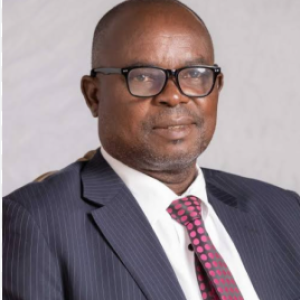
By Babafemi Ojudu
LAST WEEK, I sat quietly in church, watching Femi Osinbajo celebrate his 70th birthday, with his radiant 92-year-old mother beaming beside him. It was a beautiful moment, one of joy, grace, and gratitude. But in my mind, I saw something else. I saw wreckage. Dust. Screams. I saw the belly of a helicopter slamming into red earth. I saw us crawling out, bloodied by fear, saved only by grace.
That moment in church reminded me: we almost didn’t make it to this celebration.
On February 2, 2019, I was involved in a helicopter crash in Kabba, Kogi State, alongside Nigeria’s then Vice President Professor Yemi Osinbajo, his elder brother Femi Osinbajo, Minister of State for Labour Stephen Ochei, Media Adviser Laolu Akande, and three security operatives.
We were in the heat of a nationwide campaign from Yola to Calabar, then Calabar to Lagos, squeezing in a community engagement at VGC, Lagos before collapsing into bed. The next morning, we were up again, fuelled by yamàrità, prayer, and the goodwill of Nigerians. We flew in two helicopters: one for the advance team, and one for the Vice President and his core staff.
But the system failed us.

The landing ground in Kabba, a local stadium, had not been watered as required to reduce dust. The sitting governor, who was expected by protocol to receive us, had warned us not to go. He feared the people of Kabba and their “spiritual powers.” Even when the crash happened, he did not show up. We had to drive to his palatial mansion in Okene, not for hospitality, but to report ourselves alive.
As we began our descent, the dust from the first chopper hadn’t cleared. Suddenly, we were swallowed in a brown haze. The pilot lost visibility. Then — a loud, bone-shaking thud.
Panic erupted inside the cabin. We were tossed violently despite our seatbelts. Phones, iPads, and personal items flew like missiles. Someone shouted, “Jesus! Jesus!” while I yelled, “Calm down! Calm down!” trying to keep everyone grounded. The weight of Minister Ochei had collapsed on the Vice President’s legs, and I could hear him groaning in pain.
Moments later, we heard pounding, security agents hacking the doors open. One by one, we were pulled out, dazed and dust-covered but alive. I was the last to exit. I scooped up the Vice President’s cap, his phone, and iPad — and mine — before stepping out into the blazing light of day.

We should have rested. We should have gone home. But Prof. Osinbajo insisted: “The campaign continues.” And it did.The people of Kabba received us with songs, tears, and prayers. The same people we were warned against turned out to be our greatest source of encouragement that day.
What many didn’t know was that this wasn’t the Vice President’s first encounter with death from above. Eight months earlier, he had narrowly escaped another helicopter mishap in Abuja. And as for me, I would face another scare, this time in Zamfara.
On that trip, I was in the advance chopper again, flying with Hajia Maryam Uwais and Laolu Akande. Midair, a violent storm hit. The Vice President’s helicopter could climb above it. Ours couldn’t. The pilot struggled against the turbulence and finally announced: “We have to land — anywhere we can.” We came down in the middle of Zamfara bushland, stranded for almost an hour, praying the bandits for which that region is now notorious wouldn’t find us.
As night fell and the aircraft lights failed, we had to make a choice: stay and risk being trapped or fly blind through the dark. We took the risk. We made it. We landed in Sokoto and caught up with the VP for our return to Abuja.

These moments remind me: politics is not a game. It is service — sometimes sacrificial, sometimes fatal. When I heard of the recent helicopter crash in Ghana that claimed the lives of two ministers and six others, I was shaken. I could imagine their final minutes. I had lived a version of them, and survived.
To survive such moments is a gift. To remember them is a duty. To tell these stories is a service — so that the public understands the fragility of life in public office, the weight of duty, and the grace that sometimes pulls us back from the edge.
May the souls of those who perished in Ghana rest in peace. May their service be remembered. And may we all continue to walk — or fly — with humility, caution, and gratitude.