By Joke Kujenya
INCREASING NEUROLOGICAL disorders have emerged as one of the world’s most urgent public health threats, with the World Health Organization (WHO) warning that less than one in three countries has a national policy to address the growing burden of brain-related diseases now responsible for over 11 million deaths each year.
The new Global Status Report on Neurology, released by WHO, reveals that neurological conditions affect more than 40% of the global population, equivalent to over 3 billion people.
The WHO described the figures as a wake-up call for governments to prioritise brain health through stronger policies, funding, and coordinated healthcare action.
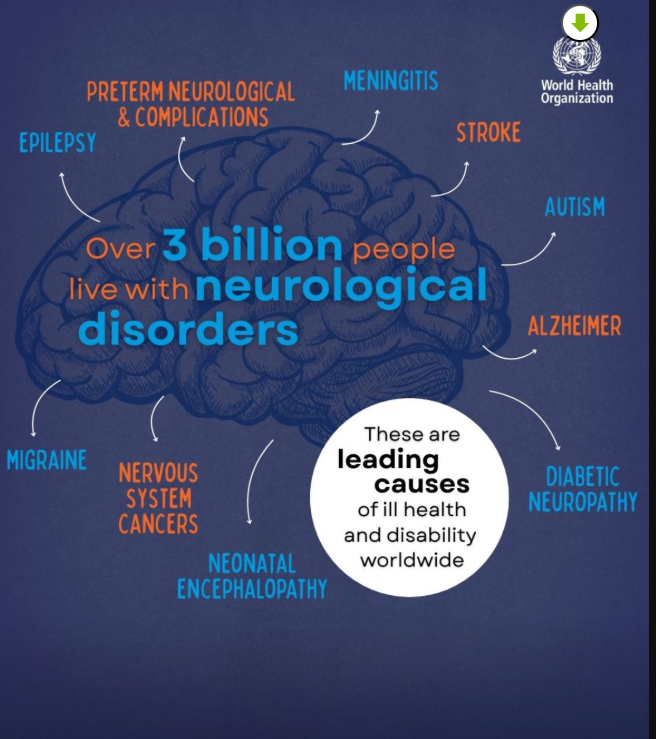
According to the health body, the top ten neurological conditions contributing to death and disability in 2021 included stroke, neonatal encephalopathy, migraine, Alzheimer’s disease and other dementias, diabetic neuropathy, meningitis, idiopathic epilepsy, neurological complications linked to preterm birth, autism spectrum disorders, and cancers of the nervous system.
The Organisation noted that low-income countries face severe disparities, with more than 80 times fewer neurologists compared to high-income nations, despite carrying the highest disease burden. It stated that many of these countries still lack national strategies, trained personnel, and dedicated budgets to respond effectively.
“With more than one in three people in the world living with conditions affecting their brain, we must do all we can to improve the healthcare they need,” said Dr Jeremy Farrar, WHO Assistant Director-General for the Division of Health Promotion, Disease Prevention and Control.
“Many of these neurological conditions can be prevented or effectively treated, yet services remain out of reach for most – especially in rural and underserved areas, where people too often face stigma, social exclusion, and financial hardship.
“We must work together to ensure brain health is prioritised and properly invested in.”
The report, described as the first of its kind, shows that only 53% of WHO Member States – 102 out of 194 – contributed data, underlining the limited attention given to neurology at policy level.

Just 32% of Member States, representing 63 countries, currently have a national policy addressing neurological disorders, while only 18% (34 countries) report having dedicated funding.
WHO stated that weak policy frameworks leave health systems fragmented and under-resourced, preventing patients and families from receiving consistent care. Public awareness campaigns and advocacy efforts are improving, but more progress is needed to tackle stigma and ensure neurological conditions are treated as public health priorities.
The report highlighted that essential services such as stroke units, paediatric neurology, rehabilitation, and palliative care remain inaccessible to most people.
Only 25% of countries include neurological disorders in their universal health coverage benefit packages, and in many cases, such services are concentrated in cities, leaving rural and underserved populations excluded.
WHO’s findings also revealed a critical shortage of health professionals. In low-income countries, there are up to 82 times fewer neurologists per 100,000 people compared to high-income nations.
The Organisation said this gap means millions of patients go without timely diagnosis, treatment, and long-term management.
The report further disclosed that neurological conditions often require lifelong care, yet only 46 Member States provide carer services, and just 44 have legal protections for carers.
WHO noted that this lack of formal recognition places a heavy burden on families, especially women, who serve as unpaid carers without social or financial support.
Weak health information systems and chronic underfunding of neurological research – particularly in low- and middle-income countries – also remain major barriers to evidence-based policymaking and effective intervention design.
In response, WHO said Member States had adopted the Intersectoral Global Action Plan on Epilepsy and Other Neurological Disorders in 2022, aimed at reducing the burden and impact of neurological conditions.
The plan offers countries a roadmap to strengthen policy frameworks, improve access to care, promote brain health, and engage affected communities in policy development.
WHO urged governments to take immediate steps to make neurological disorders a public health priority through strong leadership and sustained investment.
It called for expanded access to neurological care through universal health coverage, promotion of brain health across the life course, and strengthened data systems to support evidence-based decision-making.
The Organisation also warned that without urgent and coordinated global action, the burden of neurological disorders will continue to rise, deepening health inequalities and leaving billions without access to essential care.