By John Ofem, Sports Reporter
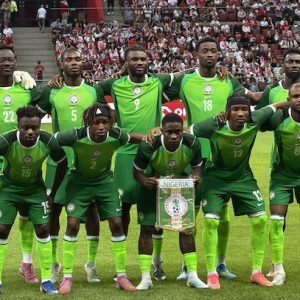
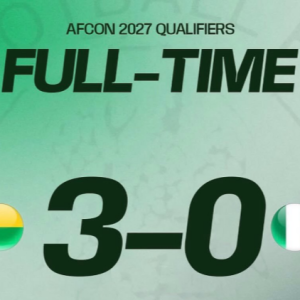
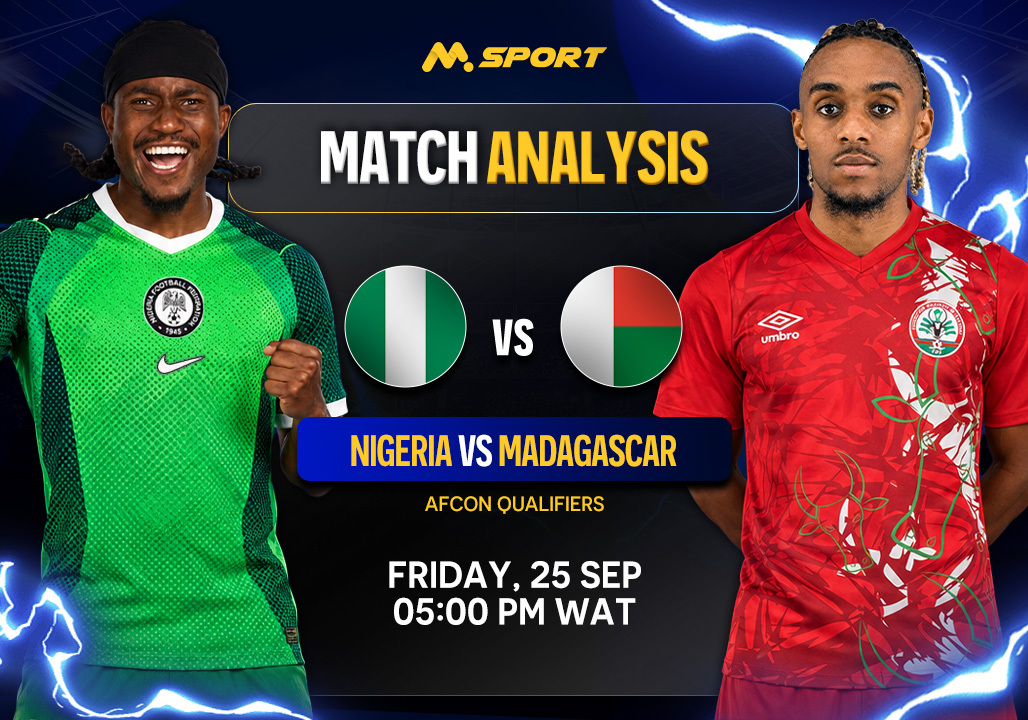
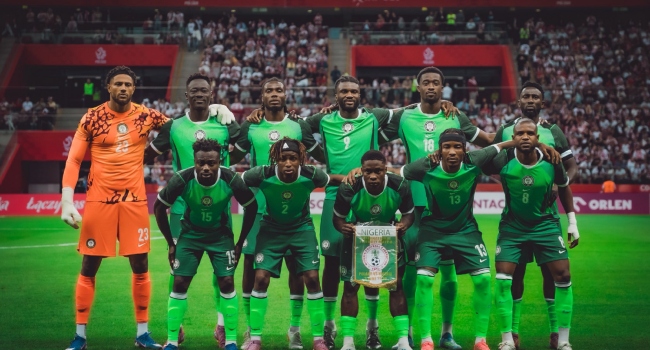
THE SUPER Eagles begin their 2027 Africa Cup of Nations (AFCON) qualifying campaign against Madagascar in Uyo on Friday, with Nigeria looking to secure a place at the next continental championship after a difficult period for the country’s national teams.
JKNewsMedia.com reports that Eric Chelle’s side will face Madagascar at the Godswill Akpabio Stadium before travelling to Guinea-Bissau for their second qualifying match on September 29.
Nigeria go into the campaign without Victor Osimhen, who has been ruled out of the squad through injury.
The Super Eagles’ return to AFCON qualifying comes after a turbulent 12 months for Nigerian football. The men’s national team failed to qualify for the last FIFA World Cup, while the Super Falcons also missed out on the Women’s World Cup.
There have also been disappointing results involving Nigeria’s age-group teams and clubs in African competitions.
The Super Eagles, however, remain three-time African champions, having won the AFCON in 1980, 1994 and 2013. They finished runners-up in 2023 and third in 2019 and 2025.
The opening match against Madagascar will therefore be played against the backdrop of growing attention on the direction of Nigerian football.
Changes at the NFF
The concerns have also reached the administration of the game.
NFF president Ibrahim Gusau, general secretary Mohammed Sanusi and several members of the federation’s executive committee resigned last month following mounting criticism.
The federation’s elections, originally scheduled for September 27, have been suspended as discussions continue over reforms to Nigerian football.
FIFA and CAF have been involved in discussions with the National Sports Commission as the various stakeholders work towards a roadmap for restructuring the game.
Emmanuel Ikpeme has been appointed interim NFF general secretary, while Ademola Olajire is serving as interim deputy general secretary.
The debate is now centred on how far the reforms should go.
Nigerian sports journalist Fisayo Dairo told BBC Sport Africa that reform should involve a proper framework for developing national teams, identifying talent from the grassroots and ensuring that the corporate sector plays a greater role in football administration and funding.
Odegbami Questions Nigeria’s Football Direction
The concerns extend to the structures that produce players for Nigeria’s national teams.
Former international Segun Odegbami has questioned Nigeria’s approach to grassroots development, academies, clubs and coaching.
He also asked whether the country has a clearly defined football philosophy and style.
The former Super Eagles forward believes the problems have developed over many years and are not limited to the current administration.
Odegbami was part of the Nigeria team that won the country’s first AFCON title in 1980.
Playing in front of a home crowd in Lagos, Nigeria defeated Algeria 3-0 in the final, with Odegbami scoring twice.
He finished the tournament in the team of the tournament and went on to make 47 appearances for Nigeria, scoring 23 goals.
Stadiums that tell another story
The condition of Nigeria’s football infrastructure is another issue raised in the discussion.
Odegbami specifically mentioned the National Stadium in Surulere, Lagos, which hosted matches during the 1980 and 2000 AFCON tournaments, as well as the former Liberty Stadium in Ibadan, Kaduna’s Ahmadu Bello Stadium and UJ Esuene Stadium in Calabar.
The former international said the deterioration of the country’s historic football facilities represented serious damage to Nigeria’s sporting heritage.
The Godswill Akpabio Stadium in Uyo is currently the Super Eagles’ home venue and will host Friday’s opening AFCON 2027 qualifier.
But while attention turns to the pitch and Madagascar, the wider conversation about Nigerian football continues away from the stadium.
For Odegbami, the current situation represents a major departure from the period when he and his teammates helped establish Nigeria among Africa’s football powers.
“It has never been this bad in our entire history that we didn’t qualify for the World Cup,” he told BBC Sport Africa.
“Our local league is not bringing in money. Something is definitely wrong.”
And he posed questions about the direction of the game that he believes Nigerian football must answer:
“What is the coaching methodology? What is the philosophy of our football in the country?
“What is our culture, what is our style?”
—