By Olaide Ajibola, JKNewsMedia Reporter
HEALTH LEADERS in Central Africa have agreed on a joint 2026–2027 roadmap designed to strengthen regional health security and improve responses to cross-border health threats.
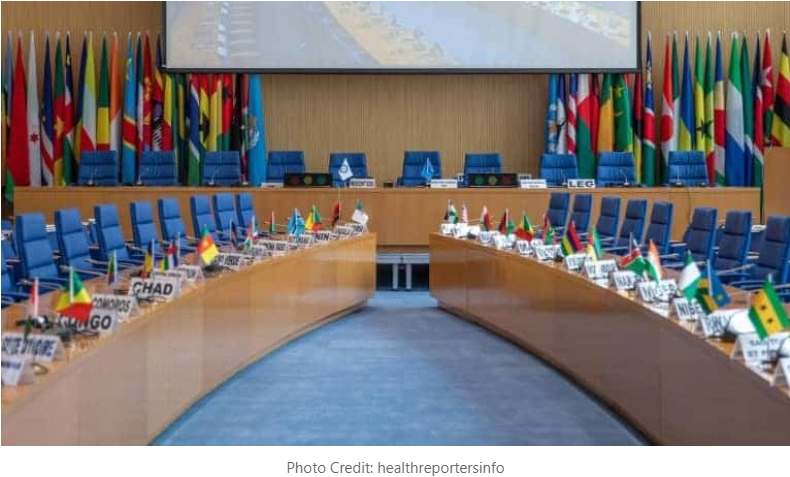
The plan was developed during a three-day strategic joint planning workshop convened by Africa Centres for Disease Control and Prevention (Africa CDC) through its Regional Coordinating Centre for Central Africa (CA RCC), held in Equatorial Guinea from 16 to 18 June 2025.
The meeting brought together technical and institutional representatives from the Commission of the Economic Community of Central African States (ECCAS), the Organisation for Coordination in the Fight Against Endemic Diseases in Central Africa (OCEAC) of the Economic and Monetary Community of Central Africa (CEMAC), and other health partners.
Africa CDC explained that the roadmap responds to recurrent and prolonged health crises in the region, where the emergence and re-emergence of infectious diseases have repeatedly exposed the fragility of health systems.
According to the agency, the initiative demonstrates the importance of an integrated, multi-sectoral and proactive approach in building resilience against epidemic-prone threats.
“This joint planning process is much more than a technical exercise.
It is a key moment to strengthen our regional public health architecture, foster the interoperability of our alert systems, promote data sharing and expertise, and facilitate more effective mobilisation of available resources,” said Dr Brice Wilfried Bicaba, Director of Africa CDC’s Regional Coordinating Centre for Central Africa.
The workshop concluded with the adoption of a consolidated 2025 action plan, which will serve as an operational guide for the months ahead.
Africa CDC noted that the plan prioritises strengthening regional coordination and governance, reinforcing integrated health systems and control of high-burden diseases, enhancing surveillance and early warning systems, and expanding national laboratory capacity through stronger networks.
“The 2025 joint action plan will serve as an operational guide for the coming months, focusing on concrete actions to strengthen regional coordination and governance, reinforce integrated health systems and the control of high-burden diseases, enhance surveillance, data collection and early warning, as well as build national capacity in terms of networks and laboratory systems,” Dr Bicaba said.
The 2026–2027 roadmap builds on this foundation with a structured framework aligned with continental and regional priorities.
These include the New Public Health Order for Africa, the Africa CDC Strategic Plan 2023–2027, the ECCAS ‘One Health’ Platform (2025–2029), and the OCEAC Five-Year Strategic Plan (2023–2027).
It also integrates preparedness and response strategies to public health emergencies under the ‘One Health’ approach, which emphasises the interconnection between human, animal, and environmental health.
“This roadmap reflects our collective commitment to building a community that is better prepared, more resilient and more responsive to health threats. Coordination with Africa CDC and other regional health organisations is essential if we are to achieve genuine health security in Central Africa,” said Dr Peggy Raymonde Conjugo-Batoma, Head of the Health Department of ECCAS.
To ensure implementation, stakeholders outlined a coordination and monitoring framework covering the period 2025–2027.
This framework establishes accountability mechanisms for monitoring and evaluating activities, while promoting synergy between national institutions, regional economic communities and technical partners.
Equatorial Guinea’s Minister of Health, Mr Mitoha Ondo’o Ayekaba, welcomed the roadmap, describing it as a symbol of regional solidarity and collective determination.
“The results of your work reflect not only the richness of your contributions but also the collective commitment and strong desire to face cross-border health threats together.
They are also an illustration of strengthened regional cooperation between national institutions, regional economic communities and technical partners in the interests of our populations,” he said.
Mr Ayekaba, a member of the steering committee of the Central African RCC, pledged to personally oversee the implementation process and to advocate for political support among his peers.
“I am personally committed to overseeing the implementation of the joint roadmap and to advocating vigorously with my colleagues to secure the necessary political support,” he stated.
Africa CDC confirmed that recommendations from the Malabo workshop include co-developing collaboration protocols between institutions, integrating its RCC as an observer or technical member in decision-making and technical meetings of regional economic communities, and strengthening Member States’ capacities in health planning and coordination.
Dr Bicaba described the outcomes as a milestone for Africa CDC’s long-term vision. “It marks an important step in Africa CDC’s ambition to build a more robust, integrated and inclusive continental public health system that is better prepared to deal with future health emergencies,” he said.