By Joke Kujenya
INCREASING USE of Artificial Intelligence (AI) in political communication, political rivalry and concerns over electoral technology and law enforcement have emerged as key issues shaping Nigeria’s 2027 elections, an early monitoring exercise has found.
JKNewsMedia.com reports that the findings were released by the Centre for Research on Development of African Media, Governance and Society (CEREDEMS-Africa), the Centre for Peace and Strategic Studies (CPSS), University of Ilorin, and the Institute of Geopolitical Communications, RUDN University, Moscow, Russia, under their #TrackingNaija2027Elections initiative.
The team said its 300-member volunteer monitoring network has begun systematic evidence collection and analysis across the country, with early findings showing that the electoral environment is already changing ahead of the formal election period.
They said they identified a growing number of presidential aspirants and political parties, pointing to an increasingly competitive political environment that could shape campaign strategies, political narratives, voter mobilisation and the behaviour of political actors as the election cycle develops.
Findings also said AI has emerged as another significant feature of the political environment.
Monitored content also includes AI-generated material used to promote candidates, political parties and issues of national importance, as well as material targeting opponents and political issues.
The initiative further described the promotional content as “glowfake” and the attacking content as “foefake”.
It said the material could influence political perceptions and deepen divisions along political and ideological lines.
The monitoring approach actually examines not only whether political information is false, but also who is being targeted, what political actor or issue is being promoted or attacked, the narrative being advanced and the political divisions the content may reinforce.
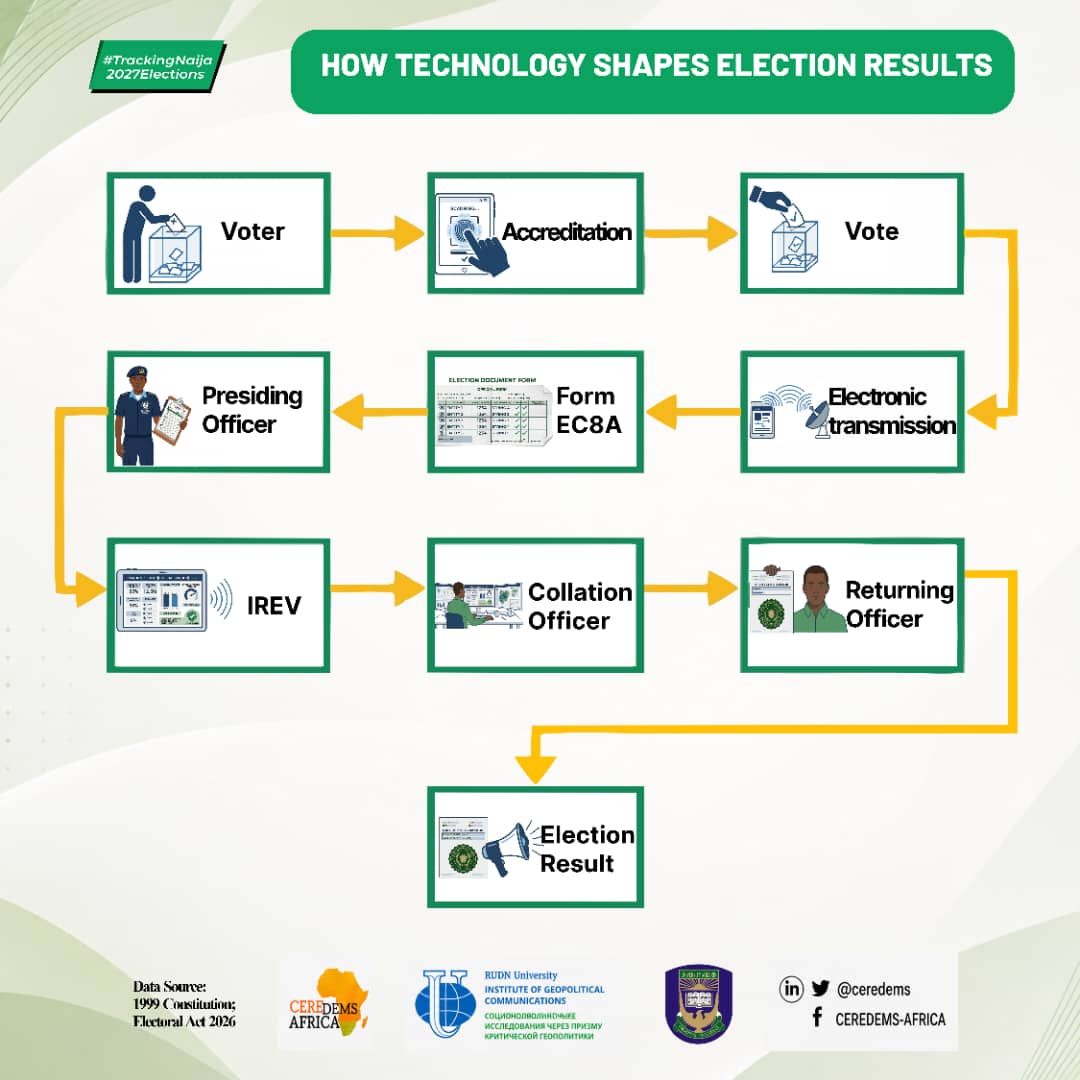
Technology, they noted, is also central to the initiative’s assessment of the electoral process, with monitoring covering its use in voter accreditation, voting, recording, electronic transmission, collation and declaration of results.
The findings further said that weaknesses at any stage could undermine confidence in the wider electoral system as it further highlighted the need for technological readiness, adequately equipped election officials, clear procedures and sufficient information for voters and other stakeholders on the management of electoral results.
They further raised concerns about enforcement of electoral laws, citing provisions in the Electoral Act 2026 covering prohibited conduct including threats, the use of force and abusive language.
It said the existence of legal provisions alone would not prevent electoral violence, stressing the importance of identifying violations and applying the law consistently. It also called for advocacy on prohibited electoral behaviour and its consequences.
Findings also reveal the issues form part of an interconnected electoral environment in which political rivalry can intensify campaign communication, digital tools can expand political persuasion and attacks, and weaknesses in electoral processes can affect public confidence.
The three institutions said continuous monitoring would continue before, during and after the 2027 elections, with future outputs covering electoral governance, political finance and vote commodification, electoral security, information integrity, artificial intelligence and elections, electoral justice and peace, and inclusive participation.
Their partnership emphasised that the initiative is strictly non-partisan and was not established to promote any political party, candidate or political interest.
Clearly, its stated purpose is to generate independent evidence about the electoral environment and make relevant findings available to stakeholders and the wider public, the group affirmed.
“The #TrackingNaija2027Elections initiative will therefore continue to monitor the electoral environment and disseminate evidence-based findings as the political cycle develops,” Stephen Obiri, Director of Communications, CEREDEMS-Africa, said.
He said the partnership’s broader objective was to contribute to a democratic process in which emerging risks are identified early, relevant actors are informed, institutions are better prepared and citizens have access to credible information about the forces shaping the elections.
Obiri added that the partners and volunteers remained committed to ensuring that the evidence generated through the monitoring process contributes to a peaceful, credible, inclusive and trusted 2027 electoral process in Nigeria.
—