By Joke Kujenya, Fellow, Naija Cancer Watch
TO THINK that, in this current age and times, people still uphold myths about a global condition as cancer beats one’s imagination.
Yet, misinformation surrounding the disease continues to shape how some Nigerians understand its causes, treatment and prognosis, sometimes with serious consequences for patients.
JKNewsMedia.com reports that Nigeria recorded an estimated 127,763 new cancer cases and 79,542 cancer deaths in 2022, according to the International Agency for Research on Cancer’s (IARC) GLOBOCAN estimates.
As things stand, breast, prostate and cervical cancers were among the country’s leading cancers.
Also, one persistent myth is that sugar feeds cancer and that eliminating it can starve a tumour.
On the contrary, the National Cancer Institute (NCI) dispels this and says that cancer cells consume more glucose than some normal cells, but there is no evidence that eating sugar makes cancer worse or that stopping sugar makes a cancer shrink or disappear.
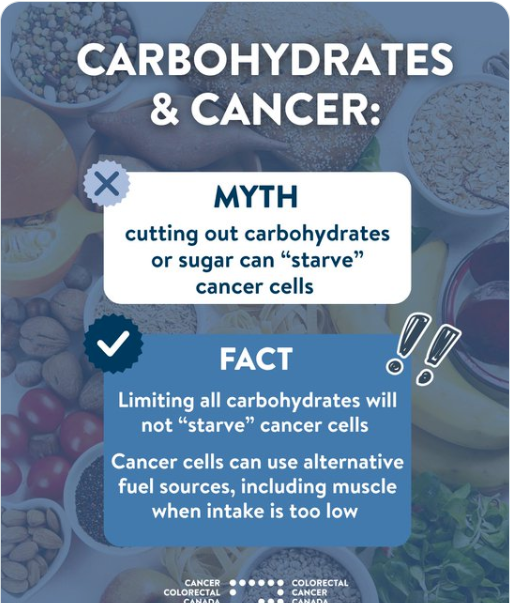
The American Cancer Society (ACS) similarly says sugar itself has not been shown to increase cancer risk or make cancer spread.
However, ACS asserts that excessive consumption of added sugars can contribute to weight gain, while excess body weight is associated with an increased risk of several cancers.
Still, another widespread misconception is that cancer is contagious. “No, it is not, affirms the ACS and adds that cancer cannot be caught through touching, hugging, sharing meals, kissing, sexual contact or breathing the same air.
Some infections, including certain viruses, could also increase the risk of cancer, but the cancer itself is not transmitted through ordinary human contact.
This distinction matters in Nigeria, where researchers are said to have reportedly documented beliefs that cancer can originate from mystical sources, be transmitted through witchcraft or become worse after hospital treatment.
However, a study of cancer myths and misconceptions in Northern Nigeria found such beliefs among communities and healthcare stakeholders.
Sadly, the belief that cancer is always a death sentence is another misconception.
To this, the NCI notes that rather, survival varies according to the type of cancer, how quickly it grows, whether it has spread, available treatment and a patient’s general health.
Actually. some cancers have five-year survival rates of 90 per cent or higher in the United States (US), the NCI confirms.
A Nigerian oncologist, Prof Kunle Odunsi, Director of the University of Chicago Medicine Comprehensive Cancer Center (UCMCCC), has also stressed the possibility of prevention and cure.
He said: “About one in four people will develop cancer in their lifetime,” in May 2026, adding that cancer is preventable and that there are better chances of cure.
Curiously, another myth holds that having no family history means a person cannot develop cancer.
The NCI says this is absolute falsehood and adds that about five to 10 per cent of cancers are caused by inherited harmful genetic changes.
NCI says most arise from genetic changes acquired during a person’s lifetime, influenced by ageing and environmental exposures.
The idea that a biopsy or cancer surgery spreads the disease is also misleading, NCI asserts.
It adds that such procedures are established components of cancer diagnosis and treatment, with their use determined by the patient’s condition and medical team.
Similarly, chemotherapy does not automatically mean death; it is one of several treatments used to control or eliminate cancer, depending on the disease, according to NCI.
Established in 2017, Nigeria’s National Institute for Cancer Research and Treatment (NICRAT), has a mandate covering cancer research, prevention, treatment, surveillance and public education.
Its Director-General, Prof Usman Malami Aliyu, has repeatedly emphasised evidence-based cancer prevention, early detection and treatment.
The facts do not make cancer less serious. Rather, they show why Nigerians need accurate information: myths can encourage stigma, delay diagnosis and push patients towards unproven remedies.
In a country facing a substantial cancer burden, replacing fear and misinformation with evidence may be one of the most important steps towards earlier diagnosis, better treatment and improved survival.
Cancer: 4 Myths You Need to Know
Culled:
By Bag It Team | Educational Articles
WITH ALL the medical advances and education for cancer, it is amazing that myths and misconceptions about cancer still abound and worry us needlessly.
Myth vs Fact graphic
Here we debunk a few common misunderstandings around cancer. Share this information with people as you gather this holiday season. It could ease others’ cancer fears.
CANCER MYTHS
Cancer is always fatal
Fortunately, this is incorrect. According to the National Cancer Institute Office of Cancer Survivorship, as of January 2022, it is estimated that there are 18.1 million cancer survivors in the United States (US).
This represents approximately 5.4% of the population. The number of cancer survivors is projected to increase by 24.4%, to 22.5 million, by 2032.
Advances in the prevention, screening and treatment of cancer are improving cancer survivorship tremendously.
Cancer is contagious
Generally speaking, no, cancer cannot be “caught” from another person. It is also true that certain cancer-causing viruses and bacteria passed from one person to another can increase the likelihood of developing cancer.
In rare circumstances involving transplantation or pregnancy, transmission has been known to occur.
Cancer runs in families
While some of us are born with genes passed down from our parents that may predispose us to developing cancer at some point in our lives, only about 5-10% of cancers are due to mutations inherited from a parent.
Most cancers are caused by genetic changes that occur and build up from lifestyle choices and/or exposure to chemicals and environmental factors during our lifetime.
Everything around us causes cancer
Who hasn’t heard that using deodorant, cosmetics, hair dyes, smart phones, microwaves, sugar, artificial sweeteners, or being in close proximity to power lines all can cause cancer?
The good news: there is no consistent, conclusive scientific evidence to support these claims.
When you hear new or suspicious information about cancer, it’s a good idea to fact check by discussing it with your doctor. If you prefer to do your own online research, visit reliable cancer organization websites like these to find credible information you can trust. And, of course, there is a wealth of information on Bag It Cancer’s Resource Center.
National Cancer Institute
American Society of Clinical Oncology (ASCO)
—