By Joke Kujenya
FOR MANY Nigerians, cancer does not announce its arrival with a funeral bell. It begins quietly, in a pain that refuses to disappear, a lump discovered almost by accident, unexplained weight loss, persistent fatigue or a medical examination that suddenly changes the direction of a life.
JKNewsMedia.com reports that that is how it had been for some of the country’s most recognisable men and women, the diagnosis came after years of achievement, public service, creativity and influence.
The ailment went a-visiting to them in their various life’s career choices.
These people were lawyers who, in their lifetime, challenged governments, pharmacists who fought counterfeit drugs, broadcasters whose voices became familiar in millions of homes, musicians who shaped generations, actors who brought stories to life and businessmen and women whose names carried weight far beyond their immediate circles.
Cancer, however, made no distinction between the celebrated and the unknown.
Beaming the journalistic lens over the past two decades, JKNewsMedia.com recalls that Nigeria has lost a long list of prominent personalities to the disease.
Though, some fought privately without bringing their cases to the limelight.
Others allowed the public into the difficult final chapters of their lives.
Even at that, a few became symbols of courage long after their diagnosis, using their experience to draw attention to a disease that continues to claim lives across the country.
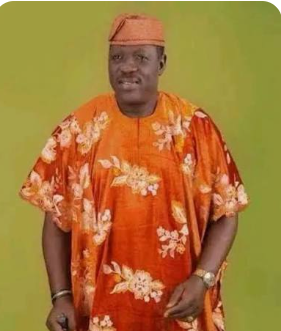
Sadly, the latest name to join that painful roll call is veteran actor, Taiwo Hassan, popularly known as Ogogo, whose death on August 23, 2026, at 66, brought fresh grief to Nigeria’s entertainment industry.
Hassan had spent more than four decades in the creative industry, building a reputation as one of the enduring figures of Yoruba cinema.
To generations of viewers, Ogogo was more than an actor. He was a familiar face, a storyteller and one of the personalities who helped give Yoruba-language filmmaking a distinctive place in Nigerian popular culture.
His final days unfolded publicly and painfully.
Out of the blue, his daughters appealed for urgent help after revealing that their father was battling stage-four cancer.
Without time wasted, friends and colleagues rallied around him. Some reportedly offered prayers. This was followed by concerted efforts from both the mighty, high and low in the Nigerian society, and probably beyond the shores, to secure treatment.
Sadly, the disease had advanced too far.
Then came the news that the industry had feared. Ogogo was gone. . .
Suddenly, his death became a reminder of how quickly a familiar face can become a memory, and how cancer can turn even a celebrated life into a desperate race against time.
But his story is not an isolated one. Beyond Hassan, several other Nollywood personalities have died from the disease in recent years.
Of very recent was, a 40-year-old actor known for films including Weekend Getaway, Lagos Cougars, The Bling Lagosians, Omo Ghetto: The Saga and A Sunday Affair, died on May 11, 2026.
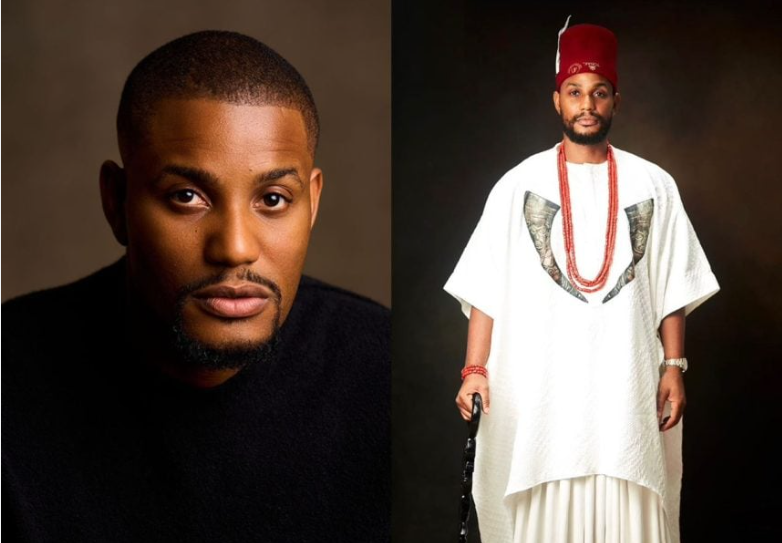
His family said he died at Evercare Hospital from complications arising from advanced metastatic kidney cancer. His illness had largely remained private until his death.
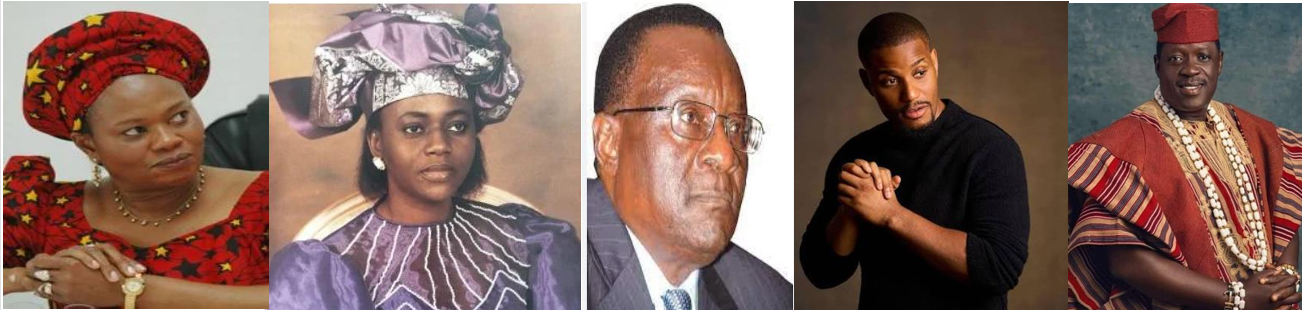
Years earlier, a very prominent Nigerian lawyer and human rights advocate, whose name had become synonymous with courage confronted the same disease.
To the whole world, the late Chief Gani Fawehinmi, a Senior Advocate of Nigeria (SAN), was not an entertainer.
He was a fighter in the courtroom and on the streets, a lawyer, publisher, author, politician and human-rights activist who built a reputation as one of Nigeria’s most outspoken critics of injustice.
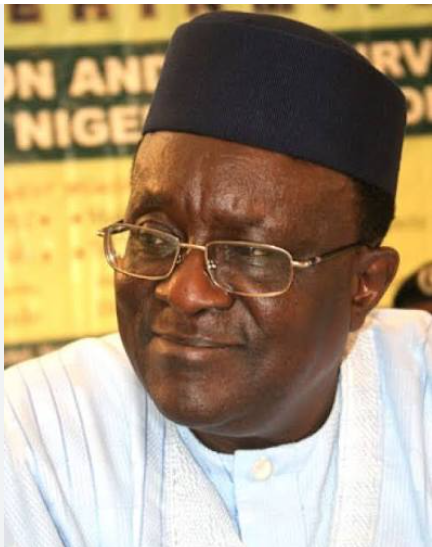
Also called the “Senior Advocate of the Masses (SAM)”, Fawehinmi spent much of his public life taking on powerful institutions and speaking for ordinary Nigerians.
His death from lung cancer on September 5, 2009, at 71 brought to an end the life of a man whose voice had become part of Nigeria’s democratic struggle.
And though, cancer claimed the body, but it could not erase the legacy.
The same could be said of Dora Akunyili.
Before cancer entered her story, Akunyili had already become one of the most admired public servants in Nigeria.
As Director-General of the National Agency for Food and Drug Administration and Control (DG/NAFDAC), she led a determined campaign against counterfeit and unsafe drugs.

Her work earned her national recognition and international respect. Then came the illness.
Akunyili battled cancer for about two years before she died in India on June 7, 2014, aged 59. Her death shocked a nation that had come to associate her with integrity, courage and an uncompromising commitment to public service.
Her passing was not simply the death of a former government official. For many Nigerians, it felt like the loss of a woman who had spent her public life trying to protect other people’s lives.
Yet, the cancer rolls call stretches further back.
Sunny Okosun, one of Nigeria’s great musicians, died from colon cancer in 2008 at 61. His career had crossed musical boundaries, moving through highlife, reggae and gospel while reflecting the social and political realities of his time.
Yinka Craig, a well-respected broadcaster and sports journalist, whose voice commanded attention, also died in 2008 after a battle with cancer.
His voice had been familiar to generations of television viewers, particularly those who grew up watching Nigerian Television Authority (NTA) programmes.
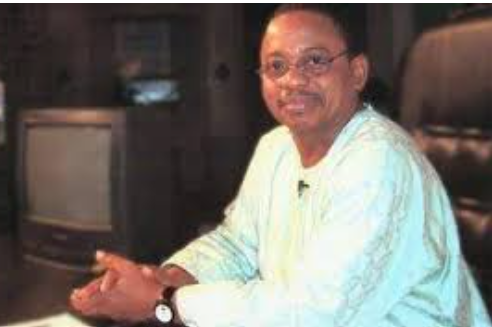
Maryam Babangida, former First Lady and wife of former military ruler Ibrahim Babangida, died in 2009 after battling cancer. She was 61.
Her public life had been associated particularly with women and family-oriented initiatives, but her death revealed another side of public prominence: the vulnerability that exists behind the official photographs, titles and ceremonies.
The same year claimed Fawehinmi for the fact that cancer did not spare the political class either.
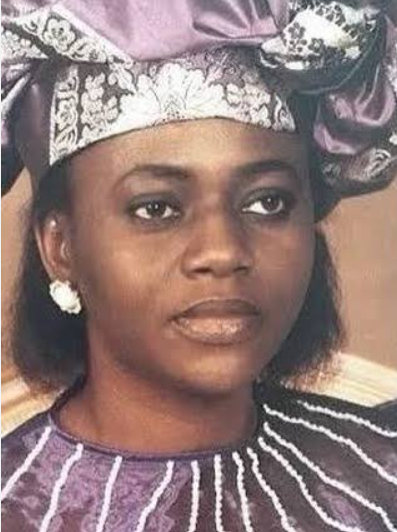
Olusola Saraki, one of the most influential politicians of his generation and a former Senate Leader, also died in 2012 after battling cancer.
His political influence extended across decades and generations, and his death marked the passing of one of the formidable figures of Nigeria’s political establishment.
Alexander Ibru, publisher of The Guardian Newspaper and businessman, also died in 2011, at the age of 66 after battling cancer.
His name was closely associated with the Guardian newspaper, one of Nigeria’s most influential media institutions.
In it all, the world of broadcasting lost more than familiar voices.
Sadiq Daba, actor and broadcaster, spent years entertaining Nigerians on television and in film.
He became known to an entire generation through productions such as Cock Crow at Dawn and later through his work in major Nigerian films.
But in the final years of his life, Nigerians knew him for another reason.
Daba publicly disclosed that he was battling leukaemia and prostate cancer.
His illness generated an outpouring of concern and support from Nigerians who had watched him on television for decades. but he later died on March 3, 2021, aged 69.
For those who knew him principally as a performer, his final years were a painful reminder that the people who create memories for others are themselves mortal.
In the same vein, the entertainment industry carried some of the heaviest losses.
Remember Fatai Rolling Dollar, the celebrated highlife musician? He died in 2013 at 85 after a battle with cancer.
Prior to that, his long career had made him one of the respected figures of Nigerian traditional and popular music.
Sound Sultan’s death was different in age but similar in sorrow.
Olanrewaju Fasasi, known professionally as Sound Sultan, was only 44 when he died in 2021 after battling angioimmunoblastic T-cell lymphoma, a rare form of non-Hodgkin lymphoma.
His death stunned the Nigerian music industry because Sound Sultan had built his reputation not merely as a singer but as a songwriter capable of mixing humour, social commentary and everyday Nigerian experiences.
His music could be playful one moment and deeply reflective the next.
At 44, he was still young enough to suggest that his greatest creative years were ahead of him. Cancer, sadly ended that possibility.
Majek Fashek, another towering name in Nigerian music, also died after a battle with cancer. The reggae icon died in 2020 at 57, leaving behind songs that had travelled across generations and borders.
His career had been marked by extraordinary musical influence, personal struggles and periods of resurgence. In death, the focus returned to the music and to the voice that had once carried Nigeria’s reggae sound to an international audience.
Not left out is the cinema industry which also suffered its own painful succession of losses to cancer.
Aisha Abimbola, known to many viewers as Omoge Campus, died in 2018 at 47 after battling breast cancer.
Her death was another reminder of the particular devastation caused by breast cancer among Nigerian women, many of whom confront the disease amid challenges involving early detection, cost of treatment and access to specialist care.
The List Continues . . .
Another actress, Ify Onwuemene, died after battling advanced endometrial cancer. Her illness had become known to the public, turning the actress’s struggle into a painful chapter followed by fans and colleagues.
Karibi Fubara, an actor and filmmaker, died in 2021 at 46 after battling kidney cancer.
Doris Chima, a once familiar Nollywood face, also died in 2021 after battling breast cancer.
The losses were not confined to actors as a few politicians also had their share of cancer beatings.
Funmilayo Olayinka, a former banker and Deputy Governor of Ekiti State, died in 2013 at 52 after a battle with cancer.
Her death came at a time when she was still actively involved in public service.
Mike Akhigbe, former Vice President and Chief of General Staff during Nigeria’s military era, died in 2013 at 68 after battling cancer.
Omo Omoruyi, political scientist and former Director-General of the Centre for Democratic Studies (DG/CDS), also died in 2013 after battling cancer.
Their stories demonstrate the breadth of the disease’s reach. Yet the fact is, cancer does not belong to one profession, one political party, one social class or one generation.
It has touched Nigeria’s boardrooms and classrooms, government offices and film sets, newsrooms and recording studios.
Just as the business community has not been spared.
Abdul-Azeez Arisekola-Alao, prominent businessman and Aare Musulumi of Yorubaland, died in 2014 after battling colon cancer.
Hosa Okunbo, businessman and commercial pilot, died in 2021 at 63 after battling pancreatic cancer.
May Nzeribe, an advertising executive and former chairman of the Advertising Practitioners Council of Nigeria (APCN), also died after a battle with prostate cancer.
These were men whose public identities were built around enterprise, leadership and achievement. Yet cancer reduced the distance between the boardroom and the hospital ward.
Among the more poignant stories was that of Oronto Douglas. A lawyer, environmentalist and presidential adviser, Douglas died in 2015 at about 49 after battling stomach cancer.
His death came while he was still a relatively young man and still deeply involved in public affairs.
The loss was felt particularly among those who had followed his environmental advocacy and political work.
Wilfred Agbonavbare, former Super Eagles goalkeeper, also died after battling cancer.
For football fans, his name belonged to an earlier generation of Nigerian football, when goalkeepers became household figures through national-team appearances and international careers.
Cancer eventually reached the world of fashion and social life.
Remi Osholake, popularly known as Remi Lagos, was a respected fashion designer who died after battling cancer. Her name had become associated with Nigerian fashion and high society.
Taiwo Bello, a film producer and director, also died after a battle with cancer.
Roseline Ogbemudia, Bimpe Oluwayose-Sorinolu and Kofoworola Orija were among other Nigerians whose lives were cut short by the disease.
Their stories may not always have occupied the same amount of national space as those of presidents, ministers, musicians or actors, but each represented a life that had meaning to families, friends, colleagues and communities.
That is perhaps the most important part of the cancer story. Behind every famous name is a human being.
There was Clara Oshiomhole, whose life and public activities were cut short by cancer.
There was Yusuf Jibo, a broadcaster and NTA executive who died after battling colon cancer.
There was Patrick Aziza, a former military governor of Kebbi State and minister who died after cancer.
In Journalism, Stories Abound
There was Oluremi Oyo, journalist, former Managing Director of the News Agency of Nigeria (NAN) and former presidential spokesperson, whose death was linked to cancer.
And there was Cassandra Gabriel, popularly known as Sisi Caro, whose career in broadcasting and acting ended with a battle against breast cancer.
For some families, the diagnosis became a public story. For others, it remained private.
As things stand, cancer can force families into decisions that outsiders rarely understand where treatment should take place, how to pay for it, whether to seek treatment abroad, how to balance hope with medical reality and how to respond when the available options become fewer.
And these stories brought that struggle into sharp public view.
However, all these stories about cancer didn’t end up in deaths.
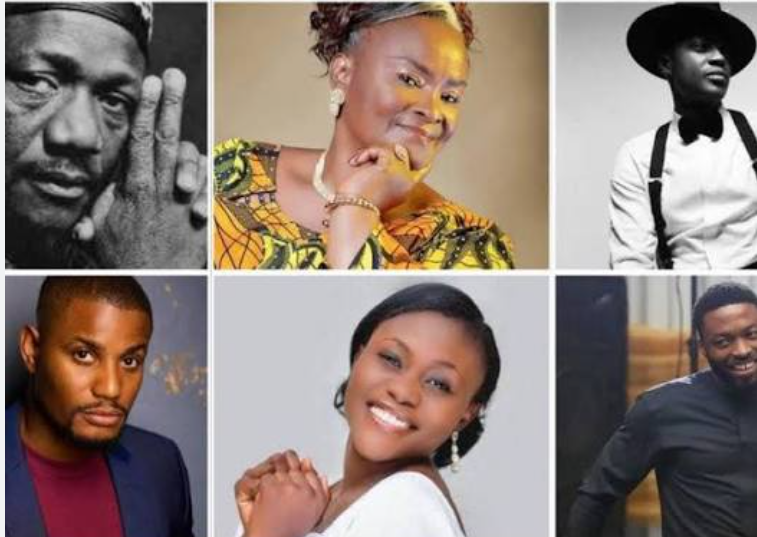
Nigerians Who Defeat Cancer
They faced cancer and found a way back. Yes, cancer has also produced its share of survivors, but the stories of those who died have become part of a larger national conversation about prevention, early detection, diagnosis and treatment.
The disease is particularly cruel because it often leaves families asking the question that cannot be answered after death: what if it had been discovered earlier?
Long established fact is that cancer can change the meaning of ordinary things. While a medical appointment can suddenly become frightening; a diagnosis can turn plans into questions, while treatment can demand a kind of courage that cannot be measured by public success or professional achievement.
For some prominent Nigerians, however, the diagnosis did not mark the end of the story.
Their journeys have moved from fear and uncertainty to treatment, recovery and, in some cases, advocacy. They have spoken about their experiences not simply to recount what they endured, but to remind others that a cancer diagnosis can still leave room for hope.
Among the most notable is Banky W, the singer, actor, entrepreneur and politician who has faced cancer more than once.
His first diagnosis came in 2007, when he was diagnosed with skin cancer.
The disease returned over the years, forcing him through repeated surgeries.
By 2024, he had undergone four surgeries, yet he continued to speak about his experience with determination.
For Banky W, survival has not meant pretending that the journey was easy. Instead, his story has been one of repeatedly confronting the disease and continuing with life after treatment.

Another public figure who faced cancer is Karen Igho, who announced in 2013 that she had been diagnosed with cancer.
She began treatment in the United Kingdom (UK) and kept her supporters informed as she went through chemotherapy.
The following year, she shared the news many people waiting for such an announcement hope to hear: her cancer was gone.
Her experience demonstrated the uncertainty that can accompany treatment, but also the emotional significance of reaching the other side of it.
For musician Nwachukwu Ozioko, popularly known as Vast of Bracket, the diagnosis came while he was in Paris for a performance.
The singer complained he had been experiencing severe body pains, headaches, persistent coughing, weight loss and weakness before doctors diagnosed him with lymphoma in 2013.
Treatment later followed in London, where he underwent several rounds of chemotherapy.
Seven months later, he was discharged after being declared cancer-free.
But Vast did not leave the experience behind completely.
In 2016, he and his Bracket partner, Smash, established the Bracket Foundation (BF) to help raise funds for cancer patients in Nigeria, particularly people who could not afford treatment abroad.
His experience therefore became more than a personal fight. It became part of an effort to help others facing the same disease.
For Farooq Oreagba, cancer changed his outlook on life.
Oreagba, a financial services executive who became widely recognised after his appearance at the Ojude Oba Festival went viral in 2024, was diagnosed with bone marrow cancer in 2014.
The diagnosis altered his priorities and gave him a different perspective on time, life and the things people often take for granted.
Rather than allowing cancer to define him solely through illness, Oreagba has used his experience to encourage awareness and support for others living with the disease.
His public presence has helped place the conversation about cancer survival before a much wider Nigerian audience.
Then there is Prof. Wole Soyinka, whose experience came during a routine medical check.
The Nobel laureate was diagnosed with prostate cancer in 2014. What followed was treatment that he later described as difficult, including proton therapy.
Soyinka has spoken openly about the experience, including the fear and physical demands associated with treatment.
His decision to discuss his diagnosis publicly has helped reinforce the importance of medical checks and early detection.
His story carries a particularly important message because the cancer was discovered during a routine examination.
The discovery gave doctors an opportunity to intervene before the disease became a later-stage crisis.
These stories are different, but they share a common thread.
Cancer interrupted their lives, but it did not become the final definition of those lives.
What Survivors’ Are Doing
As this report gets published, Banky W has returned to his work after repeated surgeries.
Karen Igho continued her life after treatment.
Vast turned his experience into advocacy.
Oreagba transformed a frightening diagnosis into a platform for encouraging others.
Soyinka continued his intellectual and creative life after treatment.
Their experiences also show that surviving cancer does not necessarily mean forgetting what happened.
And while the scars can remain., so can the memories of hospital rooms, treatment sessions, uncertainty and the possibility of losing everything that had once seemed certain.
But so can life. And perhaps that is what makes their stories worth telling.
For someone hearing the words “you have cancer”, the stories of those who have walked through diagnosis and treatment, and continued living can offer something that statistics cannot: the knowledge that the diagnosis is not automatically the end.
Their journeys do not erase the suffering caused by cancer, nor do they suggest that every case will have the same outcome.
They simply demonstrate that beyond the fear of diagnosis, there can still be treatment, recovery, purpose and another chapter.
For these Nigerians, cancer became part of their stories, but it did not become the whole story.
—