By Blessing Kenneth, JKNewsMedia Intern
THE CENTRAL Bank of Nigeria (CBN) has clarified that the new 75 percent Cash Reserve Ratio (CRR) on non-Treasury Single Account (TSA) public sector deposits will not restrict account holders from accessing their funds.
The clarification followed the Monetary Policy Committee (MPC) meeting at which the measure was introduced to manage liquidity arising from inflows into non-TSA accounts.
Non-TSA public sector deposits refer to funds belonging to government ministries, departments, agencies, parastatals, or state-owned entities that are still held in commercial banks rather than the TSA.
Under the new directive, the CBN requires banks to set aside 75 per cent of such deposits as reserves.
The apex bank explained that the requirement was designed to prevent non-TSA deposits from adding to inflationary pressures and disrupting the current disinflation momentum.
In a frequently asked questions (FAQ) document published on its website on Tuesday, the CBN said: “Funds belonging to these accounts are safe and are accessible at the commercial banks at any time.
Commercial banks have in-built mechanisms for managing liquidity and meeting legitimate obligations of all their customers, including owners of these accounts.”
The CBN further explained that the commercial banks’ internal liquidity management structures, combined with its short-term lending support through the standing lending facility, would ensure account holders continue to access their funds without restriction.
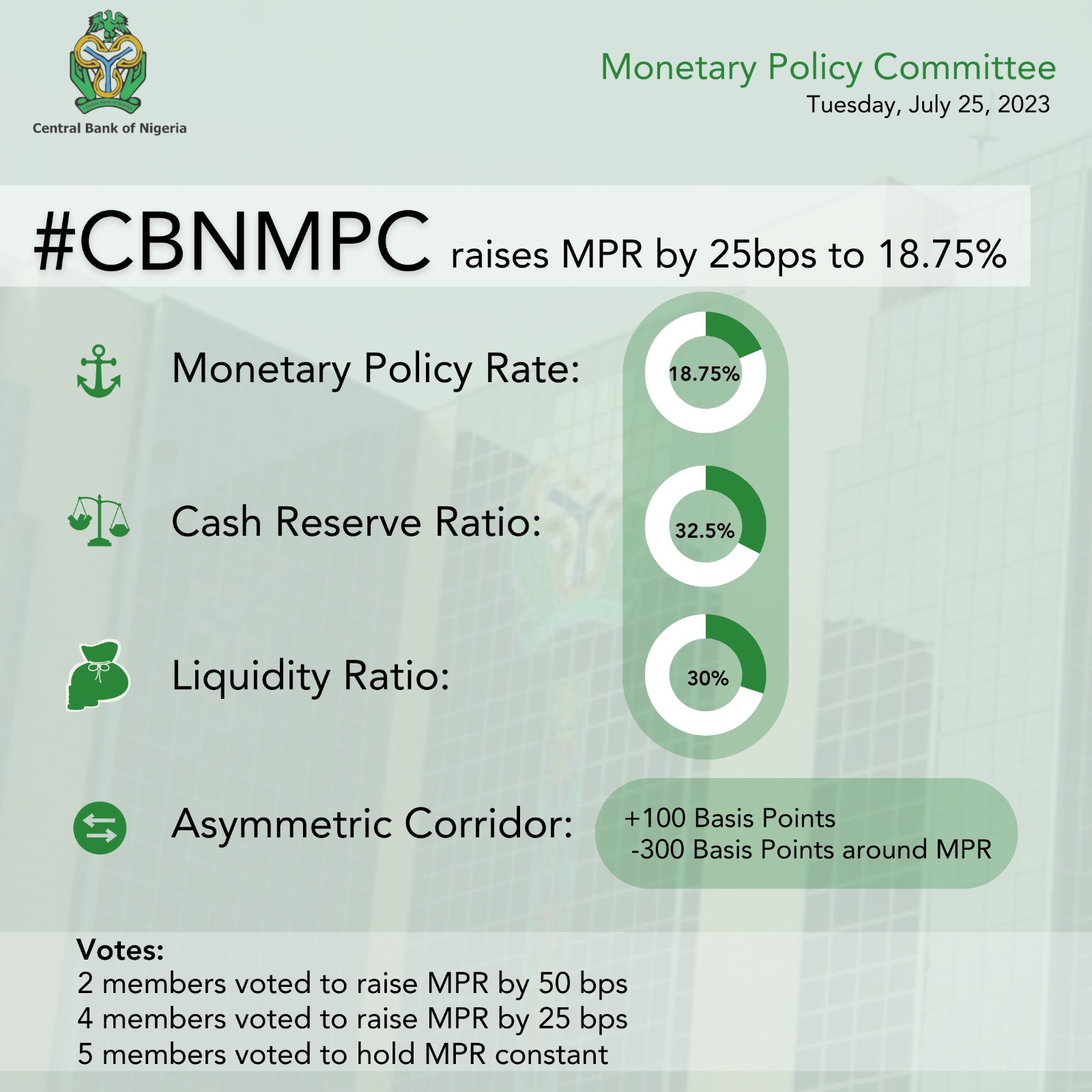
At the same meeting, the MPC reduced the CRR for commercial banks to 45 per cent.
The CBN said the decision was aimed at easing liquidity pressure on lenders, thereby providing more room for credit expansion to the private sector.
According to the CBN: “The recent reduction in the CRR by the MPC seeks to ease the liquidity burden on commercial banks, thereby providing more room for productive lending and intermediation, while maintaining sufficient sterilisation to guard against inflationary pressures.”
The Committee also narrowed the standing facilities corridor around the monetary policy rate (MPR) to +250/-250 basis points from the previous +500/-100 basis points, effectively introducing a symmetric corridor.
The apex bank said the adjustment was intended to reduce volatility in overnight rates, deepen efficiency in the interbank market, and improve monetary policy transmission.
The CBN reiterated that the new measures were designed to balance liquidity management with the need to sustain disinflation, while ensuring financial system stability and adequate credit to the economy.