By JKNewsMedia
ONE OF our previous tracking reports showed that emotional polarisation was on the rise and highlighted how it could play a significant role in fuelling division before, during and after the 2027 election.
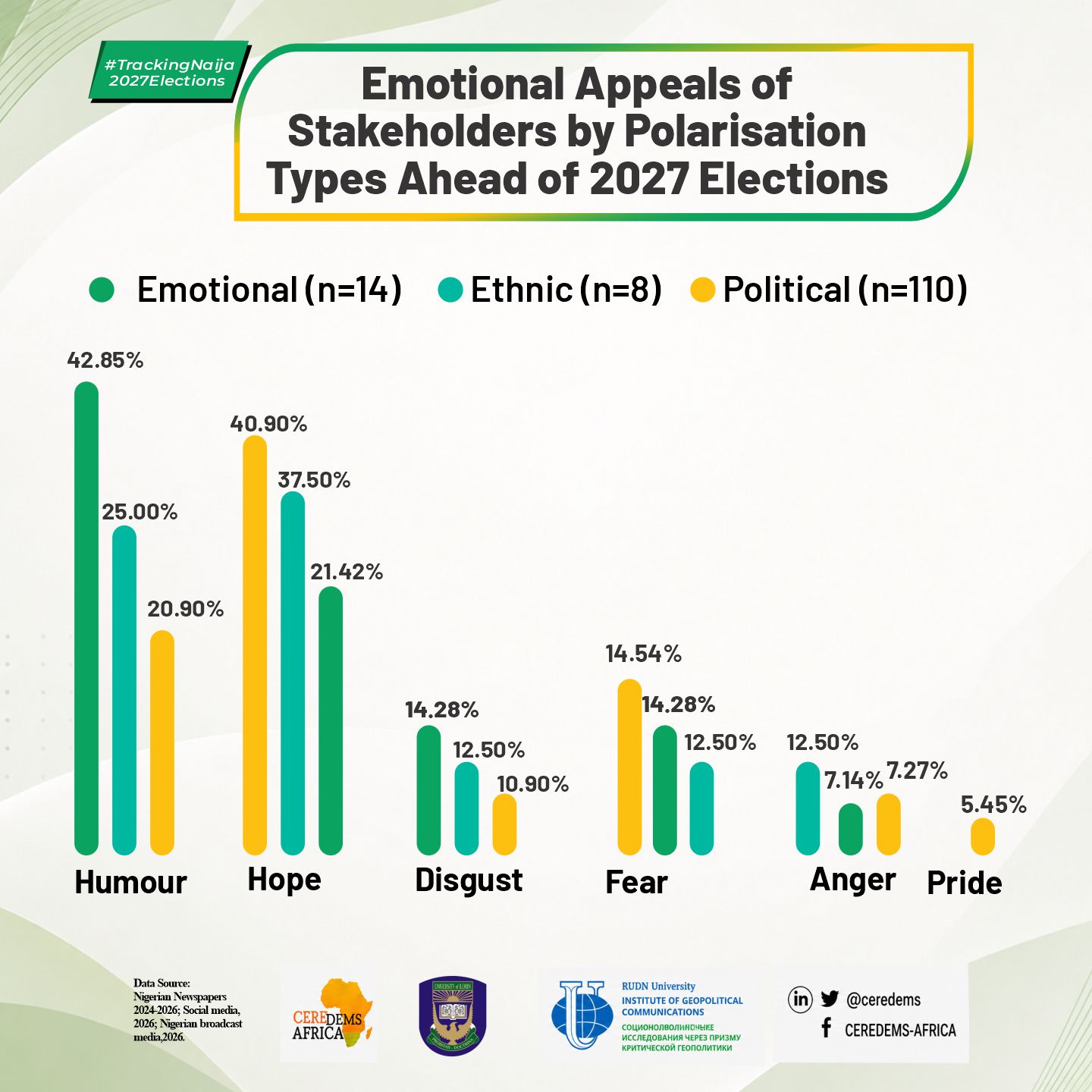
The current tracking evidence on stakeholders’ use of emotional appeals in polarising communication shows that hope and humour are the most prominent emotional appeals across the relevant stakeholders.
This suggests that polarising communication may not always rely on overtly hostile language but can also use positive or entertaining emotions such as hope and humour to shape audience perception.
As campaign activities intensify, there is a need to explicitly identify messages containing emotional polarisation that could manipulate audiences.
It is also important not to treat all forms of emotional polarisation as misinformation.