By JKNewsMedia
THE FEDERAL Government is deliberating on whether to replace the deteriorating Carter Bridge in Lagos with a N320 billion cable-stayed structure or commit to full-scale rehabilitation at a cost of N380 billion, following damning structural assessments.
Minister of Works, Engr. Dave Umahi, raised the alarm after an on-site inspection of the ageing bridge, describing its current condition as unsafe and requiring immediate attention.
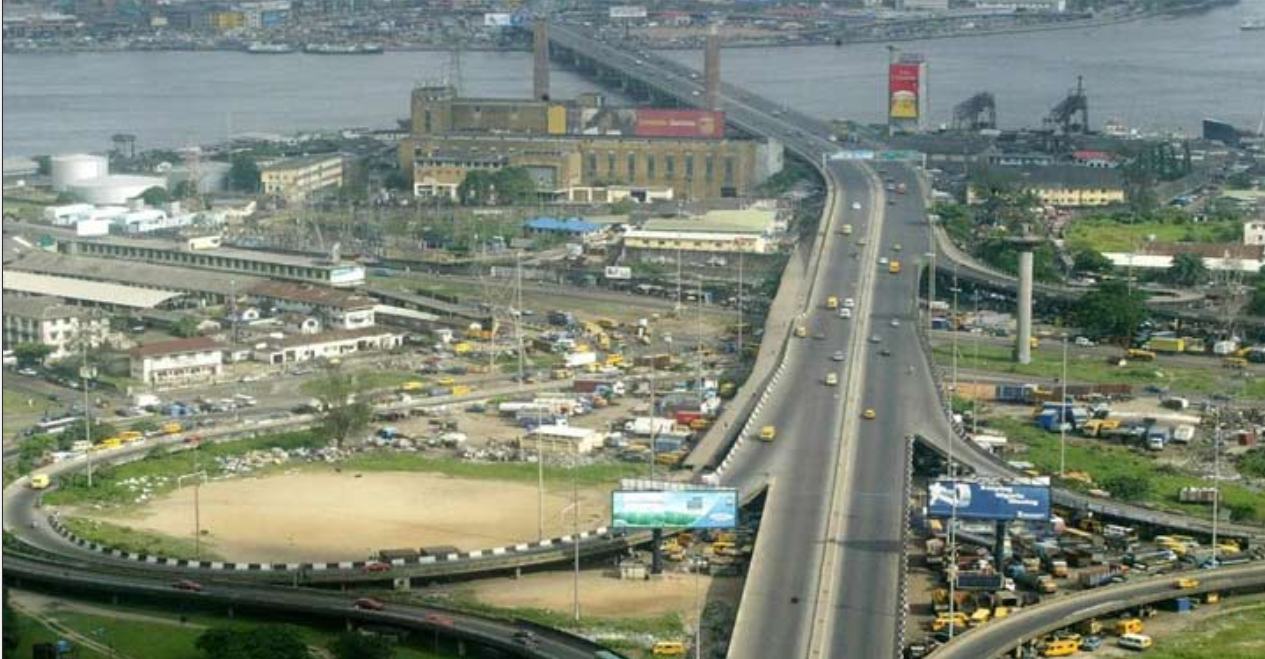
Carter Bridge serves as a vital artery linking Lagos Island to the Mainland. Despite Julius Berger completing 80% of above-water repairs, recent investigations revealed severe underwater corrosion, including damaged piles and detached caps.
These defects mirror the structural issues that led to heavy vehicle restrictions on the Third Mainland Bridge.
Speaking during the assessment, Umahi confirmed that only two firms have so far submitted proposals for Lagos bridge rehabilitations: BuildWell for the Third Mainland Bridge and Julius Berger for Carter Bridge.
The Ministry is currently reviewing the submissions and will present its recommendation to President Bola Tinubu for a final decision.
Citing earlier technical evaluations conducted in 2012 and 2019, the minister noted that Carter Bridge’s critical faults have persisted for over a decade.
He suggested a new bridge could last more than a century and still cost less than continuous maintenance.
Umahi commended Julius Berger for adopting a collaborative stance under its new leadership.
He revealed that the company initially proposed a budget of N27 billion for the current scope of work, but further negotiations led to a reduced figure of N17 billion.
The minister praised the firm’s managing director for what he called a “born-again Berger” approach that has improved stakeholder relations.
Thomas Christl, Regional Technical Manager for Julius Berger’s Region West, confirmed the firm began work on the bridge in 2024, focusing on railings and above-water components.
However, he stressed that the existing contract does not encompass the full scope of rehabilitation.
Citing the extent of the underwater deterioration, he echoed the recommendation that a complete replacement would be the most sustainable option, adding that international financiers are showing readiness to back the project.