By Oluwabunmi Akande, JKNewsMedia Reporter
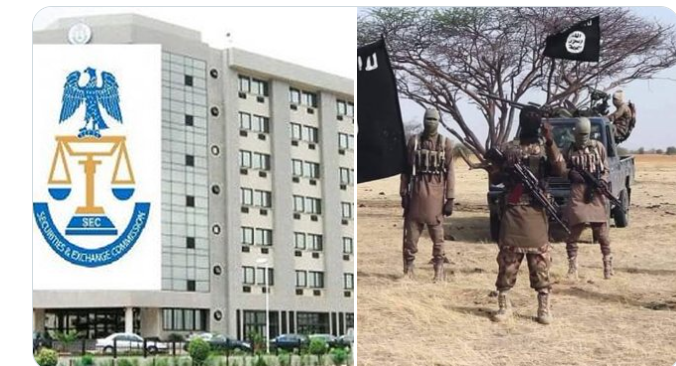
FORTY-EIGHT individuals and groups have been designated as terrorism financiers in Nigeria’s latest sanctions list, with the Securities and Exchange Commission (SEC) directing an immediate asset freeze across the capital market.
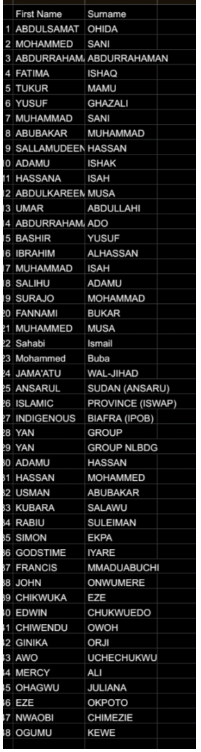
JKNewsMedia.com reports that the NIGSAC, in a fresh publication on its official portal, confirmed the designation of 48 entities – comprising 42 individuals and six-armed groups in what authorities describe as an ongoing effort to dismantle terrorism financing networks across the country.
Almost simultaneously, the SEC issued a forceful compliance directive to capital market operators, ordering the immediate freezing of assets linked to newly designated individuals and organisations.
According to the committee, the updated Nigeria Sanctions List reflects designations made under the Terrorism (Prevention and Prohibition) Act, 2022, with legal backing for asset freezes, travel bans and arms embargoes.
Among those listed is Tukur Mamu, publisher of Desert Herald, who previously mediated during the 2022 Abuja-Kaduna train hostage crisis.
Mamu is currently facing prosecution over alleged terrorism financing, an allegation he has consistently denied.
The list also includes major insurgent and separatist groups such as Boko Haram, formally Jama’atu Ahlis Sunna Lidda’awati wal-Jihad, its offshoot Islamic State West Africa Province (ISWAP), and the Indigenous People of Biafra (IPOB).
Other groups named are Ansarul Muslimina Fi Biladis Sudan (Ansaru), alongside loosely organised rural armed factions locally referred to as yan ta’adda and yan bindiga, commonly associated with banditry in northern Nigeria.
Officials noted that several of the individuals had appeared in earlier designations between 2020 and 2025, underscoring what security agencies describe as persistent financial networks sustaining insurgency.
Reports note that Nigeria’s first major exposure of suspected terrorism financiers’ dates back to 2020, when a United Arab Emirates (UAE) court convicted six Nigerians over Boko Haram funding activities.
The case revealed cross-border financial flows involving fund collection in Dubai and transfers to Nigeria.
In 2024, authorities named 19 individuals and six companies.
By 2025, additional entries included Simon Ekpa linked to the Biafra Republic Government in Exile (BRGIE) and several associates accused of raising funds for violent operations in the South-east.
The federal government has maintained that beyond proceeds from kidnapping, illegal mining and logging, insurgent groups rely on financial backers operating within and outside Nigeria.
SEC Directs Instant Asset Freeze
In a separate but coordinated move, the SEC announced an immediate asset freeze affecting 13 newly designated entities within the capital market ecosystem.
The directive, titled “Commission’s sweeping compliance directive issued to capital market operators,” mandates all operators to identify and freeze assets linked to sanctioned individuals without prior notice.
The Commission stated that its action followed the Nigeria Sanctions Committee’s approval of new entries subject to financial restrictions.
“The directive to freeze accounts and halt all transactions with the flagged entities is binding,” the SEC said, adding that institutions must also report frozen assets and attempted transactions to the sanctions committee.
Citing Sections 49 and 54 of the Terrorism (Prevention and Prohibition) Act, 2022, the SEC stressed that the asset-freezing mechanism is preventive, aimed at disrupting financial flows before they reach terrorist networks.
The SEC also warned that non-compliance carries serious consequences, including civil and criminal penalties, as well as reputational risks for affected firms.
“This highlights a pattern where corporate vehicles are used as channels for financial flows,” the regulator noted, pointing to the need for deeper scrutiny of business entities.
The directive extends beyond traditional financial institutions to Designated Non-Financial Businesses and Professions (DNFBPs), widening enforcement across Nigeria’s financial system.
JKNewsMedia.com reports that on the side, market operators have been instructed to upgrade systems for real-time name screening, asset-tracing and transaction monitoring, while compliance teams are expected to act immediately on any flagged accounts.
Meanwhile, the SEC emphasised that failure to comply could undermine confidence in Nigeria’s financial markets, both locally and internationally.
—
Do you have a news tip for JKNewsMedia.com? Please email us at jkmediapress@gmail.com.