By Joke Kujenya
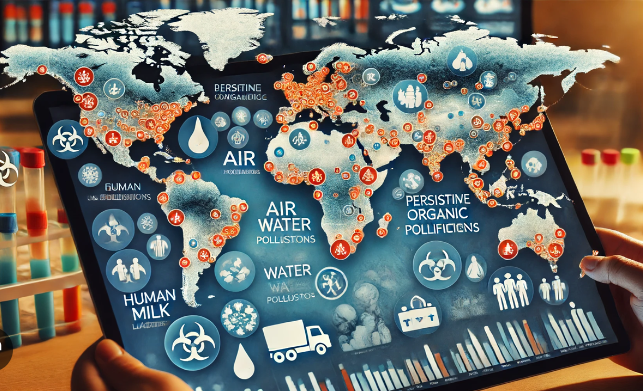
A COMPREHENSIVE international study led by the UN Environment Programme (UNEP) has unveiled alarming findings about the widespread presence of Persistent Organic Pollutants (POPs) in ecosystems and human milk across the globe.
The report notes that these chemicals, notorious for their longevity and adverse health impacts, have been detected in air, water, soil, food, and various ecosystems sampled from 42 countries spanning Africa, Asia, Latin America and the Caribbean, and the Pacific Islands.
Commissioned by the Global Environment Facility (GEF), the study examined 30 POPs listed under the Stockholm Convention, capturing data between 2016 and 2019.
Despite regulatory efforts, these chemicals persist ubiquitously, posing ongoing risks to human health and the environment.
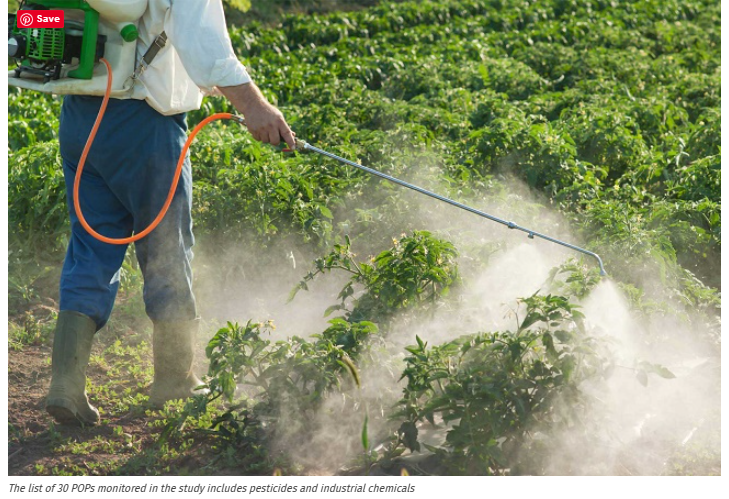
Key findings reveal that POPs, including pesticides and industrial by-products, were detected in all of the 900+ samples collected.
Notably, levels of some historically prevalent POPs have declined globally due to regulatory actions, such as the reduction of Dichloro-Diphenyl-Trichloroethane) developed as the first of the modern synthetic insecticides in the 1940s in agriculture, then used as an insecticide around 1972, but later banned by the United States; however, the compound is still used by some nations and has been found in human milk by over 70% since 2004.
The study says, however, DDT remains alarmingly prevalent in samples from regions where its use was extensive.
Rolph Payet, Executive Secretary of the Basel, Rotterdam and Stockholm Conventions, underscored the study’s importance in highlighting both achievements and challenges in global POPs management.
He emphasized the urgent need for intensified international efforts to safeguard human and environmental health.
The study also flagged concerning trends, such as the substitution of banned POPs with chemicals like per- and polyfluoroalkyl substances (PFAS), which were found in human milk and drinking water, often exceeding safety standards.
UNEP’s Chief Scientist Andrea Hinwood stressed the critical role of monitoring POPs to inform policy decisions, particularly in low- and middle-income countries where awareness and regulatory frameworks may be lacking.
The report further advocates for enhanced global initiatives to tackle POPs, building on the study’s comprehensive data to drive sustainable industrial practices and consumer behaviours.
Looking ahead, the Global Environment Facility (GEF) has committed to expanding POPs monitoring programmes, including new initiatives to address emerging contaminants like mercury.
This proactive approach aims to mitigate the risk of regrettable substitutions and prioritize sustainable development practices globally.
As governments convene in Geneva this week for discussions on chemicals, waste, and pollution prevention, the study’s findings serve as a stark reminder of the persistent threat posed by POPs and the urgent need for coordinated international action.
And while progress is noted to have been made in reducing some POPs, the study underscores the complexity and ongoing challenges in protecting global health and the environment from these hazardous substances.