By JKNewsMedia
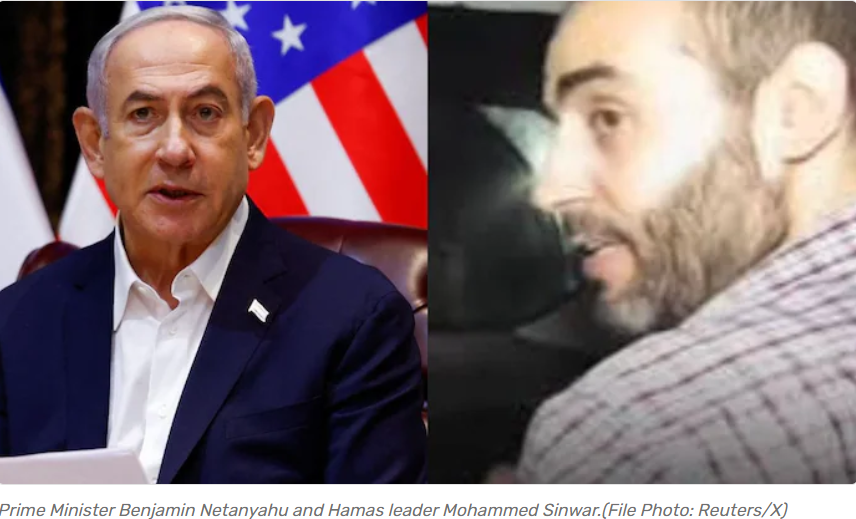
CONFIRMATION OVER the death of Hamas military leader Mohammed Sinwar remained uncertain on Wednesday as Israeli Prime Minister Benjamin Netanyahu announced that Sinwar was likely killed in an airstrike targeting southern Gaza earlier this month.
The strike he said reportedly hit a hospital believed to be sheltering him.
Sinwar, the younger brother of Yahya Sinwar who was killed in October 2024, took over leadership of Hamas operations in Gaza shortly after his brother’s death.
Prime Minister Netanyahu, speaking at a rare press conference in Jerusalem—the first in five months—told reporters and lawmakers that Israel’s campaign had eliminated “tens of thousands of terrorists,” including senior Hamas figures.
“We eliminated the leaders of the murderers Deif, Haniyeh, Yahya Sinwar, and it appears we also eliminated Mohammed Sinwar,” he stated.
Military operations continue to expand as Israeli forces move to take full control of Gaza.
Netanyahu dismissed any rumours of friction with the United States following a Gulf visit by President Donald Trump that excluded Israel.
He indicated openness to a limited ceasefire, but only to facilitate the return of Israeli hostages.
Aid distribution in Gaza remains paralysed. Despite the entry of 98 aid trucks over two days, agencies reported the supplies—including flour and medical goods—had not reached distribution sites.
Local bakeries and aid officials confirmed that critical shortages persist.
Antoine Renard, director of the World Food Programme in Gaza, said none of the aid had reached the civilian population.
Tensions flared at a distribution site managed by the Gaza Humanitarian Foundation (GHF), an alternative aid network backed by Israel and the US. According to the UN, 47 people were injured and at least one was killed during a stampede on Tuesday.
The Israeli military denied allegations of using live fire, claiming only warning shots were fired into the air. GHF also rejected reports that aid seekers had been shot, saying new distribution sites had opened without incident and that over 840,000 meals were distributed on Wednesday.
Senior UN officials continue to criticise GHF’s role, accusing it of undermining long-established humanitarian mechanisms. UNRWA head Philippe Lazzarini called GHF “a distraction from atrocities” and “a waste of resources.”
With the Gaza war reaching its 600th day, Netanyahu described the campaign as a “War of Revival” that had reshaped regional dynamics. He said Israeli forces had dismantled Hamas’s infrastructure and reasserted security dominance in the enclave.
Civilians in Gaza, however, described worsening conditions. “Death continues, and Israeli bombing does not stop,” said 40-year-old Bassam Daloul. Others said starvation had become as lethal as airstrikes.
“Dying by bombing is much better than dying from the humiliation of hunger,” said Heba Jabr, a mother of two displaced in southern Gaza.
Meanwhile, relatives of hostages taken on 7 October gathered in Tel Aviv, demanding a ceasefire and their safe return. Protests began at 6:29 am—the precise moment Hamas launched its unprecedented assault.
Former hostage Arbel Yehud, freed in January, warned that military escalation only worsened the plight of those still held captive.
Official figures state that 1,218 people were killed in Hamas’s initial attack, while Gaza’s health ministry now reports 54,084 deaths since the war began, with over 3,900 killed since the collapse of the March ceasefire.