By Babafemi Ojudu
IN TIMES of national insecurity, words do not travel alone. They carry fear with them. They also carry hope, doubt, anger, reassurance, and sometimes humiliation. This is why communication during a security crisis is not a mere public relations exercise; it is an extension of governance itself and an essential part of national defence.
Recently, a statement attributed to one of the Presidential spokespersons suggested that government had “contacted the bandits” who abducted 38 persons and that the bandits “complied” by releasing them.
If accurately reported, such a statement, though perhaps well-intended, opens itself to dangerous misinterpretation, not about the joyful relief Nigerians feel at the safe return of those abducted, but about the message conveyed to a frightened and uncertain public.
To imply or suggest any form of “understanding” or “direct engagement” between the state and criminal elements can inadvertently reinforce a perception that the state and criminals occupy the same moral or strategic space. For a people already gripped by anxiety, this can deepen uncertainty and diminish confidence in the authority of government.
In an era where perception is often as influential as reality, communication must not only be accurate. It must be deliberate, disciplined, and psychologically reassuring.
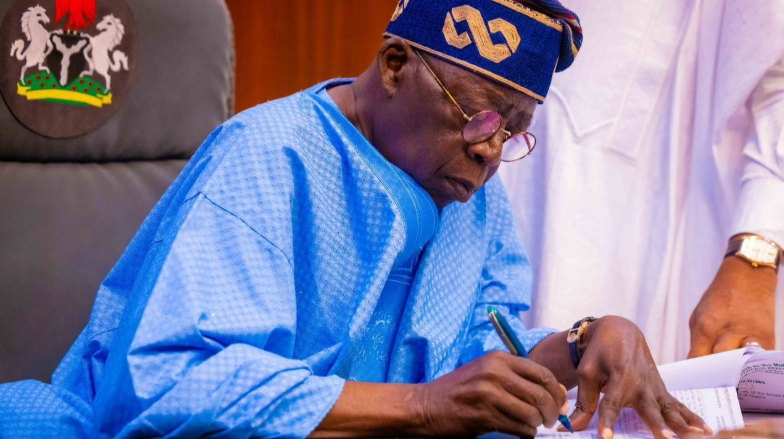
Soon after, an image circulated showing the President appearing to doze during a security meeting. Whether real, manipulated, or simply captured at an unfortunate moment, it spread rapidly and fed an unhealthy narrative. What mattered most was not the image itself, but the delay and weakness of the response that followed it. In communication, silence can sometimes speak louder than words. And in moments of national distress, silence easily becomes rumour.
Around the same time, the Honourable Minister of State for Defence was seen inspecting a guard of honour while en route to oversee security matters. Though the action may have been routine, its timing and optics, unfortunately, created an impression of misplaced priorities — an impression that retired senior military officer, General Ishola Williams, was quick to question.
More recently still, the Honourable Minister of Defence, Mohammed Badaru Abubakar, was reported to have highlighted the risks of bombing bandit hideouts, explaining that some of these hideouts are located deep within forests that conventional bombs may not even be able to penetrate.
While the technical reality of modern warfare is complex and deserving of expert discussion, statements such as this, when presented without broader strategic context, can reinforce a dangerous public perception of helplessness and limitation at a time when citizens are desperate for assurance and confidence.
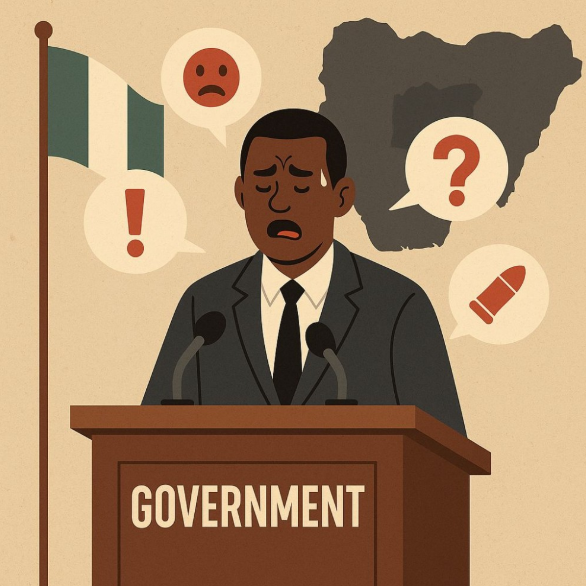
Taken together, these incidents show that what Nigeria is experiencing is not only a security crisis; it is also a communication crisis about a security crisis.
Different voices. Different tones. Different narratives. Some minimise. Others overstate. Some speak confidently. Others appear disconnected. The result is confusion, and confusion weakens the national spirit far more than any external enemy.
In times like this, the nation does not need a chorus of contradictions. It needs one clear voice, one steady hand, and one unifying narrative.
And when government seems to contradict itself, criminals do not need bullets. Fear begins to do their work for them.
How the Government Should Be Communicating Now
If the nation is to regain narrative stability and restore public confidence, a thoughtful and deliberate reset of communication is required. This is not written in hostility, but as a patriotic intervention offered in the interest of national healing and cohesion.
1. Establish One Credible Security Voice
There must be one clear, authoritative channel through which Nigerians receive information on the security situation — preferably a respected national security figure with both professional credibility and emotional intelligence. Too many voices weaken authority. Too many messengers distort the message. A properly structured and well-resourced communication centre should be established, consisting of individuals trained in crisis communication, psychology, and national sensitivity.
2. Avoid the Language of Negotiation
Even if back-channel engagement is sometimes unavoidable in complex environments, it must never become part of the public narrative. The face of the state must always be one of strength, order, and authority. The government does not appear to bargain with criminals; it asserts law and sovereign control. This distinction is critical for national morale.
3. Communicate Action, Not Emotion
Expressions like “deeply saddened,” “deeply concerned,” and “shocked” have become ineffective through overuse. Nigerians no longer seek emotional language; they seek facts, clarity, and assurance:
• What has been done?
• What is being done?
• What will be done?
• What timeline is involved?
Details restore trust. Clarity calms the mind.
4. Respond Swiftly to Misinformation
In an age of digital warfare, dangerous images and false narratives travel with frightening speed. Such misinformation must be countered promptly, professionally, and calmly within hours, not days. Silence in the information space is no longer neutrality; it is surrender.
5. Speak to Citizens as Partners, Not Subjects
Nigerians are educated, connected, and discerning. They do not need to be spoken down to. They need honesty. When leaders treat citizens as partners in the survival of the nation, unity becomes possible.
6. Align Every Word with Visible Action
Communication without practical, visible follow-through becomes mockery. Every statement must be supported by evidence on the ground: arrests, improved deployment, reform within the security architecture, and decisive leadership. No message should be issued that cannot be backed by reality. Such statement as asking citizens to report policemen guarding VIPs is ridiculous and abhorrent.
7. Recognise the Psychological Nature of Terror
You cannot defeat terror with weapons alone. Terror seeps into the mind, and fear does far more damage than bullets. The government’s words — more than its guns — now determine whether people sleep in peace or in panic.
Those responsible for communication must therefore think like psychologists, not propagandists.
Final Thought
A nation may survive bullets. It may survive hunger. It may even survive protest. But what no nation can survive is the complete loss of credibility and trust between its leaders and its people. When citizens stop believing the voice of the state, the state begins to dissolve — not from outside attack, but from internal erosion.
Nigeria needs security, yes. But today, more than ever, Nigeria also needs verbal security, language that reassures, clarifies, strengthens, and inspires.
Because in times like these, every word is either a shield…
or a weapon.