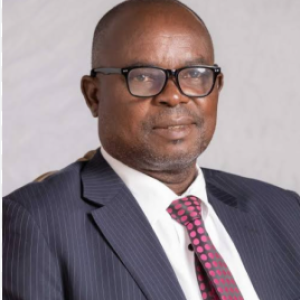
By Bolanle BOLAWOLE
SPEECHES BY political leaders generally create an in-road into their mind and give those they lead an insight into what to expect as policies or government actions. Anniversary speeches hold a special place because they are made on important, most times, specific occasions. It is, therefore, not surprising that everyone looks forward to, or attaches great importance to them.
I said “generally” because, unfortunately, it is not every leader that attaches great importance to the speeches they make to the public. Some are known to write their speeches themselves or, at least, take interest in what is prepared for them by their speech writers. They dictate the cogent points they want to make and leave the speech writers to flesh it up. Others sit in meetings where important speeches they are about to make are discussed and debated before an agreement is reached. Those are leaders who are cerebral and who are not lazy or lackadaisical but take the task of governance with all the seriousness it demands and deserves.
Of course, there are leaders who are the very opposite! To them, speeches and addresses are mere rituals which they perform and, immediately, they forget about it. Old speeches, especially on anniversary dates, are taken from the file and rehashed. Once delivered, they are returned to the file to gather dust again! Some leaders take the pains to rehearse their speeches before mounting the rostrum. Others do not have the discipline and state of mind to do so; hence, you find them fumbling and stumbling while delivering their addresses! The recent example of a state governor who could not appropriately pronounce the figures in a document as important as his budget speech readily comes to mind here.
I have written speeches for leaders – and they fall into the different categories itemized above. The seriousness that some leaders attach to their speeches also depend on the importance they attach to the occasion. Some occasions are just to “show face”, as they say, or fulfill all righteousness. In these days of politics, many appearances are irritants made for political considerations. You may not know it, but there are people who will go to any length to have a statement from the President greeting them on their birthdays! What do you think of efforts by the government to sanitize the indiscriminate use of “Dr. This” and “Dr. That” title by Nigerians? Do you think it will succeed? Or will it go the way of the “Simply Mister” policy of The Guardian newspapers of yore?
I once wrote a speech, which the big man read to great applause. Leaders don’t get more cerebral than this person, but when it was time for questions and answers, he turned to me and said, “Bola, answer them! After all, it was your speech! I only helped you to read it!” He eventually fielded questions, but that taught me a lesson: Each time I had to write a speech for anyone, I would first pick their brains.
So, from personal experience, I take speeches and addresses by our leaders with a pinch of salt. How many promises made in such speeches and addresses do they fulfill? But my duty as an opinion moulder necessitates that I take more than a cursory look at speeches made or addresses read by our leaders. I usually settle down with them after they have been made, which was exactly what I did with President Tinubu’s Democracy Day 2026 address.
Platitudes or what?
Mr. President started his speech with what his opponents and nay-sayers may call platitudes: celebrating the so-called “enduring Nigerian spirit” and “27 unbroken years” of democracy. I am sure you know many have questioned the kind of democracy we operate here! The President then proceeded to have germane words – if they are heeded – for many critical sectors of our society: To everyone involved in the electoral process, he said “Democracy fails when citizens doubt the process”; and to our JAPA youths, he counselled that “Every great nation was built by those who stayed to solve problems, not by those who abandoned ship”. He saluted the sacrifices of the armed forces while telling the traditional rulers, faith leaders and community heads that “The government cannot do it alone.”
Despite the horrific abductions in Oyo, Ekiti, Kwara, Kogi, Borno states and in other parts of the country, government activities have proceeded apace and politicians – even in the directly affected and afflicted states – have not slowed down on their partisan political activities, giving the impression that they care less about what is happening to the less privileged!
In the same Oyo state that toddlers and school children are spending weeks in captivity while a teacher was beheaded in a most horrendous manner, the state governor not only went ahead to declare a presidential ambition, the relatives of a former Minister who were abducted, were rescued in a jiffy while the poor and powerless remained in captivity!
The President, however, gave hope that he cares when he said: “Though this year’s mood is dampened by the abduction of our children in Oyo and Borno, we remain hopeful for their safe return. Democracy without security is not solid enough.” He then reeled out the efforts and achievements of his administration in the security sector. Progress is being made, he said, and victory is certain, he assured.
What do you say to that? The truth of the matter is that the efforts of the government in the security arena are yet to yield the kind of fruits that the people themselves can see from their little corners, without having to search for it with microscopes! If the government thinks it is on the right path, it should forge ahead still. I promise that when we begin to see – and enjoy – the fruits of their efforts, I will let them know!
Name and shame
The President then went on to make statements that will, no doubt, ruffle feathers. He said: “At a time like this, let us not assign blame or point fingers.” We will! Our reluctance to name and shame is one of the reasons we have found ourselves wallowing in this insecurity bind. Enough! He also said, “Crime has no ethnicity.” It has! Except we want to keep deceiving ourselves, we know the origin of the insurgency whacking the country. We also know its region, religion, and ethnic colouration. We must own up to that.
Recently, I saw on the internet the Minister of Foreign Affairs, Bianca Ojukwu, in the midst of prisoners of Nigerian nationality in Ethiopia; over 90 percent of whom were said to come from a section of the country and belonging to an ethnic group. Each time Nigeria is given a bad image abroad, it usually is traced to the same section of the country. Drug-related offences are not excluded. Say the truth and let the devil be ashamed!
Mr. President then ended this part of his address on an optimistic note: “We must stand united and be assured that the enemies of our nation shall soon be history. We will triumph over terror and continue to build a more prosperous nation.” Even if we keep being economical with the truth? We must step on toes – crush toes – if “the enemies of our nation (are to) soon be history!”
Wanted: Cenotaph for “Unknown Heroes of Democracy”
Expectedly, the President got it right on June 12. He was a major participant in the momentous events that birthed the democracy we enjoy today. When he said “June 12 occupies a sacred place in our national memory. It represents more than an election; it is a defining chapter in our story.”, he was right. That election qualifies for what historians refer to as a “watershed” in the history of this country – but, unfortunately, we lost it! The tributes he paid to the heroes of our democracy – dead and alive – is appropriate and heartwarming. Mercifully, I am one of them!
The President reeled out names; yet, many more heroes remained to be named. Maybe some of them will have their day in subsequent Democracy Day celebrations.- but what of the unknown heroes of our democracy – those mowed down on the streets of Lagos, Ibadan and other cities across the country by the armoured tanks of the vile dictator, Gen. Sani Abacha?
I propose that, just like we have a cenotaph for the “Unknown Soldier” whom we celebrate on January 15 every year, we should similarly erect a cenotaph for the “Unknown heroes of our Democracy” to be celebrated every Democracy Day.
The President said: “The heroes of June 12 secured political freedom. Our challenge is to secure economic freedom. Democracy must be felt in the quality of people’s lives…” That is correct, but he has to take another look at the reforms he enumerated as necessary for the above to be achieved. You don’t kill a patient because you want to cure him of an ailment. While I believe reforms are necessary, we must tell President Tinubu what Obasanjo told the then self-styled evil genus and Maradona, Gen. Ibrahim Babangida, that reforms must have a human face!
Tinubu’s faux pas on stable power supply
I will now address an issue that must have embarrassed the President to no end: The statement he made when campaigning to occupy his present office that if he did not solve the problem of epileptic power supply and he came asking for a second term, Nigerians should not vote for him! Opposition politicians and detractors alike have feasted on that statement.
The President tactically alluded to it in his Democracy Day speech thus: “By 2023, when we came on board, the electricity sector was characterised by chronic generation shortfalls, an unreliable gas supply, and transmission infrastructure so fragile that it could not evacuate available power. Distribution companies were burdened by massive losses and a metering deficit of over four million. Worst of all, the value chain was drowning in legacy debt. The result was a sector that generated less than the 13,500 Megawatts installed capacity, a sector that transmitted less than it generated, distributed less than it transmitted and collected revenue far below what it needed to sustain itself.” Whaaoh!
He continued: “To address the problems besetting the sector, I signed the Electricity Act, which grants states authority to generate, transmit, and distribute power. The Presidential Power Sector Task Force is working hard to reduce the metering deficit. It has also been authorised to raise N4 trillion bond to settle verified legacy debts. The Rural Electrification Agency, supported by the World Bank and the African Development Bank, has deployed off-grid and mini-grid power to underserved communities, universities, markets, and hospitals. Electricity is a democratic dividend we owe every Nigerian. We intend to deliver it.”
This is sobering! Interpreted, it reveals that the President did not have full knowledge of the problem at the time he made his boast. He got in to discover that the rot in the power sector was deeper than he had imagined. He is not the first to make this error; Chief Bola Ige before him fell into the same pit. Ige failed to deliver the stable power supply he promised Nigerians when the then President Obasanjo made him the Power minister, eventually leading to his being shuffled into the more familiar Federal Attorney-General and Minister of Justice portfolio.
Is it true that Tinubu had originally pencilled down ex-Gov. Nasir el-Rufai for the Power ministry and that El-Rufai had spent time researching and preparing for the task, only for the failure of the Senate to confirm him throwing spanners in the works for Tinubu?
Tinubu ended this section of his speech by promising that, “We intend to (still) deliver it (stable power supply)” Aaamen!
Imperatives of restructuring
Let me end with this statement by the President: “Every generation has a defining responsibility. The generation of our founding fathers secured independence—the generation of June 12 secured democracy. Our generation must secure prosperity.”
He reminds me of Frantz Fanon, author of “The Wretched of the Earth”, who said: “Every generation must, out of relative obscurity, discover its mission, to fulfill it or betray it.”
Having discovered that the mission of his own generation is to secure prosperity for Nigeria and Nigerians, I commit to Mr. President these immortal words of Karl Marx (so inscribed on his grave): “The philosophers have only interpreted the world, in various ways. The point, however, is to change it.”
Platitudes must be accompanied by the necessary courage to bring about the required change – in this wise, restructuring the country – if they are not to amount, in the words of William Shakespeare, to “ …a tale told by an idiot, full of sound and fury, signifying nothing!”
BOLAWOLE, former editor of PUNCH newspapers, Chairman of its Editorial Board and Deputy Editor-in-chief, was also the Managing Director/Editor-in-chief of The Westerner news magazine. He writes the ON THE LORD’S DAY column in the Sunday Tribune and TREASURES column in New Telegraph newspaper on Wednesdays. He is also a public affairs analyst on radio and television; turnpot@gmail.com 0705 263 1058.
(Published in the ON THE LORD’S DAY column in the Sunday Tribune newspaper of Sunday, 21 June, 2026).
—