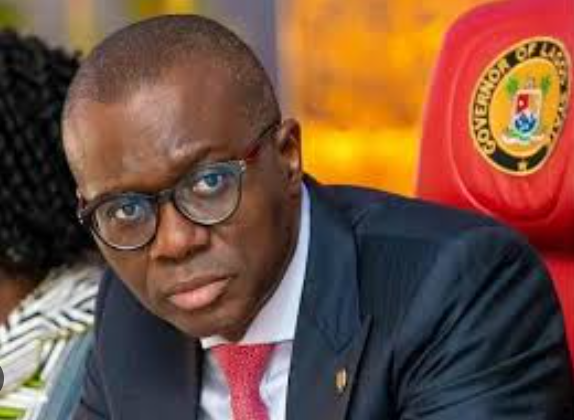
By Housing Staff writers
A WAVE of public frustration is cresting across Lagos as residents intensify calls on Governor Babajide Sanwo-Olu to take decisive action against what many now describe as a “runaway rental market.” From the mainland to the island, tenants say the cost of keeping a roof over their heads has surged beyond sustainable limits, triggering fears of displacement, overcrowding, and a looming social crisis.
At the heart of this growing agitation is a chorus of voices like that of 62-year-old resident, Mr. Uche Ogbonna, who spoke candidly about the strain on his household in Ejigbo. “Yes, crazy rents,” he said bluntly, capturing a sentiment echoed by many Lagosians. “We have lived in our current residence for almost seven years, but the recent increments are becoming unbearable.”
His testimony, though personal, reflects a broader systemic challenge confronting Africa’s most populous city. With an estimated population exceeding 20 million and growing, Lagos continues to battle a chronic housing deficit that experts place in the millions of units. Yet, for many residents, the issue is no longer abstract; it is immediate, personal, and urgent.
A CITY PRICED BEYOND ITS PEOPLE
Investigations reveal that rental prices in several parts of Lagos have spiked by as much as 70 to 100 percent within the past two years, driven by a combination of inflation, currency pressures, and the rising cost of building materials. Areas once considered affordable are rapidly slipping out of reach for middle- and low-income earners.
For families like the Ogbonnas, the consequences are stark. Fixed incomes are being stretched to breaking point, while landlords increasingly demand lump-sum payments spanning one to two years , an entrenched practice that further excludes vulnerable renters.
Urban development analysts point to macroeconomic factors, including the depreciation of the naira and escalating construction costs, as major drivers. Cement, steel, and other key inputs have witnessed significant price hikes, making new housing projects more expensive and limiting supply. However, critics argue that these explanations, while valid, do not absolve the state government of its responsibility to intervene.
“MATCHING ORDERS” FROM THE PEOPLE
Across Lagos, residents are now issuing what many describe as “matching orders” to the state government , clear, actionable demands aimed at stabilizing the housing sector.
Foremost among these is the call for a massive expansion of affordable housing schemes. “The State Government should embark on building more houses that will be affordable to the masses,” Ogbonna urged, reflecting a widely shared expectation that government must play a more active role in direct housing provision.
While the Sanwo-Olu administration has, in recent years, launched several housing initiatives under its THEMES agenda, critics argue that the scale and pricing of these developments often fail to meet the needs of the average Lagosian. Many of the completed units remain out of reach for those earning modest incomes, effectively limiting their impact on the broader crisis.
CALL FOR STAKEHOLDER ENGAGEMENT
Another key demand gaining traction is the need for structured dialogue between government and property stakeholders. Residents are calling on authorities to convene urgent meetings with landlords, developers, and housing associations to address what they describe as arbitrary rent increases.
“The State Government should have a meeting with stakeholders, especially landlords,” Ogbonna emphasized. “There must be some form of understanding or regulation.”
Housing advocates say such engagement could pave the way for policy measures, including rent control frameworks or incentives for landlords who maintain fair pricing. However, economists caution that rent control, if poorly implemented, could discourage investment in housing and worsen supply shortages.
Still, the absence of any regulatory buffer has left tenants exposed to market forces that many believe are spiraling out of control.
THE COST OF BUILDING AND THE COST OF INACTION
Underlying the rent crisis is the escalating cost of building materials, a concerned-residents are urging the government to confront head-on. Industry data shows that the prices of cement, iron rods, and finishing materials have surged dramatically in recent years, largely due to exchange rate volatility and supply chain disruptions.
Experts suggest that targeted government interventions such as tax reliefs for manufacturers, import duty adjustments, or support for local production could help stabilize prices and, by extension, rental costs.
Yet, beyond economics, there is a growing sense that the crisis also reflects policy gaps. Critics argue that urban planning, land administration, and housing finance systems in Lagos require urgent reform to unlock large-scale, affordable development.
A TEST OF GOVERNANCE
For Governor Sanwo-Olu, the mounting pressure represents a critical test of leadership. Housing remains a cornerstone of his administration’s development blueprint, but residents say the urgency of the moment demands more than incremental progress.
Civil society groups warn that failure to address the rent crisis could have far-reaching consequences, including increased informal settlements, rising homelessness, and heightened social tensions.
Already, anecdotal reports suggest that some families are resorting to extreme coping mechanisms—relocating to distant suburbs, sharing overcrowded apartments, or diverting funds from essential needs such as education and healthcare.
THE HUMAN STORY BEHIND THE NUMBERS
Beyond statistics and policy debates lies the lived reality of millions of Lagosians. For Mr. Uche Ogbonna and his family, the issue is not just about economics—it is about dignity and stability.
After nearly seven years in one home, the prospect of relocation is not merely inconvenient; it is disruptive. It means uprooting children, altering daily routines, and facing the uncertainty of an increasingly unforgiving housing market.
His voice, steady yet resolute, underscores a broader demand: that governance must translate into tangible relief for ordinary citizens.
THE ROAD AHEAD
As Lagos continues its rapid expansion, the challenge of housing affordability is unlikely to fade without decisive intervention. Analysts say a multi-pronged approach will be required—combining increased housing supply, cost-control measures, regulatory frameworks, and innovative financing models.
For now, however, the message from residents is clear and unmistakable: the time for action is now.
Whether through large-scale affordable housing projects, stakeholder negotiations, or economic reforms targeting construction costs, Lagosians expect their government to step in and restore balance to a market they say has tilted dangerously against them.
In the words of Mr. Ogbonna, “something has to be done.”
And across Lagos, millions are echoing that call.
—
Do you have a news tip for JKNewsMedia.com? Please copy and email us at jkmediapress@gmail.com.