By Joke Kujenya
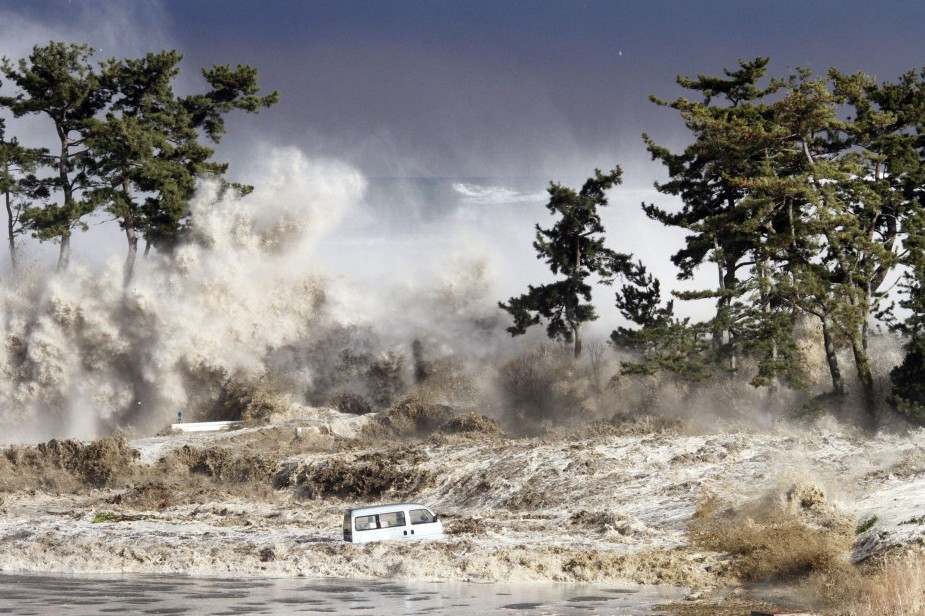
COASTAL CITIES across Southern Europe and North Africa face rising urgency over tsunami preparedness, with new warnings from United Nations Educational, Scientific and Cultural Organization (UNESCO) experts.
The UN oceanographic body alerts that an impending tsunami in the Mediterranean is no longer a remote risk but a statistical certainty, according to the Intergovernmental Oceanographic Commission (IOC) of its arm.
It says coastal communities fringing the western Mediterranean—particularly between Spain’s Málaga coast and North Africa—could have just 21 to 35 minutes to escape the incoming wave after a seismic event on the Averroes fault.
The danger zone lies beneath the Alboran Sea, a seismically active pocket of water bounded by two continents. Experts have issued grave warnings that a tsunami exceeding one metre in height will strike the region within the next three decades—possibly as soon as tomorrow. For vulnerable harbour towns and beachfront communities, time is not on their side.
UNESCO’s IOC is also sounding the alarm with stark clarity: a tsunami over one metre will hit the Mediterranean with 100 per cent certainty in the next 30 to 50 years.
Recent analysis pinpoints the Averroes fault—submerged between southern Spain and Morocco—as a high-risk epicentre.
Should an earthquake strike here, waves could reach coastal towns within half an hour.
In the case of a Málaga offshore quake, CENALT (France’s tsunami alert centre) estimates flooding could begin in just 21 minutes, giving local authorities and residents little time to act.
“What is extremely hazardous is not only the altitude of the tsunamis but the flows and fluxes of the water—and the flooding, which can cause damage to beaches, harbours and streets,” warns Pascal Roudil, technical coordinator at CENALT. Smaller harbours with low-lying waterfronts are at particular risk.
Some European countries have laid out national response plans. France, for instance, enforces a red-alert response system in the first 15 minutes following tsunami detection, a framework established in 2012 with CENALT.
Spain’s own State Plan for Civil Protection against the Risk of Tsunamis includes early-warning seismic systems and local coordination strategies.
Italy’s vulnerability is compounded by its chain of underwater volcanoes. In 2022, UNESCO surveyed the Aeolian Islands near Sicily, where volcanologists have raised alarms about eruption-induced waves that could devastate coastal communities.
Despite these measures, the looming danger has highlighted gaps in public awareness, evacuation infrastructure, and response coordination.
UNESCO’s warnings underscore the urgent need for Mediterranean nations to bolster their readiness before nature strikes.
Unlike the Pacific “Ring of Fire,” the Mediterranean is not typically seen as tsunami prone.
Yet the region’s complex geology tells a different story. The convergence of the African and Eurasian plates, coupled with significant volcanic activity, makes the sea susceptible to sudden seismic shifts.
This threat is compounded by the density of populations along its shores. From Málaga and Marseille to Tunis and Tangier, millions live just metres above sea level. With little time to flee and infrastructure not always built to absorb the shock, even a moderate tsunami could bring catastrophic results.
Mediterranean states must act decisively to address a risk that is no longer theoretical. The clock is ticking—and the waves, when they come, will not wait, the UNESCO alerts.