By JKNewsMedia
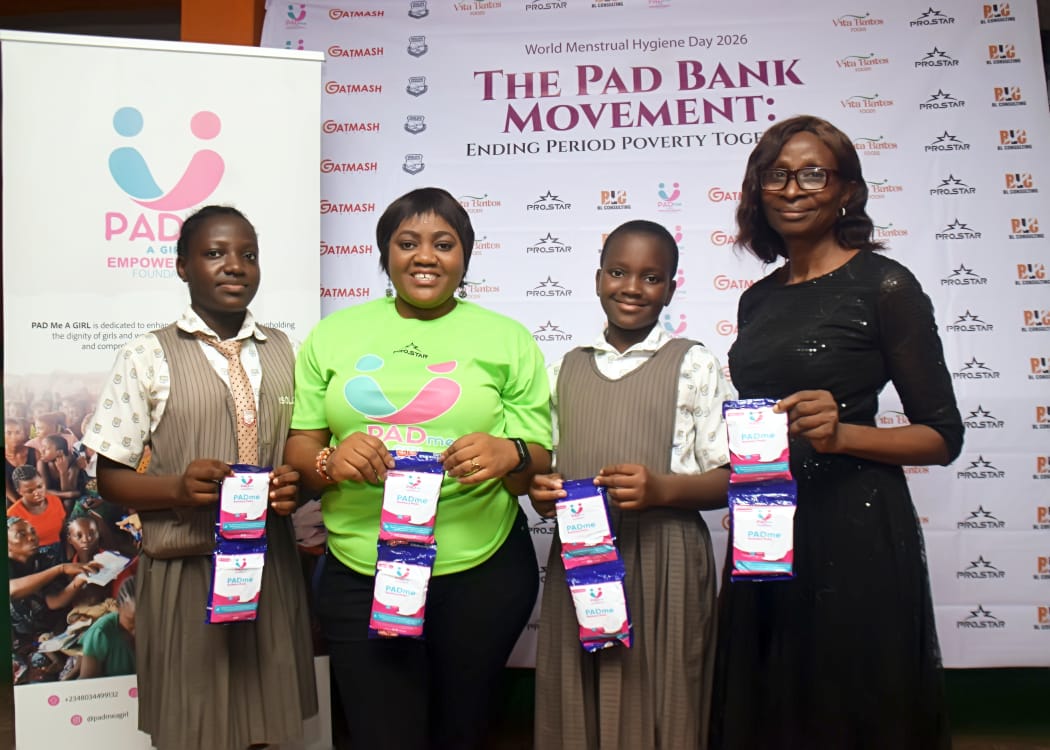
INTENSIFIED EFFORTS to tackle period poverty remained the focus as the Pad Me A Girl Empowerment Foundation (PMAGEF) called for collective action to ensure that no girl is denied education, dignity or opportunity because of menstruation.
The call was made during the commemoration of World Menstrual Hygiene Day held at Isolog College, Akute, Ogun State, on Wednesday, June 3, 2026.
The event themed The Pad Bank Movement: Ending Period Poverty Together, brought together students, teachers, partners, advocates and community stakeholders to promote menstrual health awareness and support for girls.
Founder PMAGEF, Theresa Moses, described menstruation as a natural biological process that should never be a source of shame or a barrier to education and personal development.
She said period poverty remains a major challenge affecting thousands of girls across Nigeria, forcing many to miss school, withdraw from social activities and sometimes resort to unsafe alternatives due to a lack of access to sanitary products.
Moses said her foundation was established as a sustainable solution to ensure girls have access to menstrual products whenever they need them.
“The Pad Bank is more than a storage facility for sanitary pads. It is a symbol of hope, dignity, inclusion, and empowerment. It ensures that no girl has to suffer in silence because of her period,” she said.
She disclosed that the PMAGEF has reached more than 10,000 girls and women across schools, rural communities and underserved areas through menstrual health education, advocacy campaigns, sanitary pad distribution and empowerment programmes.
Moses called on schools, governments, corporate organisations, parents and development partners to support menstrual health initiatives and establish Pad Banks in schools to help eliminate period poverty.
Addressing students, she urged girls not to feel ashamed of menstruation.
“Your period should never stop you from achieving your dreams. Speak up when you need support, ask questions, and take pride in who you are,” she said.
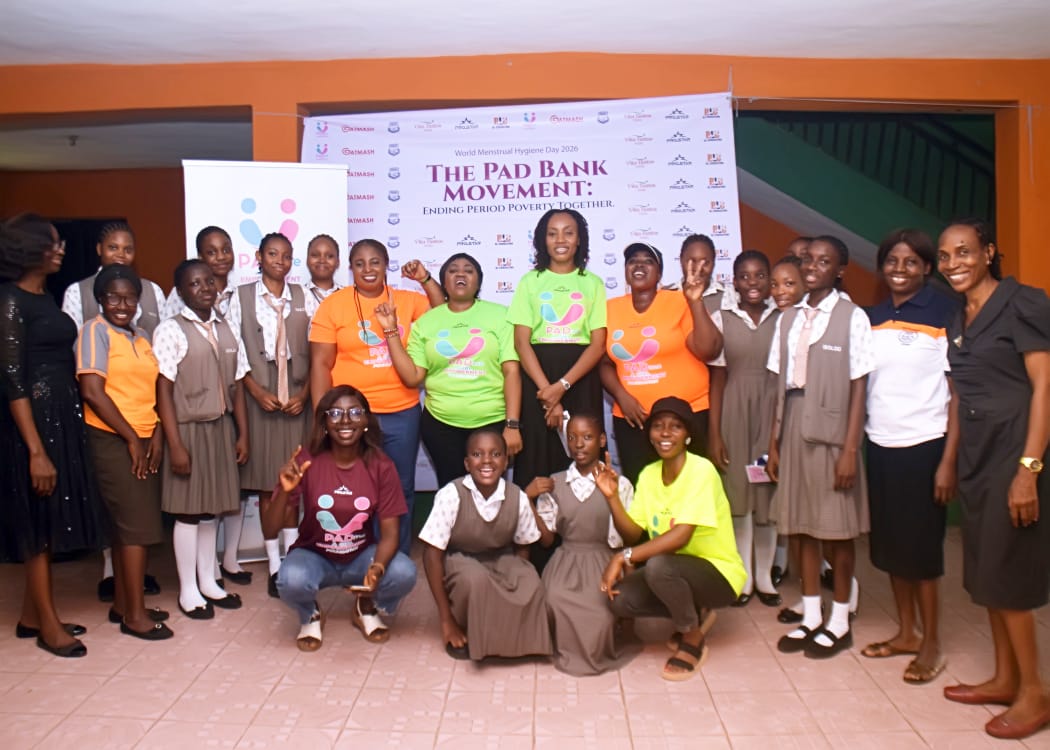
An educational session on Ending Period Poverty Together was delivered by media expert and life coach Mrs. Amina Omoike, who described menstruation as a normal biological process experienced by women and girls worldwide.
“Your period is not a sickness. It is not a punishment. It is not something that should stop you from achieving your dreams,” she told students.
Omoike said period poverty includes a lack of access to clean water, proper sanitation facilities, accurate menstrual health information and social support, in addition to the inability to afford sanitary pads.
She noted that period poverty can result in school absenteeism, reduced confidence, health risks, anxiety and social isolation among girls.
“There are girls who stay home for several days every month because they have no menstrual products. Imagine missing classes every month through no fault of your own,” she said.
She encouraged girls to learn about menstrual health, ask questions without fear, support one another and share accurate information. She also called on parents, schools and communities to create supportive environments where menstruation can be discussed openly without stigma.
“Never let your period make you feel less valuable, less capable, or less intelligent. Your period does not define you. Your character, your dreams, your talents, and your determination define you,” Omoike said.
The Foundation recognised the contributions of its corporate partners and sponsors, including ProStar Sports International, which provided customised jerseys for team members and volunteers of the Foundation.
BL Consulting, Vitabaites Foods, media partners and the management of Isolog College, Akute, were also acknowledged for their support.
Moses said the media remain critical stakeholders in breaking the silence around menstruation and educating communities on the importance of menstrual health and hygiene.
The Foundation stated that the support received from organisations reflects the growing recognition that ending period poverty requires collaboration among schools, businesses, civil society organisations, the media and community stakeholders.
Beneficiaries described the programme as impactful, educational and empowering, with many students’ expressing appreciation for the opportunity to learn more about menstrual health and hygiene.
—