By Jemimah Wellington, JKNewsMedia Reporter
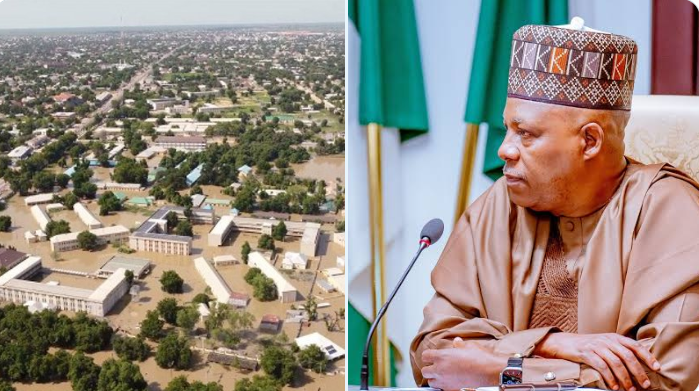
AT LEAST 15 million Nigerians face the looming threat of flood disasters this year, according to Vice President Kashim Shettima, who warned of the potential devastation during a national workshop on disaster preparedness in Abuja.
Addressing participants at the one-day Validation Workshop on the Anticipatory Action Framework for Nigeria, Shettima acknowledged the dire projections while assuring that the Federal Government has shifted from a reactionary posture to a forward-thinking strategy designed to prevent widespread catastrophe.
The event took place at the National Counter Terrorism Centre under the Office of the National Security Adviser.
“We must adopt anticipatory action and robust inter-agency collaboration,” the Vice President stressed, urging both state and federal institutions to unite in addressing environmental emergencies.
He noted that Nigeria currently loses up to five percent of its Gross Domestic Product to flooding each year—a staggering figure with dire implications for national stability and economic recovery.
To curb the projected impact, President Bola Tinubu has approved an emergency release of ₦15 billion, earmarked specifically for rapid response mechanisms and disaster management.
The workshop followed alarming forecasts from federal authorities, which identified 30 states and the Federal Capital Territory as high-risk flood zones for 2025.
These include both inland and coastal states such as Lagos, Benue, Anambra, Bayelsa, and Adamawa. Rising sea levels are expected to trigger coastal and riverine flooding in parts of the South-South, with Bayelsa, Cross River, Delta, and Rivers states among the most vulnerable.
Minister of Water Resources and Sanitation, Joseph Utsev, previously confirmed that these risks stem from intensifying climate conditions, warning of the strain such events will place on communities, infrastructure, and livelihoods.
States like Akwa Ibom and Edo have also been flagged for heightened vulnerability due to topographical and climatic factors.
Beyond natural disasters, the Vice President also addressed the nation’s mounting security concerns. He condemned the recent killings in Plateau State, extending President Tinubu’s condolences to grieving families.
Shettima reiterated the Federal Government’s commitment to peace, proposing a shift from military-only strategies to community-driven, non-kinetic solutions in conflict zones like the North-East and Plateau.
“There can never be a military solution to the crisis,” he cautioned, underscoring the importance of addressing the root causes of unrest.
As seasonal rains draw near, the VP said the country braces for turbulent months ahead. He urged for proactive steps and coordinated planning, adding that the government hopes to minimise damage and shield millions from the devastating force of nature.