By Joke Kujenya
The questions Nigerians keep asking as banditry, kidnapping and terror attacks persist. . .
A nation cannot budget endlessly for security while citizens continue to budget for fear. . .
The time has come to ask difficult questions about what is working, what is failing and what must change. . .
DAILY CONCERNS are growing, a Nigerian child should not have to learn the sound of gunfire before learning multiplication tables.
A farmer should not fear going to the farm.
A trader should not pray before boarding a bus. Parents should not go to bed wondering whether armed men will arrive before dawn.
Yet, this has become the reality for millions of Nigerians.
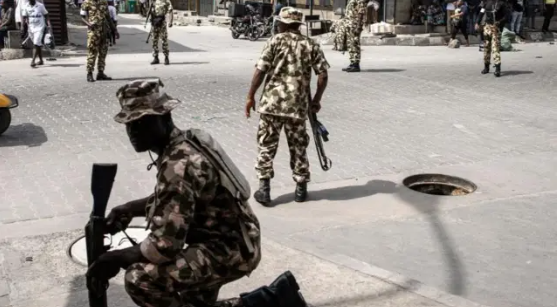
Across the country, insurgency, banditry, kidnapping, mass abductions and violent attacks have become recurring headlines.
The tragedy is not only that these attacks continue; it is that many Nigerians are slowly becoming accustomed to them. Fear is becoming normal.
Death is becoming statistics. Entire communities are learning to survive without the assurance that the state can protect them.
That should alarm every policymaker in Abuja and every governor’s office across the federation.
The disturbing question is no longer whether Nigeria has a security crisis.
The question is whether criminal groups are gradually becoming more powerful, more organised and more emboldened than the institutions established to stop them.
How did we get here?
For more than a decade, Boko Haram and its splinter groups have terrorised the North-East. Bandit groups expanded across the North-West.
Kidnapping networks spread into the North-Central region and increasingly into the South, now.
Violent criminal organisations have evolved from loosely organised gangs into sophisticated enterprises capable of recruiting fighters, collecting intelligence, negotiating ransoms, procuring weapons and controlling territory.
Many of these groups thrive in vast ungoverned spaces where government presence is largely weak or totally absent.
Repeatedly, security experts have warned that large rural areas have effectively become safe havens for criminal networks.
In such places, the state is often absent while armed groups become the de facto authority.
The result is now a frightening pattern: villages attacked, highways unsafe, schools targeted, communities displaced and citizens forced to negotiate directly with criminals for survival.
This year 2026 alone has already produced enough bloodshed to shock the conscience of any nation.
In February, one of the deadliest attacks of the year occurred in Kwara State, where militants attacked communities in Kaiama area, killing more than 170 people according to multiple reports.
Many victims were murdered after resisting extremist demands. Tears flow. . .
Human rights groups reported that more than 1,100 people were abducted across parts of northern Nigeria within just the first three months of 2026.
Cases included mass kidnappings in Niger, Zamfara, Kaduna, Borno and Kwara states.
Month of March brought further horror.
Boko Haram and Islamic State West Africa Province (ISWAP) attacks reportedly led to the abduction of hundreds of people in Borno State.
Military bases were not left out as they were shockingly attacked. Soldiers were killed. Communities were overrun.
In Maiduguri, bomb attacks killed dozens.
In Katsina, villages came under attack. In Plateau, security personnel were ambushed and killed.
April saw renewed scrutiny of military operations after reports that an airstrike targeting insurgents killed more than 100 civilians at a market near the Borno-Yobe axis.
The incident raised difficult questions about intelligence gathering, accountability and civilian protection.
May brought yet another attack in Borno State where militants reportedly killed villagers and burned homes in a community once considered relatively safe.
Even today, insecurity remains a dominant national concern.
A Nigerian court sentenced four men to death for their involvement in the horrific 2022 Owo church attack, a reminder that the scars of terrorism remain fresh and that justice often arrives years after communities have buried their dead.
The obvious question follows.
What exactly are Nigeria’s security agencies doing with the enormous resources allocated to them every year?
Nigeria spends hundreds of billions of naira annually on defence, intelligence gathering, military operations, police funding, special interventions, allowances, logistics and security votes.
Yet citizens continue to pay an additional unofficial tax called fear.
People pay ransoms.
Communities organise self-defense groups.
Families avoid travel.
Businesses relocate or get abandoned.
Farmers jettison fields.
Students abscond school.
Investors hesitate.
The economic cost is staggering, but the psychological cost is even greater.
Now, this is not to dismiss the sacrifices of countless military personnel, police officers and intelligence operatives who risk their lives daily.
Gallant Nigerian troops have recorded successes against insurgents, rescued hostages and eliminated criminal leaders.
Many officers have paid the ultimate price in service to the country.
However, patriotism requires honesty.
If insecurity remains widespread despite years of operations, then policymakers must ask hard questions.
Why do criminals continue to acquire sophisticated weapons?
How are they financing their operations?
Why are intelligence failures recurring?
How do hundreds of people get abducted from communities without early warning?
Why are forests and border regions still functioning as criminal sanctuaries?
Who profits from the ransom economy?
And perhaps most importantly: where exactly are these fighters coming from?
The answer is complex.
Information says some emerge from local criminal networks. Others exploit farmer-herder conflicts, yet some are linked to extremist ideologies.
Others take advantage of porous borders across the wider Sahel region where instability, arms trafficking and violent extremism have expanded dramatically in recent years.
Poverty alone does not create terrorism. But poverty, unemployment, weak governance, corruption and lack of state presence create fertile ground for recruitment.
A young man who sees no future is easier for criminal groups to recruit.
A village abandoned by government becomes easier for armed groups to control.
A corrupt system weakens the very institutions meant to defend society.
Security therefore cannot be achieved solely through bullets and airstrikes.
Nigeria needs a comprehensive national security doctrine that integrates intelligence, border management, technology, community policing, judicial reforms, anti-corruption measures, education, job creation and local governance.
The country must also strengthen accountability mechanisms. Security spending should be measurable. Citizens deserve to know what outcomes are being achieved with public funds.
Success should not be measured by press statements but by safer roads, secure farms, functioning schools and communities free from fear.
History shows that nations do not collapse overnight.
They weaken gradually when citizens lose confidence in the state’s ability to protect lives and property.
Nigeria is not there yet.
But the warning signs are impossible to ignore.
The greatest danger is not merely the existence of insurgents, bandits and kidnappers. The greatest danger is allowing them to become a permanent feature of national life.
No country can develop when its citizens live in fear.
No economy can thrive when criminals dictate movement.
No democracy can flourish when people feel safer negotiating with armed groups than relying on the institutions of the state.
The time for excuses has passed.
Nigeria’s security crisis is no longer simply a security issue. It is an economic issue, a governance issue, a humanitarian issue and ultimately a question about the future of the Nigerian state itself.
The nation must decide whether fear will continue to dominate daily life or whether decisive, accountable and strategic action will finally reclaim the country from those who profit from chaos.
The Numbers That Do Not Add Up
Another troubling question continues to haunt many Nigerians.
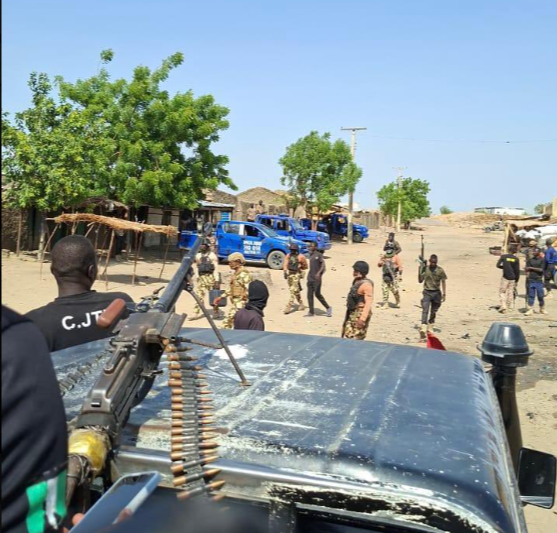
Almost every week, official statements announce that dozens of terrorists, bandits or insurgents have been “neutralised,” “eliminated” or “taken out” during military operations.
Such announcements often highlight successful airstrikes, ground offensives and intelligence-led raids.
Yet, despite these reported victories, attacks continue to spread across communities.
Or are new cells emerging?
Are fresh recruits appearing?
Entire villages are still overrun. Highways remain vulnerable. Kidnapping networks continue to expand.
The contradiction is difficult to ignore.
If hundreds or even thousands of insurgents have indeed been eliminated over the years, why do these groups still appear capable of replenishing their ranks?
Where are the replacements coming from?
Are recruitment channels operating unchecked?
Are fighters crossing Nigeria’s borders from neighbouring countries affected by instability in the wider Sahel region?
Are local economic hardships, unemployment and weak governance creating a steady pool of vulnerable recruits?
How are weapons still finding their way into the hands of criminal groups despite repeated security operations?
These questions are not criticisms of frontline troops risking their lives daily.
Rather, they are questions policymakers owe citizens answers to.
Military victories on the battlefield are important. But if recruitment, financing, arms trafficking and cross-border movements remain largely intact, then tactical successes may not translate into strategic victory.
The ultimate measure of success is not the number of insurgents reportedly neutralised.
Our tears are yet to dry; our hearts still ache on the abduction of teachers and students in Oyo which has renewed concerns over the safety of schools and little children now “living” for about twenty-five days in one unknown forest.
It is whether ordinary Nigerians can travel safely, sleep peacefully and conduct their daily lives without fear.
Until that happens, many citizens will continue to wonder why insecurity appears to regenerate faster than it is defeated.
Quote:
Nigeria continues to battle insurgency, banditry and kidnapping despite massive security budgets. This column examines the hard questions citizens are asking about recruitment, border security, intelligence failures and accountability.
—