By Joke Kujenya
WHEN THE sun sets in many villages across Sub-Saharan Africa, darkness settles in almost instantly. It’s been like that for eons of years.
Often, thousands of homes without electricity rely on kerosene lamps or candles, while families prepare evening meals over smoky wood fires that fill kitchens with harmful fumes.
JKNewsMedia.com reports that for hundreds of millions of people, this remains daily life rather than an exception.
According to the latest Tracking SDG 7: The Energy Progress Report reveals that despite years of investment and global commitments, 655 million people worldwide still live without electricity, while around two billion people continue to cook with polluting fuels and technologies, exposing themselves to dangerous household air pollution and preventable diseases.
The findings paint a stark picture of widening inequality in access to modern energy, with Sub-Saharan Africa remaining the epicentre of the global energy crisis.
It shows more than 560 million people across the region still lack electricity, while 970 million have no access to clean cooking, making it the world’s largest concentration of energy poverty.
Drawing on new data from 2023 and 2024, the joint report shows that although most regions continue to make progress towards universal energy access, improvements have slowed sharply where they are needed most.
Global electricity access stood at 92 percent in 2024, but annual growth has fallen to roughly half the pace recorded during the previous decade.
That slowdown leaves the world drifting further away from Sustainable Development Goal 7, which aims to ensure universal access to affordable, reliable, sustainable and modern energy by 2030.
According to the report, the current pace of electrification would need to triple over the next few years for that target to remain within reach.
The challenge is particularly severe in rural communities.
While cities have continued to expand electricity networks, many remote communities remain disconnected.
In Sub-Saharan Africa, the number of rural residents living without electricity has grown from 376 million in 2010 to 447 million in 2024, highlighting how population growth continues to outpace infrastructure development.
Electricity is only part of the problem.
The report describes access to clean cooking as the world’s largest remaining energy gap, affecting nearly one in every four people globally.
Although 89 percent of urban residents now have access to cleaner cooking solutions, that figure falls to 56 percent in rural areas, exposing millions of households to smoke generated by charcoal, firewood, kerosene and coal.
Without faster progress, the report warns that 1.8 billion people could still depend on these polluting fuels by 2030.
The consequences extend far beyond inconvenience.
Household air pollution caused by traditional cooking methods contributes to about three million deaths every year, while women and children – who often spend the most time near cooking fires – bear the greatest health burden.
In Sub-Saharan Africa alone, the number of people without access to clean cooking is projected to rise to one billion by 2027 unless action accelerates.
Yet amid the sobering findings, the report identifies areas where momentum is building.
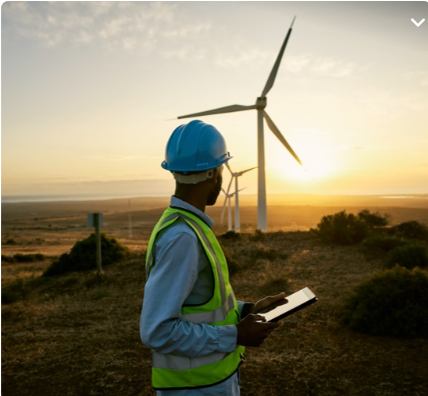
Renewable energy now generates more than 30 per cent of global electricity, while renewable energy capacity reached a record 544 watts per person worldwide.
Distributed energy technologies – including off-grid solar systems and mini-grids – are increasingly providing electricity to communities that national grids have struggled to reach, offering a faster and more affordable route to electrification.
Cleaner cooking technologies are also expanding.
Electric cooking, bioethanol and biogas are gradually emerging as viable alternatives, particularly in communities where traditional fuels remain dominant.
Even so, connecting households to electricity does not automatically guarantee that families can use it.
The report notes that affordability continues to exclude millions of people, even in areas where electricity infrastructure already exists.
High connection charges, household wiring costs and the price of basic electricity services remain beyond the reach of many low-income families.
To bridge that gap, the report calls for targeted subsidies, innovative financing mechanisms and least-cost electrification strategies that prioritise underserved communities.
Financing remains another obstacle.
International public financial flows supporting clean energy in developing countries increased only marginally – from US$24.4 billion in 2023 to US$24.6 billion in 2024.
More concerning, support for the least developed countries fell by 11 percent to US$3.7 billion, raising concerns that investment is failing to reach the countries facing the greatest energy deficits.
The transition to renewable energy also remains deeply uneven.
While low-income countries have renewable energy capacity of just 33.6 watts per person, high-income countries have reached 1,224 watts per person, underlining the enormous gap in clean energy infrastructure.
Meanwhile, progress in energy efficiency is slowing.
The report says the annual rate of improvement declined from 2.4 percent in 2022 to 1.5 per cent in 2023, widening the gap between global ambitions and actual implementation.
The report concludes that achieving universal energy access will require stronger political commitment, better coordination across sectors and sustained investment that reaches communities most at risk of being left behind.
Its findings are expected to shape discussions at a special launch event on 8 July 2026, following the review of SDG 7 during the High-Level Political Forum on Sustainable Development in New York.
For millions of families, however, the challenge is far more immediate than any international meeting. Until electricity reaches their homes and clean cooking becomes affordable, every sunset still marks the beginning of another night lived in darkness and smoke.
—