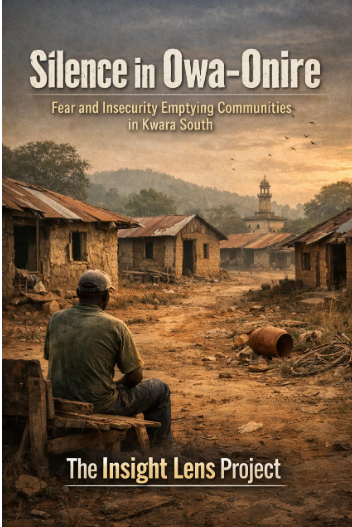
WHEN A combined security team reportedly arrived in Owa-Onire, a rural community in Ifelodun Local Government Area, they were met by an unsettling sight, deserted homes, abandoned public spaces, and a haunting silence that residents say has become the defining feature of life in parts of Kwara South. At the center of the story was one remaining resident, identified as Lekan, whose presence underscored the scale of displacement that insecurity has brought to the area.
For years, communities across parts of southern Kwara State have faced growing concerns over kidnappings, armed attacks, and criminal activity linked to bandit groups operating within forest corridors that stretch across several local government areas. Residents, community leaders, and security observers have repeatedly warned that persistent insecurity has forced families to abandon farms, businesses, schools, and ancestral homes in search of safer locations.
Owa-Onire has become a powerful symbol of that crisis. According to accounts shared by residents and local stakeholders, repeated attacks and the fear of abduction gradually pushed people out of the community. The reported kidnapping of a traditional ruler further heightened anxiety and accelerated migration from the town. Whether temporarily displaced or permanently relocated, many former residents now live in neighboring communities, uncertain about when they might safely return.
The situation is not unique to Owa-Onire. Across parts of Ifelodun, Isin, Oke-Ero, and Ekiti local government areas, reports of deserted settlements have fueled concerns about the long-term social and economic consequences of insecurity. Empty houses, neglected farmlands, and disrupted local commerce are increasingly becoming visible reminders of communities struggling to survive under persistent security threats.
Yet the crisis has also become deeply political. Many residents and commentators have questioned whether elected officials at the local, state, and federal levels have responded with sufficient urgency. Critics argue that public officials, including lawmakers representing affected constituencies, should do more to advocate for stronger security measures and humanitarian support for displaced residents. Others contend that governments face complex operational challenges and that security interventions require sustained coordination rather than short-term deployments.
The debate has also exposed wider tensions around ethnicity, religion, and responsibility. Some citizens have attributed the violence to particular ethnic groups, while others have warned against broad generalizations that risk stigmatizing entire communities for crimes committed by armed criminal networks. Security experts have consistently cautioned that banditry, kidnapping, and organized violence are criminal activities that should be addressed through law enforcement and intelligence operations rather than ethnic or religious profiling.
Attention has also turned to the administration of AbdulRahman AbdulRazaq, with some residents expressing frustration over what they perceive as inadequate protection for vulnerable communities. State authorities, however, have repeatedly stated that they are working with federal security agencies to strengthen operations against criminal groups. The challenge facing policymakers is not only restoring security but also rebuilding confidence among displaced populations who may fear returning home even after military or police operations are conducted.
For now, Owa-Onire stands as a clear reminder of what prolonged insecurity can do to a community. Beyond politics and public debate lies a simpler reality, families separated from their homes, farmers cut off from their livelihoods, and settlements struggling to retain their identity. Whether through stronger security operations, improved intelligence gathering, or coordinated rehabilitation efforts, the ultimate measure of success will be the day communities such as Owa-Onire are no longer defined by silence, but by the safe return of the people who once called them home.
Adebamiwa Olugbenga Michael is a Lagos-based journalist, political economy and policy analyst, and publisher of TheInsightLensProject.com, delivering data-driven open-source intelligence insights on Nigeria, Africa, and global affairs.
Published by: Silence in Owa-Onire – How Fear and Insecurity Are Emptying Communities in Kwara South – TheInsightLensProject.com
—