By Jemimah Wellington, JKNewsMedia Correspondent
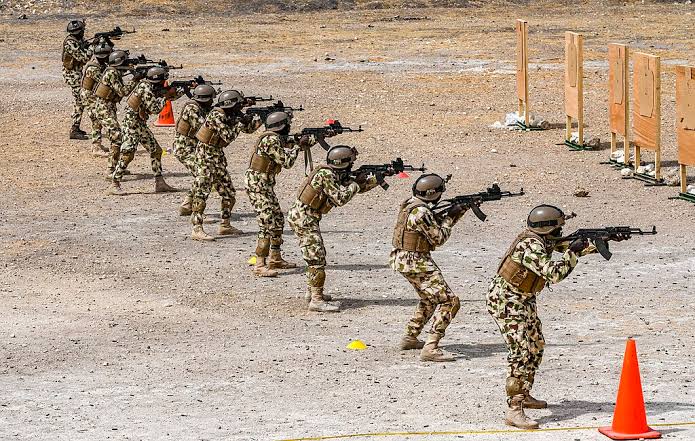
NIGERIA’s NATIONAL Economic Council (NEC) has approved N100 billion for the overhaul of police and security agencies’ training institutions across Nigeria, pending final ratification by President Bola Tinubu.
The approval follows recommendations by an ad-hoc committee constituted to assess the state of the nation’s security training facilities.
At its 154th virtual meeting on Wednesday, the NEC also sanctioned N2.6billion for consultancy services to support the rehabilitation project, adding that the funding reflects a continuation of the President’s proposal, first presented at the 152nd NEC meeting in October, for a comprehensive revamp of training facilities nationwide.
Governor Peter Mbah of Enugu State, chairman of the NEC ad-hoc committee, highlighted the urgency of the initiative, describing many security training institutions as being in dire condition.
His presentation underscored the critical need for government intervention to restore and upgrade the facilities.
Vice President Kashim Shettima, who chairs NEC, reaffirmed the federal government’s commitment to addressing the state of training institutions. He urged governors across Nigeria’s 36 states to ensure that economic reforms translate into visible improvements in the daily lives of citizens.
“Governance is meaningful only when citizens can feel its impact,” Shettima said.
He called on all tiers of government to prioritise execution over rhetoric, stating that policy should be measured by tangible outcomes in communities nationwide.
He added: “Our task is not to admire problems, but to solve them. Not to explain challenges, but to overcome them. And not to hope for progress, but to engineer it.
Today’s agenda speaks to our shared responsibility to build a nation where reforms translate into results, and where policies are not mere promises, but convincing instruments of change felt in the markets, schools, clinics and farms across our federation.”
The Council also received financial updates from the Accountant-General of the Federation.
Balances reported as of November 2025 included $525,823.39 in the Excess Crude Account (ECA), N71,647,494,101.12 in the Stabilization Account, and N79,252,769,532.35 in the Natural Resources Development Account.
An update on polio eradication was presented by the Chairman of the NEC Ad-Hoc Committee on Polio, Governor of Gombe State.
Since the committee’s inauguration earlier this year, it has convened four meetings to strengthen political commitment, coordination, and state engagement in the national campaign to halt variant poliovirus transmission.
The NEC noted that as of Week 47, Nigeria had recorded 73 cases of circulating variant poliovirus type 2 (cVPV2) in 2025, a 39% reduction from 119 cases during the same period in 2024.
Six priority states accounted for 63% of cases, with Sokoto reporting 23, Zamfara 9, Kebbi 7, Gombe 2, Kano 3, and Katsina 2.
Progress was significant in Kano and Katsina, where case reductions reached 94% and 88% respectively.
The committee observed 13 new poliovirus detections namely 12 cVPV2 and one cVPV3, across several states, including Gombe, Kebbi, Sokoto, Jigawa, Nasarawa, and Zamfara.
NEC noted the results of the first phase of the integrated Measles, Rubella, HPV, and Polio campaign across 20 northern states and Oyo.
The campaign also reached 83% of all planned settlements with geo-evidence and achieved 92% and 95% coverage for MR and polio vaccines respectively. Lot Quality Assurance Sampling (LQAS) results recorded 85% pass for MR and 86% for polio.
In priority states, Kano, Katsina, and Gombe passed LQAS, demonstrating strong campaign quality. Kebbi, Sokoto, and Zamfara fell below the 80% threshold, prompting revaccination in affected local government areas.
A new round of nOPV2 campaigns will commence in December, implemented in two blocs: Bloc A covers 12 northern states including Kano, Katsina, Kebbi, Sokoto, and Zamfara, while Bloc B covers nine northern states including Gombe.
The NEC allso emphasised the importance of this round to close remaining immunity gaps before year-end.
Deputy Governors of implementing states were encouraged to convene State Taskforce Meetings ahead of the campaign.
State governments were urged to work closely with security agencies to provide safe access for vaccination teams, especially in insecure or hard-to-reach settlements.
Local Government Chairmen were tasked with leading Evening Review Meetings to monitor daily performance and address challenges in real time.
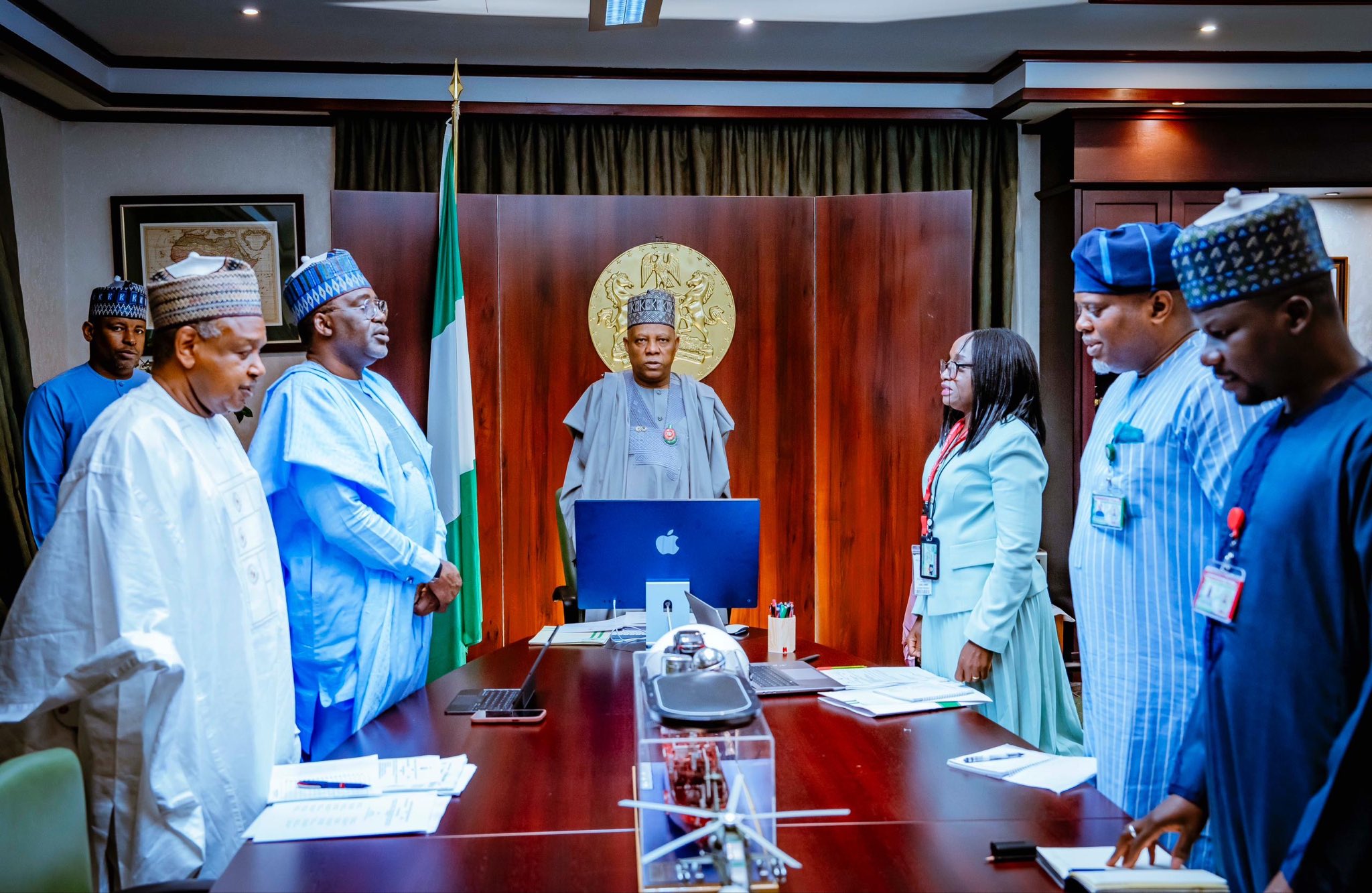
The Minister of Petroleum (Gas), Ekperikpe Ekpo, briefed Council on the cost and availability of domestic gas.
He highlighted the need to pay outstanding obligations to gas producers to stimulate increased production and supply for domestic consumption.
Gas producers have a cumulative debt claim of $1billion for gas supplied to the power sector since 2011, with N185billion of naira-denominated debt validated by NNPC Gas Marketing Ltd (NGML) and the Nigerian Electricity Regulatory Commission (NERC).
Council noted that variances in claims arose mainly from NEPL’s claims against GenCo customers and unreported claims by Shell, Seplat Energy, and NUIMS.
President Tinubu had previously approved urgent settlement of the N185billion validated debt through future oil and gas royalty deductions, with the Nigerian Upstream Petroleum Regulatory Commission (NUPRC) coordinating repayment schedules with six gas producers.
Council approved concurrence with the Presidential directive, affirming support for the N185 billion payment to gas producers to enhance domestic gas supply.
Members commended the committee’s efforts in improving gas availability, given Nigeria’s status as a largely gas-dependent nation.
The 154th NEC meeting demonstrated a coordinated approach to addressing security infrastructure, public health, and energy supply challenges, with clear directives for implementation and oversight at federal and state levels.