By John Udeh, For JKNewsMedia Sports
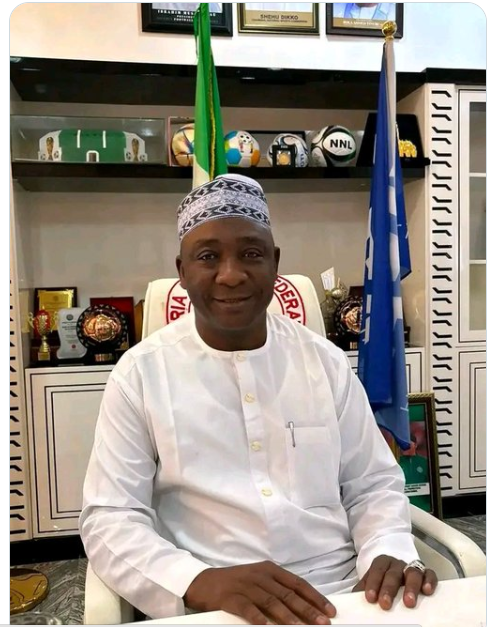
NIGERIA FOOTBALL Federation (NFF) President Alhaji Ibrahim Musa Gusau, General Secretary, Dr Mohammed Sanusi and several members of the federation’s executive committee have resigned from their positions amid growing concerns over the management of Nigerian football, with official confirmation from the NFF awaited.
JKNewsMedia.com reports that the resignations followed pressure from the National Sports Commission (NSC) and came ahead of the NFF’s elective congress.
The development is said to have deepened scrutiny of the federation’s leadership amid concerns over the management of the country’s national teams and the utilisation of Federal Government funds.
Pressure on the NFF is also said to have intensified following a series of disappointing results, including the Super Falcons’ failure to secure automatic qualification for the 2027 FIFA Women’s World Cup.
According to media reports, Nigeria had featured in every edition of the FIFA Women’s World Cup since the tournament began in 1991.
The latest setback has therefore been viewed as a major blow to the country’s reputation in women’s football.
Also, the leadership crisis has coincided with investigations into the utilisation of a N17bn intervention fund released by the Federal Government to the NFF.
President Bola Tinubu also reportedly approved the money in 2024 to settle outstanding wages, bonuses and other financial obligations owed to members of Nigeria’s national teams.
Security agencies, including the Department of State Services (DSS), have reportedly been examining documents relating to the fund and how it was spent.
A source familiar with the investigation said the review was part of the normal process of examining government funds and should not necessarily be interpreted as a witch-hunt against NFF officials.
The investigation, it was also noted, has nevertheless added to the pressure surrounding the federation’s leadership as questions over the management of Nigerian football have intensified.
Meanwhile, the Super Falcons’ failure to secure automatic qualification for the 2027 Women’s World Cup followed their 1-0 defeat to Cameroon in the quarter-final of the 2026 Women’s Africa Cup of Nations (WAFCON).
The defeat ended Nigeria’s title defence and forced the Falcons to pursue qualification through the playoff route.
South Africa subsequently defeated Nigeria 2-1 in the World Cup qualification playoff, leaving the Falcons facing the unprecedented prospect of missing the global tournament.
Again, the development has further fuelled calls for accountability within the NFF.
Pressure reportedly became more pronounced after several members of the NFF executive committee resigned.
Eight of the 13 members of the board had already left their positions, creating uncertainty over the future of the federation’s current leadership structure.
Media reports account that Gusau’s resignation adds another major development to the crisis and could affect the NFF’s planned electoral process.
Earlier, the federation had scheduled its next elections for September 27 in Lafia, Nasarawa State, but the wave of resignations could complicate preparations for the exercise.
—