By Jemimah Wellington, JKNewsMedia Correspondent
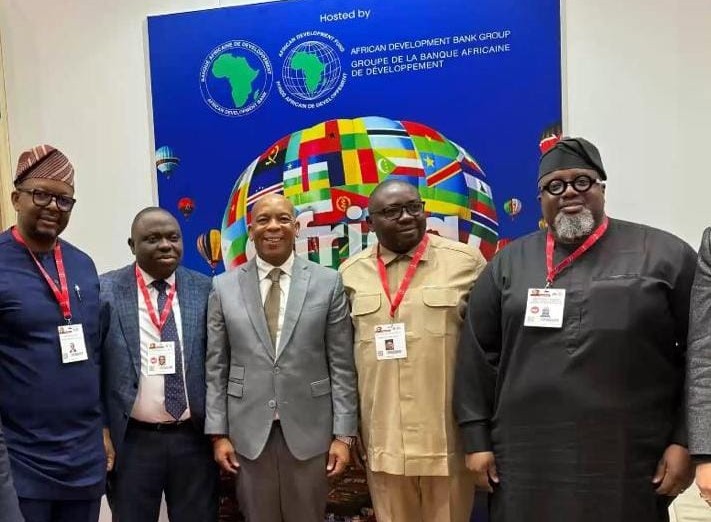
PROJECTING A strong voice for Africa’s energy future, Nigeria’s Power Minister, Adebayo Adelabu has advanced the country’s strategic energy agenda at the 2025 Africa Energy Forum in Cape Town, South Africa.
Through high-level discussions, closed-door negotiations and ministerial engagements, Adelabu signalled Nigeria’s readiness to lead a continent-wide shift towards integrated, sustainable and investment-driven energy systems.
At the exclusive Ministerial Roundtable, Adelabu presented Nigeria’s blueprint for aligning policy, regulation and financing to improve efficiency and accelerate the delivery of energy projects.
The meeting drew key figures from government and business to identify pathways for fast-tracking infrastructure and synchronising private sector strength with national energy goals.
During a panel session focused on the global energy transition, the Minister described Nigeria’s approach as pragmatic and economically grounded.
He noted that while the country remains committed to decarbonisation, its abundant hydrocarbon resources are central to national development.
Referencing the recently approved National Integrated Electricity Policy, he underscored Nigeria’s structured roadmap to unify power generation, transmission and distribution, with gas-to-power and renewables occupying priority positions.
Adelabu detailed Nigeria’s investment outlook, naming grid modernisation, off-grid expansion, and renewable energy integration as key targets.
He reaffirmed Nigeria’s openness to partnerships across all energy sectors.
“Nigeria is open for business across the entire energy spectrum – from hydrocarbons to clean energy,” he told investors, sending a firm invitation to global financiers and developers.
On the sidelines, the Minister engaged in bilateral talks with regional and global energy stakeholders.
With South Africa’s Minister of Electricity and Energy, Dr. Kgosientsho Ramokgopa, discussions centred on strengthening Africa’s collective voice in global energy decision-making platforms such as the G20.
Both ministers explored cross-border collaboration, privatisation reforms, and interconnection between African power pools to build a unified continental grid.
Further meetings demonstrated Nigeria’s intent to diversify its energy alliances. With His Majesty’s Deputy Trade Commissioner for Africa, Ben Ainsley, Adelabu reaffirmed energy cooperation between Nigeria and the UK.
Talks with the International Finance Corporation focused on scaling investment support for both on-grid and off-grid energy systems.
Additional sessions with Canada’s Ambassador and Siemens Energy highlighted trade expansion and technological support for Nigeria’s ongoing grid upgrade.
Through each engagement, Nigeria advanced a narrative of leadership, resilience and inclusion in the African energy landscape, he noted.
Adelabu closed the forum by affirming the country’s long-term goal: “Our objective is clear – energy access, sustainability and prosperity for Nigeria and the continent.”