By Jemimah Wellington, JKNewsMedia Reporter
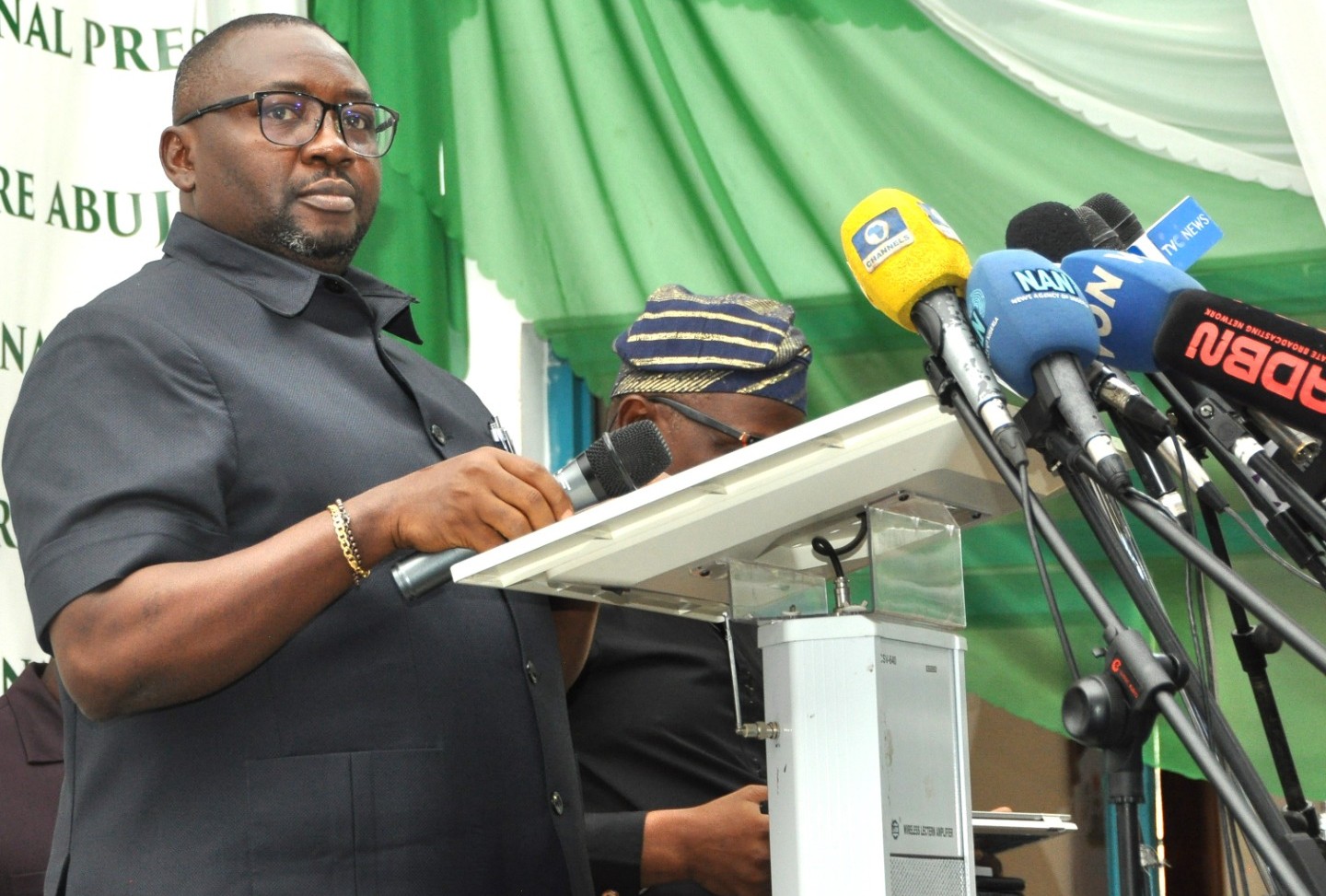
THE FEDERAL Ministry of Power through its Minister, Adebayo Adelabu, said it has reported historic gains in Nigeria’s electricity sector during the first quarter of 2025, including a ₦700 billion market revenue surge, a peak power generation capacity of 6,003 megawatts, and structural reforms aimed at long-term sector sustainability.
The minister attributed these outcomes to bold reforms enacted under the Electricity Act 2023, the rollout of the National Integrated Electricity Policy (NIEP), and cost-reflective tariff adjustments.
These measures, he noted, alongside new strategic partnerships and a sharpened regulatory focus, are reshaping Nigeria’s electricity landscape.
He said the development of the NIEP and its accompanying Integrated Resource Plan (IRP) has set a data-driven roadmap for improving supply reliability, particularly for small and medium enterprises (SMEs) and industries.
Both frameworks are currently awaiting Federal Executive Council (FEC) approval and aim to reduce operational disruptions while accelerating economic growth.
The ministry also reaffirmed its commitment to the M300 Energy Compact—an Africa-wide initiative targeting energy access for 300 million people by 2030.
Nigeria’s role, signed in Dar es Salaam in January, prioritises generation expansion, utility reform, renewable energy investment, and regional power integration.
Cost-reflective tariffs for Band A customers yielded a 70% rise in market revenue, pushing it from ₦1 trillion in 2023 to ₦1.7 trillion in early 2025.
This growth reduced the government’s tariff shortfall by 35%, bringing the subsidy burden from ₦3 trillion to ₦1.9 trillion.
In compliance with the Electricity Act, Adelabu noted that the Federal Government established the National Independent System Operator (NISO), separating it from the Transmission Company of Nigeria (TCN).
Also, NISO’s board was inaugurated on 8 April, with a mandate to manage grid operations independently and enhance efficiency.
This unbundling aligns with ongoing decentralisation efforts.
Eleven states now oversee their electricity markets, with regulatory powers transferred to subnational authorities in Plateau, Niger, and others.
He added that the Nigerian Electricity Liability Management Company also reported a 47.4% reduction in debts owed to Abuja DisCo by federal ministries, departments and agencies, falling from ₦15.53 billion to ₦8.17 billion.
Adelabu also disclosed that Nigeria recorded its highest-ever available generation capacity at 6,003MW on 2 March 2025, followed by peak evacuation of 5,801.44MW on 4 March. Average daily generation rose to 5,700MW, compared with 4,100MW in Q3 2023—a 40% increase.
The Niger Delta Power Holding Company restored 232.5MW from previously idle capacity, while also upgrading 14 transmission lines. Rehabilitation of key projects such as the Afam-Ikot Ekpene 330kV line and Papalanto substation is ongoing.
Off-grid initiatives expanded power access to thousands of households in Plateau, Cross River, Niger, Oyo, and Osun States through new mini-grids, he said.
Zungeru and Kashimbila hydropower plants began significant evacuation, and preparations are underway to revitalise the Kaduna thermal plant and develop the Makurdi hydro project with a 1,500MW capacity potential.
Investors including Sun Africa Energy and Skipper Electric are exploring solar integration into the national grid, while feasibility studies continue for the abandoned Katsina wind farm.
On grid stability achieved and transmission infrastructure expanded, Adelabu said following multiple grid disturbances in 2024, the ministry reported no major disruptions in 2025’s first quarter.
Stability was attributed to the successful pilot of the Presidential Power Initiative (PPI), which delivered 700MW across 13 sites nationwide.
Contracts for Phase One of the PPI have been signed with Siemens, CMEC, Elswedy, and Power China. Nigeria’s transmission network now includes 92 lines at 330kV covering 9,504.5km and 141 lines at 132kV over 8,557.9km, supported by over 450 transformers with a total capacity of 34,216MVA, he said in a lengthy speech he read at the first 100 Days Performance Review (Q1 2025).
He said, in 2024, 61 new transformers were commissioned, adding 5,589MVA. An additional 1,637.5MVA was installed in Q1 2025 across sites in Lagos, Kano, Kaduna, Bauchi, Osogbo and Benin. NGN 25 billion in the 2025 federal budget has been earmarked to complete outstanding transmission projects.
Approvals for regional supergrid structures—the Eastern and Western Supergrids—are progressing, promising greater redundancy and efficiency.
Efforts to close Nigeria’s metering gap advanced with the launch of the Presidential Metering Initiative, backed by a ₦700 billion FAAC allocation. A special purpose vehicle has been formed to deploy 1.1 million meters by end-2025, scaling to 2 million annually thereafter.
Under the World Bank-backed DISREP programme, over 3.2 million meters will be procured, with the first 75,000 arriving in April and 200,000 more expected by May.
Distribution Companies (DisCos) are undergoing restructuring to improve service delivery, while the Nigerian Electricity Regulatory Commission (NERC) is enforcing new performance benchmarks.
The ministry accelerated renewable energy projects through several landmark initiatives. The Energizing Education Programme (EEP) is nearing completion across 37 universities and seven teaching hospitals, adding 100MW of clean energy in collaboration with the World Bank and African Development Bank.
The $750 million DARES project, backed by the World Bank, aims to expand distributed renewable energy to 17.5 million Nigerians. Separately, $5.91 million in grants were secured for 23 mini-grid projects under the Africa Mini-grid Programme.
A new partnership with Oando Clean Energy will deliver a 1.2GW solar plant featuring panel recycling capacity.
The ministry commissioned JICA’s demonstration substation for technical training and trained 387 professionals during Q1 2025. Meter testing stations in Kano and Benin are being equipped to ensure standardisation of locally produced meters.
The Rural Electrification Agency continues to support local manufacturers, with partnerships underway to enhance solar panel production through the Solar Energy Manufacturers Alliance of Nigeria.
He adds that the ministry acknowledged major challenges, including ₦4 trillion in unpaid generation subsidies as of December 2024. This includes ₦1.94 trillion for the year alone—an unsustainable burden on public finances.
Vandalism of transmission towers, energy theft, and non-payment of electricity bills continue to undermine service delivery, costing the sector hundreds of billions of naira. Enhanced security measures and enforcement strategies are being implemented.
Additionally, chronic underinvestment in distribution infrastructure remains a bottleneck. Stronger regulatory oversight and performance enforcement are underway to address operator shortcomings, Adelabu told the audience at the event.
Concluding his speech, Adelabu said his ministry reaffirms its commitment to a reform-driven and people-centred approach, pledging to build on these gains to deliver reliable electricity for all Nigerians.