By Jemimah Wellington, JKNewsMedia Reporter
THE FEDERAL Government has reaffirmed its commitment to enhancing rural electricity access because it recognises electricity as a fundamental right for all Nigerians.
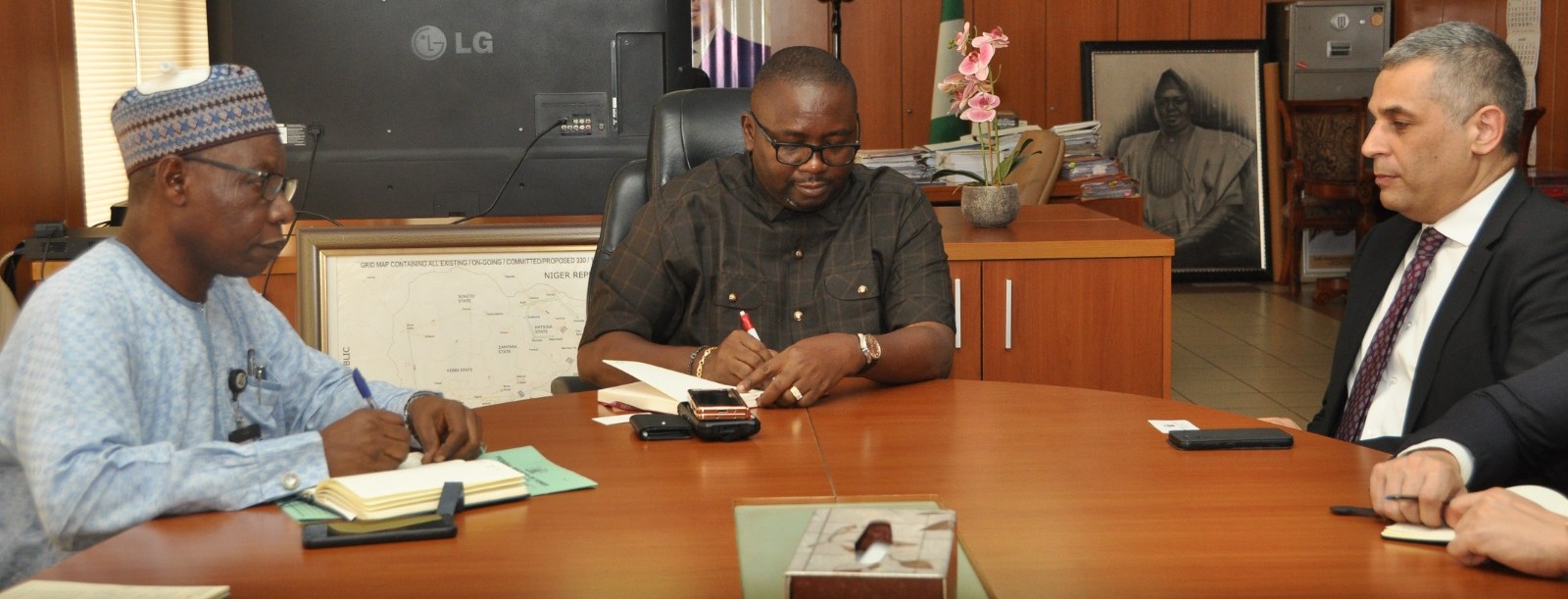
This pledge was reiterated by the Minister of Power, Chief Adebayo Adelabu, during a recent meeting in Abuja with the Egyptian Ambassador to Nigeria, Mohammed Fouad.
The discussions between Adelabu and Fouad focused on strengthening bilateral cooperation in energy expansion, particularly in renewable energy and rural electrification.
Adelabu stressed Nigeria’s ongoing efforts to power remote areas through renewable energy, citing economic barriers to extending the national grid to these locations.
“Many rural areas cannot be connected to the grid due to economic constraints, but we cannot neglect them. Through our renewable energy programme, we are bridging this gap.
“We have secured significant investments, including $750 million from the World Bank’s DARES project and an additional $190 million from the Japan International Cooperation Agency (JICA), to support this initiative,” Adelabu stated.
He highlighted Nigeria’s abundant renewable energy resources—solar, wind, and hydroelectric—and reaffirmed the government’s resolve to harness them for sustainable energy access.
Adelabu also lauded Egypt’s strides in the energy sector, describing the country as a model in energy infrastructure development.
“Egypt has made remarkable strides in energy transformation, and we are eager to collaborate and learn from your expertise. Our goal is to ensure reliable, stable, and affordable energy access for all Nigerians,” he said.
The Minister noted that since assuming office 17 months ago, his administration has expanded electricity access and taken steps to improve grid reliability.
However, challenges persist, including aging infrastructure and metering gaps, which the government is addressing through initiatives like the Presidential Metering Initiative (PMI).
In response, Ambassador Fouad expressed Egypt’s commitment to deepening collaboration with Nigeria, particularly in addressing metering gaps and sharing best practices in energy access.
He emphasised the mutual benefits of reinforcing bilateral ties between the two nations.
“Nigeria and Egypt have much in common, and there is immense potential for collaboration in the energy sector. We are committed to working together to achieve sustainable energy solutions for both countries,” Fouad stated.
He also commended Nigeria’s focus on renewable energy, noting that Egypt aims to increase its renewable energy contribution from 14 percent to 42 percent by 2035.
He also stressed that Nigeria’s experiences in the sector would be invaluable to Egypt.
“I want to commend you for your efforts in the power sector, which are visible everywhere. Nigeria and Egypt signed a Memorandum of Understanding on power projects, and we should activate it. We can start by holding virtual meetings to explore areas of mutual learning, especially in renewable energy,” Fouad said.