By JKNewsMedia
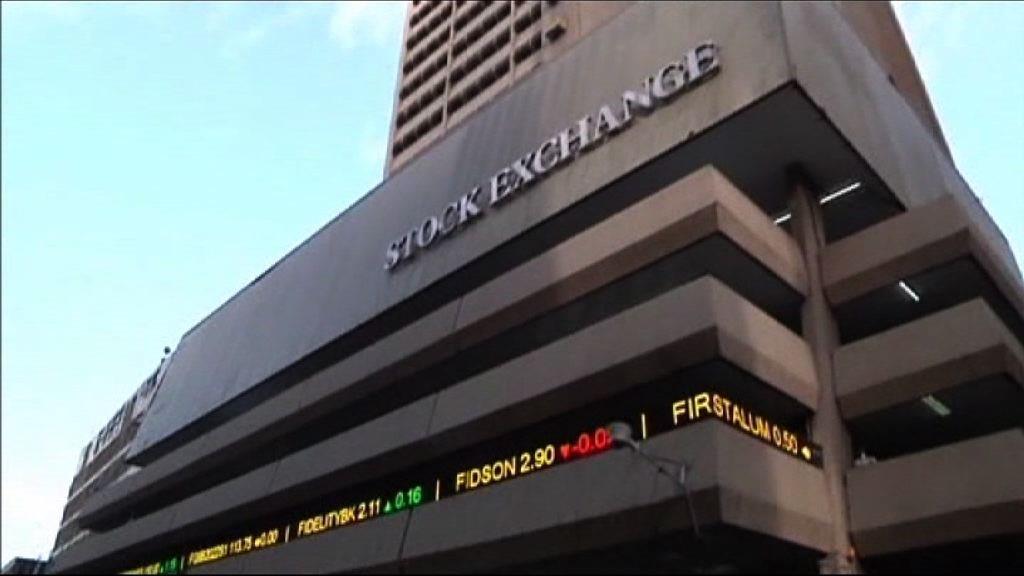
INVESTOR CONFIDENCE faltered sharply this week as the Nigerian stock market suffered heavy losses, with investors wiping out N858 billion in just two trading sessions on the Nigerian Exchange Limited (NGX).
The downturn reflected a storm of geopolitical tension, domestic policy uncertainty, and weakening sentiment, following remarks by U.S. President Donald Trump that unsettled already fragile markets.
Data released by the NGX indicated that total market capitalisation dropped from N97.828 trillion at Friday’s close to N96.970 trillion by Tuesday, while the All-Share Index fell by 1,496.85 points or 0.98%, sliding from 154,126.46 to 152,629.61 points.
Tuesday’s session recorded the steepest decline, with N612billion erased as 42 stocks fell and only 17 posted gains.
Market data showed widespread selloffs across blue-chip counters. Nestlé Nigeria Plc led the losers’ chart, plunging by N185 to close at N1,730 per share.
NASCON Allied Industries followed, dropping by N11 to ₦98, while Sky Aviation Handling shed N9.95 to N89.55.
Oando Plc fell by N4.80 to N43.25, and Guaranty Trust Holding Company (GTCO) dipped N4.35 to end the day at N85.15.
Other key decliners included NEM Insurance (N2.50), PZ Cussons (N2.50), Nigerian Breweries (N1.50), Zenith Bank (N1.45), and United Bank for Africa (UBA), which lost N1.00.
Sectoral indices mirrored the broad weakness.
The insurance index slumped by 3.76%, the steepest fall of the day, followed by the banking index with a 2.05% decline, reflecting sharp selloffs among tier-one lenders.
Consumer goods fell by 1.49%, oil and gas by 0.78%, while industrial goods posted only a marginal 0.01% dip, showing slight resilience in that segment.
Despite the sharp selloffs, trading activity recorded a modest uptick. NGX data revealed that investors exchanged 683.92 million shares, representing an 8.25% increase compared with 627.50 million traded in the previous session.
Analysts noted that the rise in volume reflected repositioning by traders amid growing uncertainty but did little to ease bearish sentiment across the bourse.
Market observers described the latest downturn as a reflection of fragile investor sentiment.
Executive Director of Halo Capital Management Limited, Paul Uzum, stated that the market was already under pressure before Trump’s comments circulated on Truth Social.
He explained that rumours of a failed coup attempt last month had already rattled confidence, while the proposed 30% capital gains tax on equities expected to take effect in January 2026 had further discouraged risk-taking.
“The equities market is struggling under the weight of uncertainty,” Uzum said. “When government policy is unpredictable and political risk rises, investors naturally shift toward safer assets like fixed-income securities. That’s exactly what we’re seeing right now.”
He added that investors were increasingly reallocating funds into treasury bills and government bonds, which currently offer higher yields with lower risk exposure.
This, he noted, had intensified the pressure on equities as liquidity gradually shifted out of the stock market.
Analysts from Cordros Research similarly highlighted the growing risk aversion among both domestic and foreign portfolio investors.
According to their weekly market report, the market’s reaction affirmed the sensitivity of Nigerian assets to external shocks and political rhetoric.
They maintained that any sustained recovery would depend on the government’s ability to communicate policy clarity and ensure macroeconomic stability.
The NGX data further showed that market breadth remained negative, confirming that decliners outnumbered gainers by a wide margin.
Trading sentiment was dominated by sell orders in the banking and consumer goods sectors, while modest bargain-hunting was observed in industrial and oil counters.
Market capitalisation losses over the two sessions amounted to ₦858 billion, marking one of the steepest short-term declines in recent months.
Market analysts attributed the scale of the selloff to multiple triggers, including dollar scarcity, sluggish foreign exchange inflows, and renewed capital controls speculation.
Investor response to Trump’s remarks, in which he threatened to deploy American troops to Nigeria over alleged religious killings, added geopolitical tension to an already cautious market environment.
Analysts warned that unless the Federal Government restores confidence through clear communication and consistent policy direction, the ongoing capital flight from equities could intensify, further weakening Nigeria’s fragile macroeconomic outlook.
They emphasised the need for fiscal discipline, credible exchange rate management, and effective investor protection to rebuild confidence in local capital markets.
The market volatility also raised concern among pension fund administrators and retail investors who hold significant exposure to listed equities.
Market watchers said the sustained downturn could reduce portfolio valuations, delay corporate expansion plans, and limit future dividend payouts, ultimately affecting long-term wealth accumulation and savings returns.
Financial analysts noted that the ripple effects could extend beyond the stock market, potentially impacting the wider economy.
A prolonged equity selloff could increase borrowing costs, as companies with declining market valuations may find it more difficult to raise capital.
The weakening of investor confidence could also exert additional pressure on the naira, accelerate inflation, and deter foreign investment inflows critical to Nigeria’s post-reform recovery.
According to data from the Central Bank of Nigeria (CBN), foreign portfolio inflows had shown modest recovery in the second quarter of 2025, but analysts cautioned that recent market volatility could reverse those gains if confidence deteriorates further.
Economic research firms observed that the timing of the market dip, amid discussions over fiscal reforms and the 2026 tax transition, could heighten investor caution.
They stressed that the government’s ability to reassure the market through policy clarity and geopolitical diplomacy would be pivotal in determining whether the market stabilises or continues to slide.
The Nigerian Exchange Limited has urged investors to remain calm, reaffirming its commitment to transparency, orderly trading, and the protection of investors’ interests.
A statement from the bourse noted that market fluctuations are part of normal investment cycles and encouraged participants to adopt long-term perspectives in their investment strategies.
Analysts, however, remain cautious, noting that market stability will depend on broader political developments and government policy responses in the coming weeks.
As uncertainties persist, investors appear to be adopting a wait-and-see approach, closely monitoring official communication from both the Nigerian government and international partners.
For ordinary Nigerians, the effects of the market slump extend beyond trading floors. Reduced investor confidence can translate into weaker business performance, job stagnation, and slower economic activity.
With fewer companies raising funds for expansion and innovation, productivity may decline, limiting the economy’s growth prospects.