By Joke Kujenya, Fellow, 2026 Naija Cancer Watch Fellowship
AS THE Naija Cancer Watch Fellowship boot camp moved into its next session, none of us quite knew what to expect.
The organisers had held their holding rights to the programme fluid, revealing each presentation only as it came.
There was none of the usual scramble to capture every slide the moment it appeared on the screen.
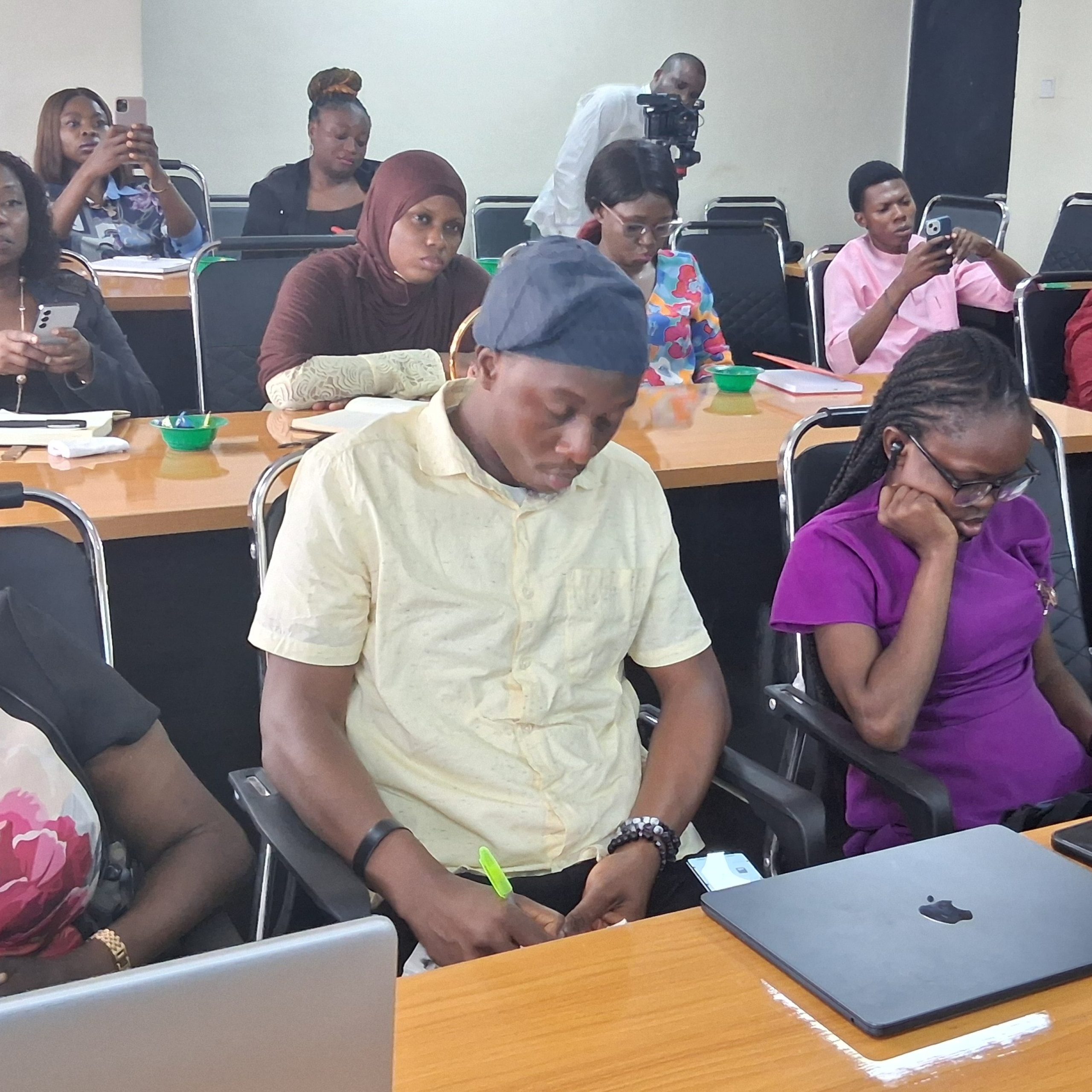
Instead, notebooks flipped open. Laptop lids rose almost in unison. Conversations faded as Fellows settled back into their seats, waiting for the next speaker.
Then, Professor Oyomoare L. Osazuwa-Peters of Duke University School of Medicine appeared on the screen. Hers was a virtual session like a few others.
Usual pleasantries done and dusted, his opening slide carried a sentence that sounded deceptively simple: “Extra body fat isn’t just stored energy.”
Then, he let it sit for a moment before explaining why.
What followed was not another lecture about losing weight or counting calories. It was a patient-friendly walk through the biology of breast cancer, showing us, how fat tissue can send signals that fuel inflammation, alter metabolism and encourage cells to keep dividing, conditions that tumours can exploit.
From that point on, obesity was no longer just a discussion about body size. It had become a discussion about what happens inside a tumour.
Again, the room fell silent, but not because the projector had gone blank. It was because Professor Osazuwa-Peters challenged a belief many people doubted without question. What has obesity got to do with cancer?
Like someone who reads minds, she intoned: “Obesity is one of the few breast cancer risk factors we can actually change.” How can, this reporter thought within herself.
It was a simple statement, yet it became the starting point of a far more complex conversation and one that reached beyond body weight into the hidden biology of cancer itself.
As journalists and selected Cancer Fellows, we had converged, expecting another lecture on prevention and early detection.
Instead, researchers unfolded evidence suggesting that excess body fat does far more than increase the chances of developing breast cancer.
They noted that it may actually influence how some tumours grow, survive and become more aggressive. Mhn🤔
For a country where obesity is steadily rising while many women continue to present with advanced breast cancer, the implications could hardly be more urgent. And where else is that? Nigeria, of course!
Staring at the Fellows virtually, Professor Osazuwa-Peters distilled years of research into language patients that not just scientists could understand.
She said her findings came from two studies: the MEND study involving 45 Nigerian women diagnosed with breast cancer and the Women’s Circle of Health Study involving 367 women in the United States …where she’s based.
She also noted that together, the studies sought to answer a deceptively simple question: does obesity affect every breast tumour in the same way?
The answer, according to the research she presented at the fellowship, is no. But the report isn’t yet published, she cautioned. Fellows were only privileged to have a glimpse into it, she added.
“We often treat obesity as one thing,” one of her slides explained.
“But the same extra weight might act very differently depending on the woman.”
She added that research therefore examined not only body weight, but also tumour type and ancestry to understand what was happening inside cancer cells.
Rather than looking only at patients’ Body Mass Index (BMI), scientists analysed the genetic activity inside tumours, searching for biological pathways switched on by obesity.
The results revealed what Professor Osazuwa-Peters described in patient-friendly terms as different biological “programmes” operating inside each tumour.
Some were dominated by chronic inflammation. Others by insulin and growth signals. Some relied on sugar metabolism or survived by adapting to low-oxygen environments. Still others remodelled surrounding tissues in ways that could help cancers spread, she further broke down the study.
For readers unfamiliar with molecular biology, the explanation was refreshingly straightforward.
Fat tissue, the researcher said, is not merely stored energy. It behaves like an active organ, releasing hormones and chemical signals that influence inflammation, metabolism and cell growth, precisely the kinds of biological processes that cancers can exploit.
One finding particularly stood out. Among Nigerian women, the different tumour patterns appeared to track closely with body weight. In contrast, among women in the U.S. study, tumour biology aligned more with tumour type than ancestry.
That distinction matters, she stressed.
It suggests that measurable biological factors – not race itself – better explain why certain cancers behave more aggressively.
Even more striking was the discovery that some of the most aggressive tumour signatures observed among Nigerian women closely resembled aggressive triple-negative breast cancers already documented in the U.S.
Despite thousands of kilometres separating the patients, their tumours appeared to share remarkably similar biological pathways involving low oxygen, sugar metabolism and tissue remodelling, Professor Osazuwa-Peters explained.
She described this as a “shared, conserved tumour biology” saying it is one that could eventually provide common targets for treatment across continents.
Yet the fellowship was never intended to remain inside the laboratory😅We moved out. . .
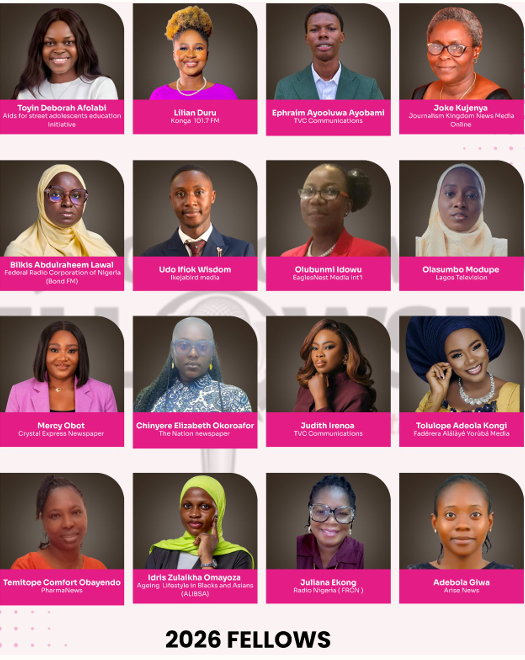
Journalism Fellows As Cancer Storytellers
As the science session etched towards wrapping up, attention shifted to another crucial question: how should journalists tell these stories?
Though earlier hinged on by Dr. Omolola Salako, The People’s Oncologist and Founder, Sebeccly Cancer NGO empowering people affected by cancer since 2006; there seemed to be a need for reinforcement as Ijeoma Ezenwere, Team Lead for Communications and Branding at ACT Foundation, argued that evidence alone is rarely enough to change public behaviour.
“Excellent programmes fail quietly every day,” her presentation slide observed, “not because the work is not good, but because nobody knows how to talk about it.”
The point resonated across the room. Not that journalists have not heard that before, but because every profession relies on journalism to bridge that gap.
She reeled out how ACT Foundation’s own cancer-health investments have helped reach more than 1.1 million women and men with awareness campaigns, screened over 51,500 people for breast, cervical and prostate cancers, trained more than 460 oncology professionals and supported hundreds of cancer survivors.
Yet, impressive numbers alone do not necessarily inspire action.
Instead, she urged the journalism Fellows to combine rigorous evidence with deeply human storytelling.
Ezenwere adds, “Statistics inform. Stories move. The strongest stories carry both,” as she reminded the Fellows, urging them to tell the story of one patient, one nurse or one moment of care honestly and accurately.
That ultimately became the fellowship’s most enduring lesson.
Scientific discoveries can reshape medicine. But unless reporters translate those discoveries into language communities understand and into stories people remember, many of their life-saving possibilities may never leave conference halls or academic journals, Ezenwere further appealed.
At the end, walking out of the session, one thought lingered.
Every cancer story published is doing more than informing readers.
It is persuading a man or a woman to seek screening earlier, encourage a family to recognise symptoms sooner or help the public understand that maintaining metabolic health is not simply about appearance; it is also to influence the biology of one of the world’s deadliest diseases – cancer.
And so, to the Fellows, this is no longer just science. It is public service journalism.
—