By Ajibola Olaide, JKNewsMedia Reporter
THERE ARE lives that seem to move in a straight line, and there are lives that bend so sharply that, when the journey is over, it becomes difficult to recognise the person at the beginning from the one at the end.
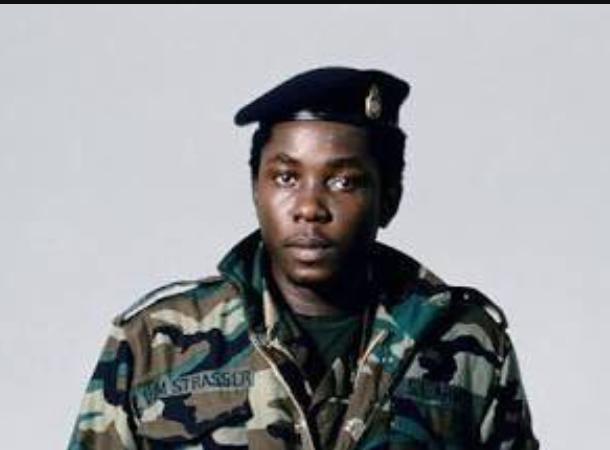
JKNewsMedia.com writes that Valentine Esegragbo Melvin Strasser belongs to the second kind.
He was born in Freetown, Sierra Leone, on April 26, 1967.
Nothing about the boy who grew up in the capital suggested that, before his 26th birthday, he would become one of the most talked-about young military leaders in the world.
Yet that is what happened.
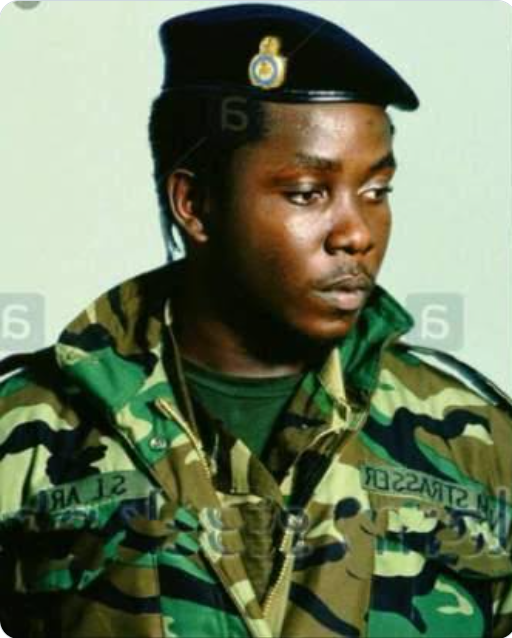
At 25, Strasser stepped into history when he and a group of young army officers overthrew President Joseph Saidu Momoh in April 1992.
Three days after his 25th birthday, he became head of state, emerging as the world’s youngest head of state at the time.
His rise was spectacular.
His fall was equally dramatic.
And the years that followed turned his story from one of military ambition and political power into something much more complicated: a story about youth, war, exile, rejection, illness, survival and the strange loneliness that can follow a person who once occupied the highest office in his country.
The Boy From Freetown
Strasser’s early years began in Freetown, where available biographical accounts place his upbringing in the city’s east end, including Allen Town.
He attended the Sierra Leone Grammar School and completed his secondary education in 1985.
Accounts of his school years describe him as particularly strong in mathematics and chemistry.
At 18, rather than immediately pursuing a conventional civilian career, he chose the military.
That decision placed him on a path that would eventually take him from the classroom to the battlefield, and from the battlefield to State House.
He enlisted in the Republic of Sierra Leone Military Forces in 1985 and underwent military training at the Benguema Military Training Academy outside Freetown.
He was commissioned into the army at about 19 and was posted to Daru in Kailahun District in eastern Sierra Leone.
It was there, in the east, that the young officer encountered the reality that would reshape his life.
The war that changed everything
In March 1991, the Revolutionary United Front, led by Foday Sankoh, launched its rebellion in eastern Sierra Leone.
The country entered a devastating civil war.
Strasser was a young officer in an army struggling to contain the rebellion.
The soldiers were not simply confronting rebels in the field; they were also dealing with poor conditions and complaints over unpaid salaries and welfare.
The frustrations eventually became political.
On April 29, 1992, a group of young soldiers marched from the east towards Freetown. Strasser was among those at the centre of the movement.
What began as a military protest over the conduct of the war, soldiers’ welfare and unpaid salaries rapidly became a seizure of political power.
President Momoh fled to Guinea.
The young soldiers took control.
And Captain Valentine Strasser suddenly found himself at the centre of a country he had not entered politics to lead in the conventional sense.
He became chairman of the National Provisional Ruling Council, the military government that replaced Momoh’s administration.
A young army captain had become Sierra Leone’s head of state.
He was only 25.
Power at 25
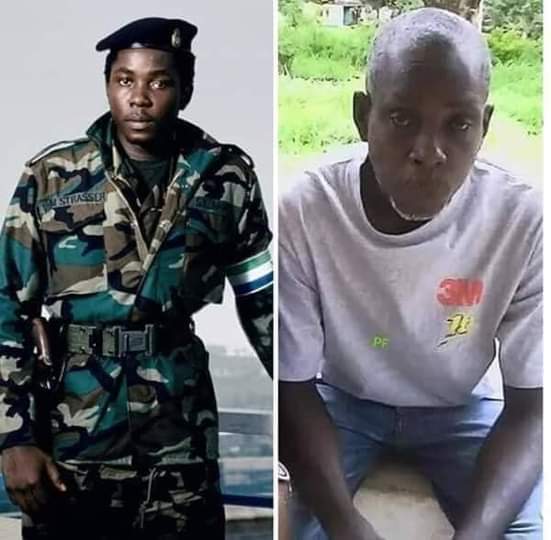
The image was extraordinary: a young man barely out of his twenties occupying the country’s highest office while Sierra Leone was engulfed in war.
Strasser inherited a country facing enormous problems.
The economy was weak. The civil war was spreading. The state was under pressure.
The RUF had established itself as a formidable rebel force, while the army struggled to regain control of territory.
The new military government promised change.
In his first address to the nation, Strasser presented the coup as a break with what he described as years of corruption, mismanagement and economic decline under the All People’s Congress government. He declared that a new era had begun.
But governing proved far more difficult than seizing power.
The war continued.
The RUF remained a major threat, particularly in the country’s diamond-rich east.
And the NPRC became increasingly dependent on extraordinary military measures to survive.
The mercenaries and the battlefield
One of the defining decisions of the Strasser years was the engagement of Executive Outcomes, a South African private military company.
The Sierra Leone Truth and Reconciliation Commission records that the NPRC secured the services of Executive Outcomes to help repel the RUF, regain government control of diamond-producing areas, stabilise the country and assist with the retraining of military forces and allied militias.
The company supplied personnel, equipment, helicopter support, communications and logistical assistance.
The arrangement became one of the most controversial aspects of the war.
Executive Outcomes achieved significant battlefield successes, including pushing the RUF away from areas around Freetown and from important diamond-producing territory. But the wider conflict remained brutal, and civilians paid an enormous price.
The International Committee of the Red Cross has documented the Sierra Leone conflict as one marked by serious violations of international humanitarian law by both the NPRC and RUF, with thousands of civilians killed.
Strasser’s government therefore cannot be remembered simply as the administration of a young military leader who seized power.
It was also a government operating in the middle of one of West Africa’s most horrific civil wars.
The complicated road towards elections
For Strasser, the contradiction at the heart of his rule was becoming increasingly visible.
He had come to power through a coup.
Yet his government eventually moved towards elections and a return to civilian rule.
As the war continued, pressure grew for the military to hand power back to civilians.
By 1995 and early 1996, the political atmosphere inside the NPRC had become increasingly tense.
The military government was divided over how the peace process and elections should proceed.
Then came the rupture.
The Coup That Ended His Presidency
On January 16, 1996, almost four years after Strasser had seized power, his own deputy turned against him.
Brigadier Julius Maada Bio, together with other senior NPRC officers, staged a palace coup and removed Strasser.
The man who had once entered State House at the head of a group of young soldiers was now being taken out of power by soldiers who had once been his colleagues.
Contemporary reports described Strasser being flown out of Sierra Leone to neighbouring Guinea after the coup. Accounts of the episode differed over the precise circumstances surrounding his removal, but there was no ambiguity about the central fact: his four-year rule had ended.
The Sierra Leone Truth and Reconciliation Commission later described the collapse of the NPRC as the product of internal power struggles and characterised Bio’s takeover as an effort to wrest power from Strasser.
It was an extraordinary reversal.
In 1992, Strasser had been the young soldier who overthrew the government.
In 1996, he was the military ruler overthrown by his own comrades.
From State House to England
After his removal, Strasser’s life changed dramatically.
He eventually went to Britain and, under arrangements connected to his post-government life, studied law at the University of Warwick.
But the university years did not become the beginning of a new professional life.
He did not complete the programme.
By the late 1990s, the former head of state who had once commanded a country was living a much quieter and more uncertain existence.
In 2000, Britain rejected his asylum application.
His subsequent attempt to move to The Gambia also failed, and he eventually returned to Sierra Leone.
Contemporary reporting from the period captures how far his circumstances had fallen from the grandeur of State House.
The contrast was almost painful.
The young captain who had once been surrounded by soldiers, ministers and officials now had to navigate a world in which his former title could no longer guarantee him security.
The Long Silence
Back in Sierra Leone, Strasser largely disappeared from the centre of public life.
Reports over the years described him as living modestly and away from political power.
He worked for a period at an ICT institute, where he was reported to have helped young people develop computer skills.
The transformation was striking.
The man once known around the world as the youngest head of state was no longer making decisions for a nation. He was trying to rebuild an ordinary life after an extraordinary political journey.
That period of his life has often been portrayed in dramatic terms, sometimes with claims about poverty, isolation and personal difficulties.
Some of those accounts are poorly sourced, however, and should be treated cautiously.
What is beyond serious dispute is that Strasser’s post-presidential life bore little resemblance to the world he had occupied between 1992 and 1996.
Illness And Another Battle
Then, years after leaving power, came another difficult chapter.
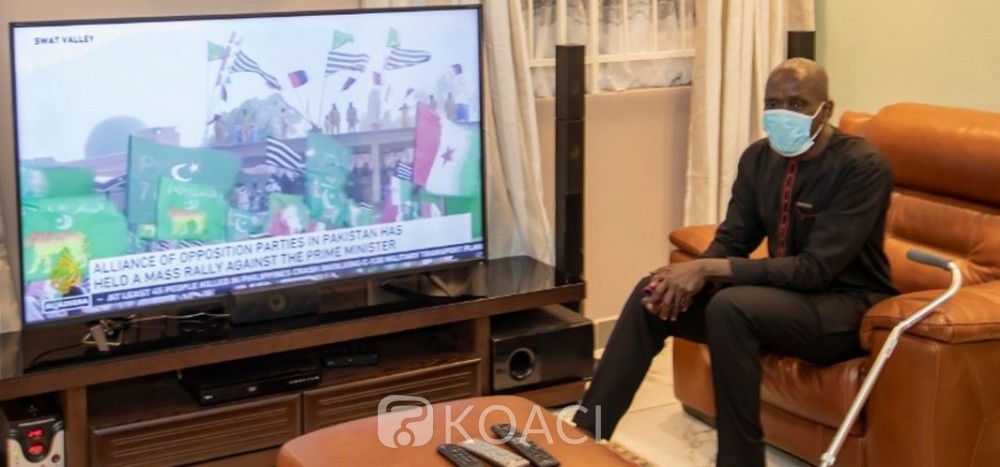
In January 2019, Strasser became seriously ill and was flown to Ghana for medical treatment.
Reports say that part of his left leg was amputated because of peripheral artery disease.
He underwent rehabilitation and eventually returned to Sierra Leone in July 2021.
His return was accompanied by an extraordinary gesture from the man who had once removed him from power.
President Julius Maada Bio, the same former military colleague who had led the 1996 coup against him, provided Strasser with an apartment.
History had come full circle in a way that would have been almost impossible to imagine in January 1996.
The former ruler and the former coup leader were now part of the same country’s political history, but on entirely different terms.
The strange irony of Valentine Strasser
There is an irony at the centre of Strasser’s life that makes his story particularly compelling.
He entered the army as a young man.
The army took him into the centre of a national crisis.
The crisis took him into State House.
State House made him internationally famous.
Power made him a symbol of military rule.
And the loss of power sent him into years of uncertainty.
His story also illustrates how quickly political fame can disappear.
For a brief period in the early 1990s, the name Valentine Strasser carried enormous weight.
At 25, he had achieved something few people could imagine achieving at any age: he was the head of a sovereign state.
But history does not preserve power indefinitely.
The uniform comes off.
The convoy disappears.
The official residence belongs to somebody else.
And the man who once stood behind a presidential microphone eventually has to confront the ordinary realities of life.
The man behind the history
It is tempting to reduce Strasser to a single description: dictator, soldier, coup leader or former president.
None of those labels, standing alone, tells the whole story.
He was also a young man shaped by a country at war.
He was a soldier before he was a ruler.
He was thrust into national leadership at an age when many people are still deciding what they want to do with their lives.
He governed during a brutal civil war.
His administration employed foreign military contractors.
His government eventually moved towards elections.
He was removed by his own deputy.
He spent years abroad after his overthrow.
He returned home.
He endured serious illness.
And he lived long enough to see the man who once displaced him become President of Sierra Leone through electoral politics.
That is more than a political biography.
It is a story about the unpredictable journey of power.
What remains of Strasser?
As of 2026, Strasser is 59.
There is relatively little reliable contemporary reporting about his day-to-day life, and claims about his present health or personal circumstances should therefore be treated carefully.
The public record does, however, establish the broad outline of the extraordinary journey he has travelled: from a Freetown schoolboy to an army officer; from an army officer to coup leader; from coup leader to the world’s youngest head of state at the time; from head of state to exile; and from exile back to Sierra Leone.
The details of his present life may be quieter than the years that made him famous.
But the history remains.
Valentine Strasser’s name is permanently tied to one of the most dramatic periods in Sierra Leone’s modern history.
His life also carries a warning about the seduction and fragility of power.
At 25, he had the authority to command a nation.
At 28, he had lost it.
At 34, he was struggling with the consequences of exile.
Years later, he would face a different battle, this time against illness.
And at an age when the world might have expected a former head of state to be remembered only through monuments and archives, Strasser was instead living through the quieter, more difficult task of simply surviving his own history.
Perhaps that is the most human part of his story.
The world remembers the young captain who took power.
History remembers the coup.
The photographs remember the uniform.
But behind all of them was a man who began life as a boy in Freetown, entered the army at 18, reached the summit of political power at 25, lost it before he was 30, and then spent decades learning what life looks like after the world stops calling your name.
That is the story of Valentine Esegragbo Melvin Strasser.
—