By Joke Kujenya
LONG BEFORE the programme began, the atmosphere inside the Sheraton Hotel, Ikeja, ballroom hinted that this would be no ordinary memorial lecture.
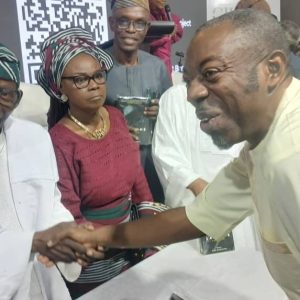
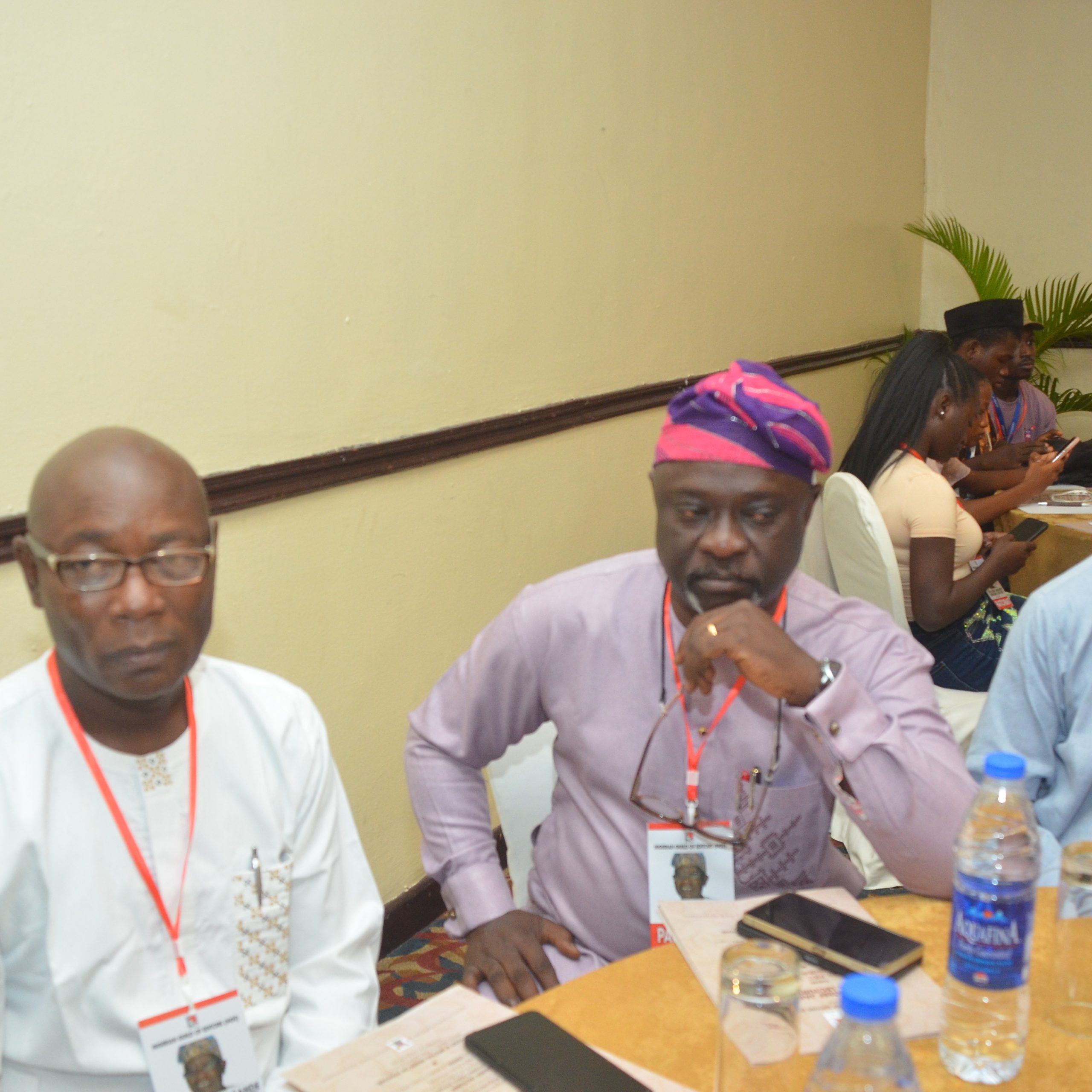
Editors, newsroom executives, media proprietors, communication scholars and journalists exchanged warm greetings with back slaps as camera shutters clicked across the hall.
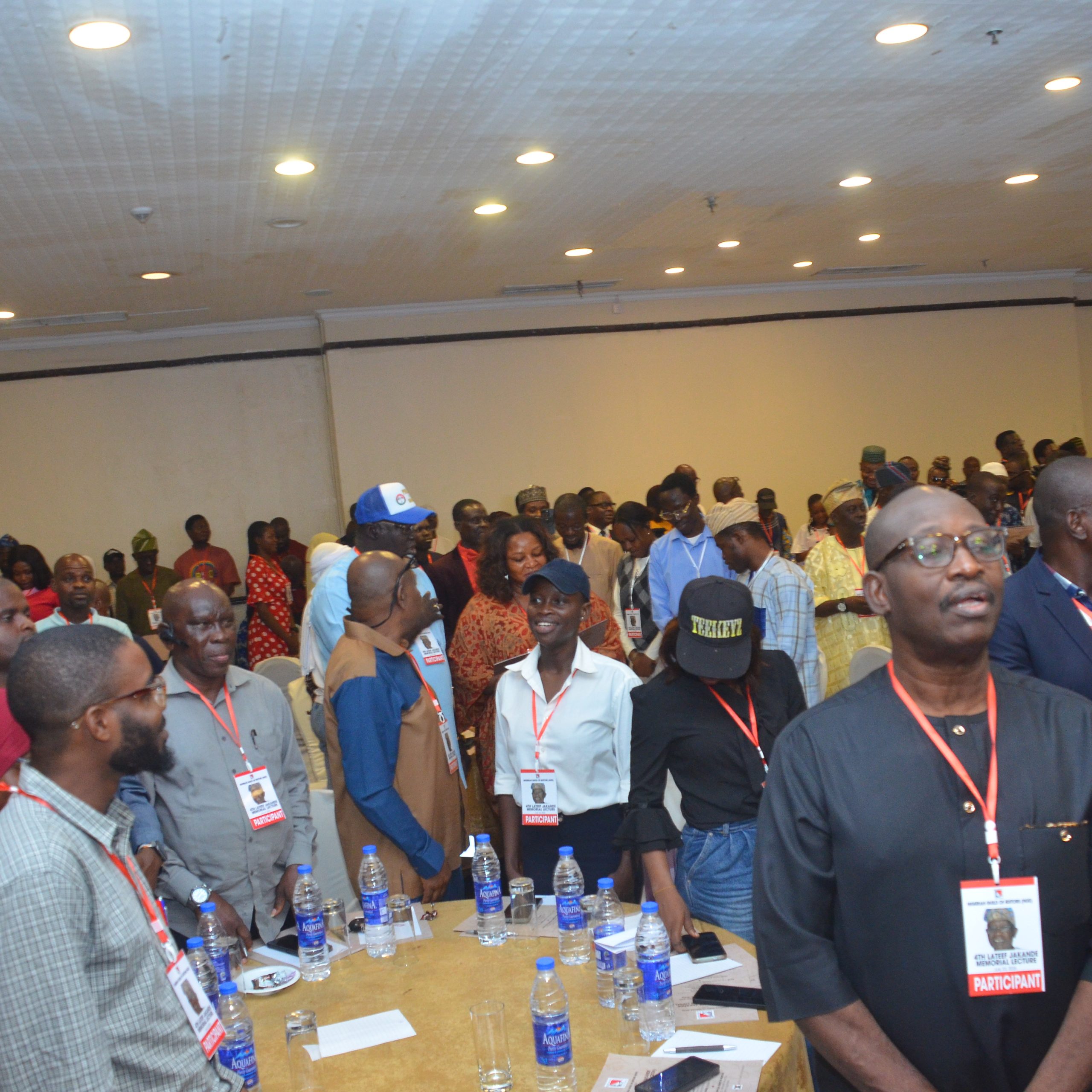
By the time proceedings got underway, nearly every seat had been occupied.
The audience had grown so large that both early and latecomers spilled into the adjoining lobby, listening from outside while peering into the packed venue.
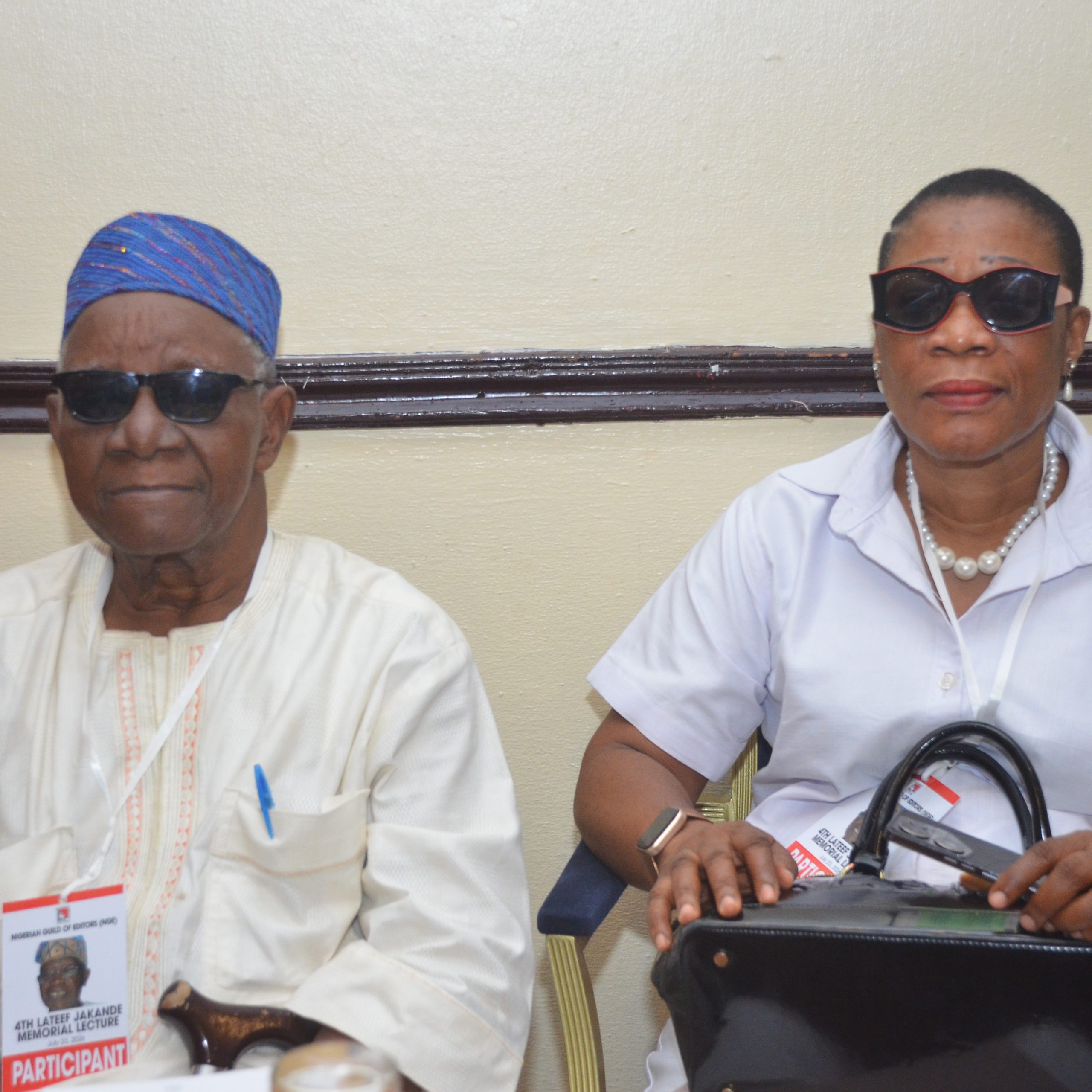
What perhaps stood out most was the mix of generations.
Alongside some of Nigeria’s most respected editors sat eager Mass Communication students from the Lagos State University (LASU), Caleb University and the Yaba College of Technology (YABATECH), quietly watching, smiling, obviously enjoying the banters by the oldies and taking notes as veteran journalists reflected on the profession’s past and its role in shaping the country’s democratic future.
It was against this backdrop that the Nigerian Guild of Editors (NGE) held the 4th Annual Lateef Jakande Memorial Lecture, honouring one of Nigeria’s most celebrated journalists and former governor of Lagos State, who assumed office on 1st October 1979, following the return to civilian rule and left office on 31 December 1983, at a time when the military coup led by Major General Muhammadu Buhari ended the Second Republic; while also focusing attention on an issue already dominating political conversations ahead of the 2027 general elections.
Representing Lagos State Governor Babajide Sanwo-Olu, the state’s Commissioner for Information and Strategy, Gbenga Omotoso, himself a former newspaper editor, officially declared the event open, setting the tone for what became an afternoon of reflection on journalism, democracy and electoral integrity.
Among those in attendance were the widow of the late Lateef Jakande, Alhaja Abimbola Jakande, veteran journalist, Ray Ekpu and several prominent figures from Nigeria’s media industry, many of whom listened intently as the keynote speaker, Professor Sylvester Odion Akhaine, took the podium.
The political scientist wasted little time before explaining why the lecture’s theme: “Media, INEC, Voters and Path to Credible Elections” could hardly have come at a more appropriate moment.
With Nigeria already looking towards another election cycle, Akhaine argued that credible elections cannot depend on one institution alone.
Instead, he identified three principal actors whose responsibilities intersect: the media, the Independent National Electoral Commission (INEC) and the electorate itself.
“If credible elections are to take place in our country,” he said in essence, “the media, INEC and voters all have roles to play.”
Rather than beginning with election mechanics, Akhaine first painted what he described as the wider political environment within which elections are conducted.
Nigeria, he argued, continues to grapple with deep structural problems that weaken democratic institutions.
Drawing on academic scholarship, he described the country as suffering from what has been termed “state capture”—a condition in which institutions gradually lose their independence, leaving executive authority increasingly dominant over the legislature and judiciary.
He also pointed to the growing influence of non-state actors across parts of the country, arguing that insecurity has reached levels where communities now rely on local vigilante groups to complement constitutionally established security agencies.
For him, these realities inevitably shape the quality of democratic governance.
The professor was equally critical of Nigeria’s political culture.
According to him, the country’s elite recruitment process increasingly rewards wealth and patronage rather than merit, while public trust in government continues to decline.
That erosion of confidence, he suggested, has left many Nigerians feeling detached from political participation instead of believing they can genuinely influence governance through elections.
From there, Akhaine turned naturally to the institution most familiar to his audience, the media.
Addressing a hall filled largely with editors and senior journalists, he smiled briefly before observing that defining the media before practitioners might seem unnecessary.
Still, he proceeded to revisit journalism’s place in democratic society.
Tracing the evolution of the media from the invention of the printing press to today’s digital newsrooms, he described journalism as more than an industry.
It is, he said, an institution through which societies inform citizens, educate the public, entertain audiences and shape public opinion. Newspapers, radio, television, books, cinema, digital platforms and social media all form part of that communication ecosystem.
The Nigerian media, he reminded his audience, predates the Nigerian state itself.
Its historical identity, he said, has largely been rooted in defending liberty, resisting authoritarianism and expanding democratic freedoms.
That heritage, he argued, remains as important today as it was during the colonial struggle.
Drawing on historical scholarship, Akhaine noted that newspapers emerged not simply because printing technology improved but because societies increasingly demanded platforms through which political ideas, governance debates and public affairs could reach ordinary citizens quickly and widely.
He then shifted attention to INEC, describing the electoral commission as one of the most critical democratic institutions in modern states.
Electoral management bodies, he explained, organise elections, supervise the voting process and officially recognise election outcomes.
Globally, their importance has grown significantly since the third wave of democratisation swept across many developing countries.
Citing international research, Akhaine observed that by 2013, about 54 per cent of countries had entrenched electoral oversight in their constitutional or organic laws.
Yet despite that expansion, many electoral commissions across Africa still struggle to exercise the level of autonomy required for truly credible elections.
Turning to Nigeria’s own electoral history, the professor offered a brisk journey through the country’s succession of electoral management bodies from the Electoral Commission of Nigeria (ECN), which conducted the landmark 1959 elections, to the Federal Electoral Commission (FEC), FEDECO, NEC, NECON and eventually today’s INEC, established in 1998.
Each institution, he observed, reflected Nigeria’s evolving democratic experiments, military interruptions and repeated attempts to rebuild civilian rule.
As Akhaine spoke, audience members occasionally nodded in agreement while others hurriedly scribbled notes, particularly whenever he linked historical experience to present-day electoral reforms.
The discussion then moved to what he described as the true owners of democracy—the voters.
Borrowing from a remark attributed to former United States President Bill Clinton, Akhaine reminded listeners that citizens remain the ultimate source of political authority.
“You Americans are the boss. Today you are the boss; tomorrow you are the boss; and in the future you are the boss,” Clinton once said, a quotation Akhaine employed to reinforce the centrality of voters in every democratic process. Without voters, he argued, democracy itself cannot exist.
He described elections as much more than periodic political contests.
They provide peaceful opportunities for alternation of power, help reconcile competing interests, hold elected officials accountable and confer legitimacy on governments that emerge through transparent processes.
Yet, he acknowledged, agreeing on what constitutes a credible election remains one of democracy’s greatest challenges.
Returning to the question of credible elections, Akhaine suggested that while defining the concept may appear straightforward, reaching consensus on what truly makes an election credible is far more difficult.
Rather than attempting an abstract definition, he proposed looking instead at what clearly undermines electoral credibility.
Ballot stuffing, vote buying, intimidation of voters, gerrymandering and other forms of manipulation, he argued, are unmistakable indicators that an election has fallen short of democratic standards.
It is often easier to recognise a flawed election than to produce a universally accepted definition of a credible one.
He noted that this global concern has inspired numerous international legal instruments designed to safeguard electoral integrity, including the International Covenant on Civil and Political Rights (ICCPR), the African Charter on Human and Peoples’ Rights (ACHPR), the Harare Commonwealth Declaration (HCD), the ECOWAS Supplementary Protocol on Democracy and Good Governance (ESPDGG), and the Southern African Development Community (SADC)’s principles on democratic elections.
Collectively, these frameworks, he explained, reinforce citizens’ political rights, encourage transparency and reject unconstitutional access to power, even though compliance has often lagged behind the aspirations they embody.
He identified what he regarded as the principal determinants of credible elections.
While previous scholars had highlighted the influence of incumbent governments, interested political actors, the legal framework and electoral contestants, Akhaine argued that one additional institution deserved equal recognition: the media.
The media, he stressed, can strengthen public confidence in electoral processes—or deepen cynicism—through its reporting, editorial judgement and framing of political events.
News reporting, editorial judgement and public framing, he said, can either strengthen confidence in electoral processes or deepen public cynicism.
Incumbent governments may deploy state resources to influence outcomes. Opposition parties may quickly allege stolen mandates. Supporters of rival political camps often shape public perception before official results are even declared.
Against that backdrop, journalists shoulder the delicate responsibility of reporting facts without becoming participants in political contests.
Using Nigeria’s electoral history as a case study, Akhaine reminded the audience that controversies have accompanied virtually every democratic transition.
Beginning with the disputed 1959 elections, he recalled allegations that British colonial authorities manipulated outcomes in favour of the Northern People’s Congress.
He moved through the turbulent federal and regional elections of 1964 and 1965, whose aftermath contributed to political instability before the military coup of January 1966.
He revisited the legal dispute surrounding the famous “12 two-thirds” interpretation following the 1979 presidential election, the monetisation of politics during the aborted Third Republic, the annulment of the June 12, 1993, presidential election, and the political compromises that accompanied Nigeria’s return to democratic rule in 1999.
Despite nearly three decades of uninterrupted civilian rule, Akhaine argued that Nigeria’s electoral system still struggles with credibility.
Since 1999, he observed, the country has conducted seven general elections, yet none, in his assessment, could confidently be described as completely free and fair.
Reflecting on the 2003 elections, he referred to what he called the “Carter Clause,” recalling the assessment of international observers that although the elections were marred by serious irregularities, the shortcomings were not considered sufficient to justify annulment.
He also cited the Commonwealth Observer Group’s verdict on the 2007 elections, which concluded that they fell below standards previously attained by Nigeria and hindered voters from expressing their will fully, freely and fairly.
As attention returned to journalism, the atmosphere in the hall remained attentive.
Akhaine anchored his arguments firmly in the Constitution, reminding editors that Sections 22 and 39 of the 1999 Constitution places both freedom and responsibility on the media.
While Section 39 guarantees freedom of expression and the right to receive and impart information, Section 22 places an equally important obligation on the press to hold government accountable on behalf of the people.
He acknowledged that Nigerian journalism has often operated under pressure.
From authoritarian crackdowns during military rule to intimidation during election periods, he said, the profession has repeatedly been tested.
Recalling observations by Commonwealth election monitors in 2007, he noted reports of attacks on journalists, disruptions of broadcasts, confiscation of media materials and arrests of reporters covering electoral developments.
Yet despite those experiences, he maintained that the Nigerian media has continued to discharge its constitutional responsibilities as professionally as circumstances have allowed.
If the traditional challenges confronting journalism were not enough, Akhaine argued that the digital age has introduced a far more complex information environment.
Today’s journalists, he said, contend not only with an overwhelming volume of information but also with fake news, misinformation, half-truths and the broader phenomenon of what scholars describe as a “post-truth” era.
Quoting cognitive scientist Daniel Levitin, he observed that modern journalism is no longer defined simply by access to information but by the ability to verify it.
In a world populated by trolls, bots and competing online narratives, he warned, factual reporting no longer automatically triumphs over falsehood.
Drawing on political scientist Francis Fukuyama’s reflections on the social media age, Akhaine cautioned that the traditional belief that accurate information will naturally rise above misinformation no longer holds true in an increasingly fragmented digital landscape.
His response, however, was not one of pessimism.
Instead, he urged journalists to recommit themselves to evidence-based reporting, vigorous public debate and the defence of open democratic societies.
Those values, he suggested, remain the strongest antidote to misinformation and political manipulation.
As the lecture drew to a close, the audience responded with sustained applause before the programme moved into a question-and-answer session, where participants continued the conversation on journalism, elections and democratic accountability.
Although the exchanges ranged across several issues, they reflected the same concern that had dominated the afternoon: how Nigeria can strengthen confidence in its democratic institutions before another nationwide election.
In his concluding remarks, Akhaine called for greater synergy among all stakeholders.
The media, he said, must remain faithful to truth and its constitutional obligation to hold power accountable.
INEC should continue strengthening electoral administration through technological innovations, including electronic voting systems and electronic transmission of results, while further reforms such as revisiting recommendations of the Justice Mohammed Uwais Electoral Reform Committee on the appointment of electoral commissioners deserve renewed consideration.
He also urged sustained voter education to reduce citizens’ vulnerability to vote buying and other forms of financial inducement.
Only when journalists, election managers, voters and the wider public faithfully perform their respective roles, he concluded, can Nigeria move closer to elections that genuinely reflect the people’s will.
As guests gradually filtered out of the Sheraton ballroom, conversations resumed in small clusters across the corridors and lobby. Editors compared notes, students lingered to discuss the lecture with their lecturers, while familiar faces from different generations of Nigerian journalism exchanged handshakes before heading home.
The Fourth Annual Lateef Jakande Memorial Lecture had done more than celebrate the legacy of one of Nigeria’s iconic journalists. It had also thrown into sharp relief the responsibilities that lie ahead for the media, electoral institutions and citizens as the country inches towards another defining democratic test in 2027.
FULL TEXT OF
—