By Joke Kujenya
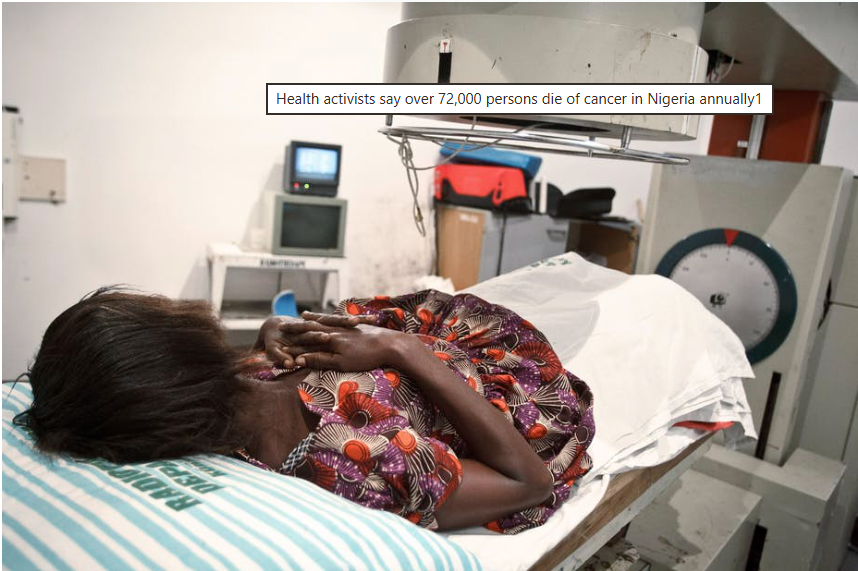
BY THE time the morning began at the oncology ward of a Lagos teaching hospital, the waiting area was already crowded.
JKNewsMedia.com reporter observed that patients sat beside relatives on plastic chairs, holding thick folders filled with laboratory results, referral letters and prescriptions.
Some told the reporter that they had travelled overnight. Others said they had spent weeks moving between hospitals before finally reaching a specialist hospital.
For one woman, the journey began with a lump she had noticed months earlier.
She asked not to be named and said the swelling eventually became too large to ignore.
Another patient spoke about severe pain that persisted before doctors eventually diagnosed cancer.
Painfully, a man said his urinary symptoms had initially been treated as something less serious until worsening pain led him to specialist care.
For many of the people in the ward, getting to that point had already involved consultations, referrals, scans, biopsies and laboratory tests.
Yet, beyond the struggle to diagnose and treat cancer lies another problem Nigeria is still trying to solve: the country does not yet have a complete national count of everyone living with the disease.
GLOBOCAN Global Estimate
Gleaning from the latest available estimates from Global Cancer Observatory (GLOBOCAN), put Nigeria’s cancer burden in 2022 at 127,763 new cases and 79,542 deaths.
Similarly, the International Agency for Research on Cancer (IARC, which produces the estimates, also put Nigeria’s five-year cancer prevalence at 269,109 people.
Collectively, those figures provide Nigeria with its clearest picture yet of the scale of the disease.
However, they are estimates as things remain till date.
They are not the result of a single, nationwide register containing every Nigerian diagnosed with cancer as the JKNewsMedia.com‘s finding reveal.
Challenge is that difference is important.
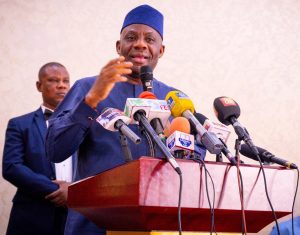
At a recent 2026 Naija Cancer Watch Fellowship boot camp recently attended by 16 Nigerian journalists, oncologists and other cancer specialists raised concerns about the gaps that remain in cancer diagnosis, treatment and surveillance, which prompted this report.
They noted undisputably that Nigeria has cancer registries.
Also, they informed that the Federal Ministry of Health and Social Welfare says its National Cancer Control Programme (NCCP) maintains a cancer register and coordinates cancer control activities.
However, building a complete picture of cancer across a country of Nigeria’s size requires more than recording patients who arrive at major hospitals.
The oncologists argue that cancer case first has to be found just as the patient must reach a health facility.
They noted that a suspicious symptom may need to be investigated just as a tissue sample may have to be taken and examined by a pathologist before cancer can be confirmed.
Then comes the less visible work of surveillance: identifying the case, reviewing records, checking information from hospitals and laboratories, removing duplicates and coding the diagnosis.
If any part of that chain breaks, the national picture becomes less complete. That’s the general concern the oncologists exhibited at the boot camp.
What The Numbers Show
GLOBOCAN estimated that an average of about 350 Nigerians developed cancer every day in 2022, while about 218 died from the disease.
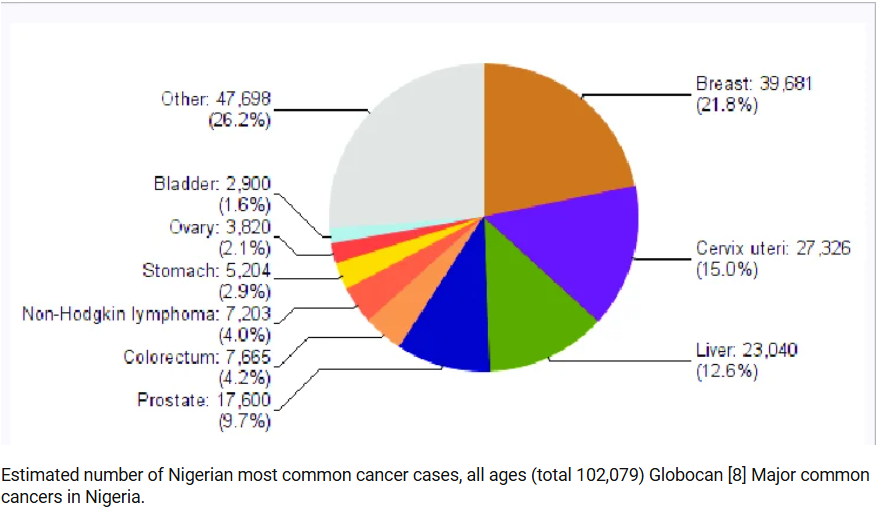
The agency noted that breast cancer was the leading cancer by number of new cases, with an estimated 32,278 cases.
This is followed by prostate cancer with 18,019 cases, while cervical cancer accounted for 13,676 cases.
These figures are grim, one would admit.
But they do not answer every question about cancer in Nigeria.
They still cannot provide a complete, real-time list of every person who developed the disease, where they lived, when they were diagnosed or how their illness progressed.
That is because GLOBOCAN admits it is an estimation system, not Nigeria’s national cancer register.
It says that its figures are produced from the best available data and statistical methods.
Where national cancer surveillance is incomplete, its estimates become particularly important because they provide a picture of the likely burden.
But an estimate remains different from a headcount, insists the People’s Oncologist, Dr. Omolola Salako, who insisted that Nigeria’s cancer data challenge has existed for years. And it’s about time we changed this narrative; she told the 17 fellows passionately.
Meanwhile, a major 2012 study on cancer incidence in Nigeria relied on two population-based cancer registries: Ibadan and Abuja.
Researchers noted that they analysed 4,521 invasive cancer cases recorded between 2009 and 2010 through the Nigerian National System of Cancer Registries (NNSCR) programme, an initiative of the Federal Ministry of Health and the Institute of Human Virology Nigeria (IHVN) that used data from the population-based cancer registries in Ibadan and Abuja.
In all, it was found that the two registries covered about 3.96 million people, or roughly 2.5 per cent of Nigeria’s population at the time while it provided valuable evidence on the country’s cancer pattern, which asserted that breast and cervical cancers remain the most common among women and prostate cancer as the leading cancer among men.
But the researchers said they were still studying defined populations as they were not counting the whole country back then.
Need For Population-based Registries
Also, a 2023 review of Nigeria’s cancer registration system showed population-based registries remain crucial to understanding cancer incidence and assessing cancer-control efforts, while also noting continuing gaps in the development of registries in Nigeria and other parts of sub-Saharan Africa.
It states that such gap matters because the number of cancer cases recorded in a location does not necessarily reflect only the number of people who have cancer, but this can also reflect the ability of the health system to find them.
A patient who never reaches a specialist may not get a biopsy and without a confirmed diagnosis, that patient may never enter a cancer registry, the review said.
It adds that another patient may receive treatment at a facility that does not routinely contribute data to a registry while others may die without a confirmed diagnosis.
On a larger scale, the result is that cancer surveillance depends heavily on access to diagnosis as well as the strength of the registry itself.
The Long Road To A Diagnosis
That reality was evident in conversations with patients at the Lagos oncology ward.
Their stories were different, but the journeys shared familiar features: symptoms that persisted, repeated hospital visits, referrals and the search for answers.
Cancer does not enter a database at the first sign of illness.
For many patients, confirmation requires several steps as they recounted.
A suspicious lump or other symptom may lead to imaging. Doctors may request a biopsy. The sample then has to reach a laboratory, where a pathologist examines the tissue and determines whether it is malignant, this reporter also gathered.
Only then can a suspected case become a confirmed diagnosis.
Establishing Diagnostic Differences
Revisiting the 2012 Ibadan and Abuja registry study, it showed how diagnostic practices could differ between populations.
In Ibadan, histology of the primary tumour was the basis of diagnosis for 42.6 per cent of recorded cases, while 41.3 per cent were based on clinical diagnosis. In Abuja, histology accounted for 68 per cent.
The figures do not simply describe two registries. They show how cancer data can be shaped by the diagnostic systems available to patients.
Where pathology and other diagnostic services are difficult to access, confirmation can take longer. Where confirmation does not happen, surveillance can also suffer.
For the patient, however, the immediate concern is not whether the case will eventually appear in a national database.
It is whether treatment can be found.
A Missing Link in Nigeria
Medical experts note that a suspicious symptom must first be recognised as the patient may need imaging.
Then, a tissue sample have to be taken, and it must reach a laboratory where a pathologist must examine it and determine whether the tumour is malignant and, if so, identify the type of cancer.
However, each stage depends on access even though, access is usually uneven.
And while pathologists occupy one of the most important but least visible positions in cancer care; their work can actually determine whether a suspicious growth becomes a confirmed diagnosis and help guide what treatment follows, or not.
Sadly, pathology services are not readily available across Nigeria whilst their duty is to counsel on reliable cancer data bank.
Even till the time of this report, patients may have to travel to obtain a biopsy or histological examination which is often compounded by laboratories facing staffing, equipment and supply constraints.
In cancer care, a pathologist is much needed to examine a biopsy to confirm whether a tumour is cancerous and identify the type of cancer.
They are the interval between suspicion and confirmation which can stretch while the patient waits. And here is a major missing link in cancer cares.
Further Barriers To Treatment
Dr Omolola Salako, addressing the 2026 Naija Cancer Watch Fellowship boot camp, said despite the visible challenges witnessed over the years, many patients still arrive late that caused them to face serious financial barriers to treatment.
That reality is reflected in the choices families often have to make while seeking care: paying for investigations, travelling to specialist centres, finding accommodation and raising money for treatment, she added.
Back in July, the Federal Ministry of Health and Social Welfare also acknowledged that transportation, accommodation, loss of income, nutrition and limited social support can affect whether cancer patients complete treatment.
Those pressures are often absent from cancer statistics.
The figures do not show every missed appointment or every delay caused by the cost of a scan, biopsy or journey to a treatment centre.
They do not show the patient who stops pursuing a diagnosis because the next stage of the investigation is unaffordable.
Yet those experiences can affect both the outcome for the patient and the country’s ability to understand the full scale of the disease.
A Country Working With Estimates
Nigeria is not without a cancer-control system as the Federal Ministry of Health and Social Welfare operates a NCCP, while the government has also developed the Nigeria National Cancer Control Plan (NNCCP) for 2026 to 2030.
This plan covers prevention, early detection, diagnosis, treatment, palliative care, survivorship, research, capacity building and other areas of cancer control.
But cancer control depends heavily on knowing where the disease is and how it is changing; are more people developing cancer in a particular area, or are more patients simply reaching facilities where they can finally be diagnosed, and which communities are being missed by screening and referral systems, among others?
Others to be looked into are if more patients being diagnosed earlier than before and are survival outcomes improving? These are factors that would help Nigeria as a country to be able to duly evaluate the cancer burdens.
Salako notes that reliable answers require reliable and sufficiently comprehensive data.
“For now, Nigeria has an estimate,” she said.
Nigeria’s Reality
Nigeria knows, based on GLOBOCAN’s 2022 calculations, that about 127,763 people developed cancer that year and that 79,542 died.
Nigeria also knows which cancers dominate the national picture.
What it does not yet have is a complete, real-time national record of every Nigerian living with cancer.
And somewhere between the patient sitting in the oncology ward and the figure that eventually appears in an international estimate are people who may never be diagnosed, never be registered or never appear in a reliable national record.
Whilst the numbers Nigeria already has are alarming; the full count remains unfinished.
—