By Olaide Ajibola, JKNewsMedia Reporter
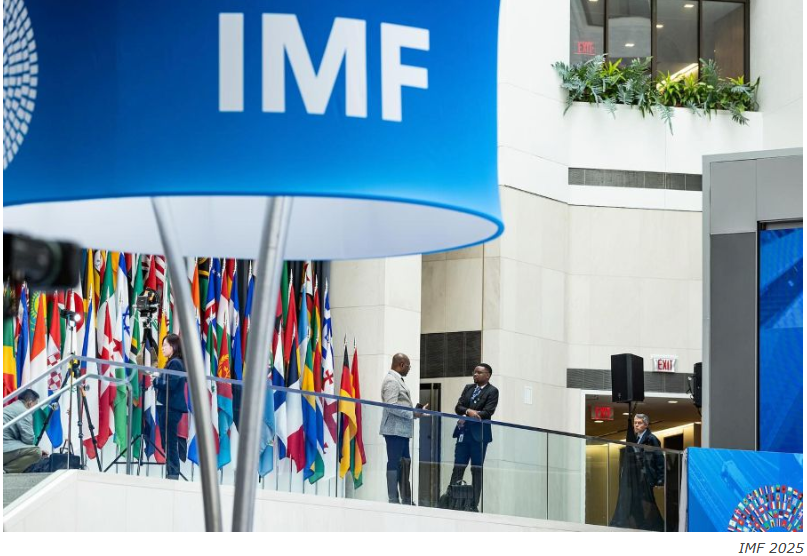
HIGHER PRICES for essential goods will further aggravate poverty and food insecurity in Nigeria despite improved macroeconomic stability, the International Monetary Fund (IMF), has said while maintaining its growth forecast for the country at 4.1 percent in 2026 and 4.3 percent in 2027.
JKNewsMedia.com reports that the IMF disclosed this in its July 2026 World Economic Outlook Update, which also lowered its forecast for global economic growth to 3.0 percent in 2026 from the average 3.5 percent recorded in 2024 and 2025, citing the impact of the Middle East conflict and uneven benefits from the artificial intelligence driven technology boom.
Commenting on Nigeria and Sub-Saharan Africa, the IMF said: “Growth in sub-Saharan Africa is expected to remain broadly stable at 4.3 percent in 2026, though this masks substantial divergence across countries, reflecting differences in policy space, reform implementation, and exposure to external shocks.
“Oil importing, non-resource intensive economies are more adversely affected by higher energy and food prices, whereas some larger economies continue to benefit from earlier stabilization and reform efforts, even though they are largely absent from the AI-driven global technology upswing and face headwinds from the decline in official development assistance.
“Nigeria is supported by improved macroeconomic stability and favorable terms of trade effects, though higher prices for essentials are expected to further aggravate poverty and food insecurity.”
The IMF also projected Nigeria’s economy to expand by 4.1 percent in 2026 and 4.3 percent in 2027, while Sub Saharan Africa is expected to record growth of 4.3 percent in 2026 and 4.5 percent in 2027.
On the global economy, the IMF said: “Global growth is projected to be 3.0 percent in 2026 and 3.4 percent in 2027, down from the average of 3.5 percent observed in 2024 to 25.
“The modest slowdown reflects the effects of the war in the Middle East being partly offset by accelerated demand driven momentum in the global technology cycle thanks to advances in artificial intelligence (AI) and its adoption.”
JKNewsMedia.com reports that the IMF also warned: “Global headline inflation is expected to increase from 4.1 percent in 2025 to 4.7 percent in 2026 before declining to 3.9 percent in 2027,” adding that the earlier disinflation trend has stalled.
Highlighting risks to the outlook, the IMF said: “The possibility of renewed Middle East conflict looms large and could extend commodity price volatility, further threaten supply chains, raise prices, and weigh on financial conditions.”
It added: “Trade fragmentation could accelerate, possibly hurting output and increasing prices,” stressing that governments should restore price stability, rebuild fiscal buffers and pursue structural reforms to strengthen energy security, AI readiness and international cooperation.
—