By Jemimah Wellington, JKNewsMedia Reporter
TERRORIST NETWORKS operating across the Sahel are intensifying efforts to push southward toward West Africa’s coastline, raising urgent alarms over potential coastal access that could supercharge smuggling, arms trafficking, and transnational terrorism.
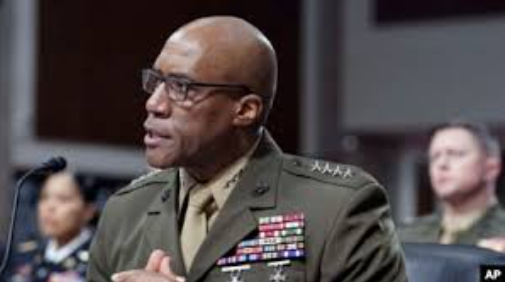
The warning came from United States Africa Command (AFRICOM) Commander General Michael Langley, who described recent attacks in Nigeria, the Sahel, and the Lake Chad Basin as an escalation with global consequences.
Speaking in Nairobi during the African Chiefs of Defence Conference, attended by military leaders from 37 African countries, Langley cautioned that extremist groups were not only expanding their territorial ambitions but also seeking maritime routes to finance operations through illicit networks.
He said a coastal breach would heighten the threat to African nations and amplify risks to US interests.
The Sahel region—particularly Mali, Burkina Faso, and Niger—remains the most active front of terrorist activity, with entrenched networks linked to ISIS and Al-Qaeda. Burkina Faso, in particular, has faced a surge in attacks, making it one of the most affected countries.
According to the 2025 Global Terrorism Index, the Sahel accounted for over half of global terrorism-related deaths in 2024, with five of the ten most-affected countries located in the region.
Langley noted that attacks were resurging in the Lake Chad Basin and across Nigeria, adding that the brutality of recent incidents indicated a shift in tactics.
“Extremist groups are growing more aggressive. Their objective now includes gaining access to West African coasts,” he said.
“If they succeed, they can dramatically increase the scale of smuggling, human trafficking, and arms trading operations. That threatens not just the region—but could reach US shores as well.”
Coastal nations such as Ghana, Côte d’Ivoire, and Benin were identified as crucial frontlines in halting southward incursions.
Langley lauded their efforts and confirmed ongoing US support. “Our coastal partners are fighting fiercely along their northern borders. AFRICOM is standing with them,” he said.
While acknowledging that the partial US troop withdrawal from Africa had constrained direct operational capacity, Langley affirmed that the United States remained firmly committed to counterterrorism partnerships.
“We respect national sovereignty and only deploy forces when requested and aligned with US national security objectives,” he said.
Reflecting on his November 2024 visit to Nigeria, Langley said it offered insight into local defence priorities and collaborative efforts to confront Boko Haram and ISIS West Africa.
“Nigeria has one of the most capable militaries in the region. Despite reduced troop presence, we maintain strong liaison and provide support where needed.”
Langley said Washington continued to seek dialogue with all Sahel nations, including Burkina Faso. “We invited Burkina Faso’s chief of defence to this conference because dialogue matters. The channel remains open,” he said.
Turning to East Africa, Langley revealed that AFRICOM had doubled its airstrikes in Somalia this year at the Somali government’s request, targeting jihadist networks with over 25 strikes.
Despite setbacks, he highlighted African-led responses as a sign of progress. “African militaries are stepping up. They’re confronting security challenges head-on and shaping their futures.”
Langley stressed that AFRICOM’s mission is rooted in long-term partnership, not dependency. “We’re here to deepen collaboration, not create reliance.
A stable Africa is a strategic imperative—not a charity case—for both Africa and the United States.”
He added that military cooperation now prioritises independence, interoperability, and rapid crisis response.
Training, intelligence sharing, and institutional capacity-building remain at the core of AFRICOM’s agenda.
“Peace through strength—that’s our mission,” Langley concluded.