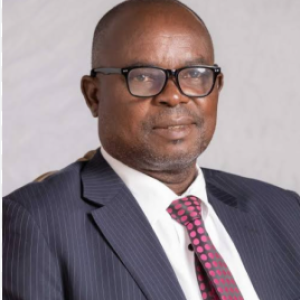
By Babafemi Ojudu
WE NIGERIANS talk about unity, yet every election exposes our deepest fractures. Ethnicity isn’t just politics it’s poison. I’ve seen it in boardrooms, at elite gatherings, even in the intimacy of marriage. Until we confront this sickness head-on, our future will remain hostage to the lie of “it’s our turn”.
Let me stoke this fire again.
The debate about ethnicity and our choices is one we must never allow to die down. We must keep talking, keep educating, until we purge our people of this disease. For that is what it is, a national malaise that blinds us to our reality.
Ethnicity, tribalism, clannishness—call it what you will, has become the politician’s most convenient weapon. It is often wrapped in the garb of love for “our people.” But don’t be fooled. It is a lie. A big lie. As Chinua Achebe once warned, “When suffering knocks at your door and you say there is no seat for him, he tells you not to worry because he has brought his own stool.”
The “love” politicians profess in the name of tribe is nothing but love of self.
Let me shock you with a story. One morning, I woke up to a call from an old friend, a professor who has spent most of his adult life abroad, not some online yobbo shouting “Yoruba nasan” on social media. Calm, rational, exposed.
Or so I thought. “Femi,” he said, “I can’t wrap my head around your campaign for another Ogun man to be president. Haven’t we had enough of them? For me, it is time for an Ekiti man, an ara oke, to be president.” He went further. He was busy working to ensure a “southerner” becomes governor in Ekiti.
I was stunned. This is Ekiti, where you can drive from one end to the other in less than an hour. Ilawe in the South is barely 15 minutes from Ado, the capital in the Central. And here was a professor, who has dined with the world’s best minds, telling me it must be our turn. I was pissed, truly angered. So, the Ijebu man I was supporting was suddenly no longer Yoruba? I gave him a piece of my mind. We didn’t speak again for years.

Another scene: I was once on a flight to Owerri with some top government officials. I casually asked a fellow traveler if he was from Enugu. He nearly leapt out of his skin: “What makes you think I’m Wawa?” he barked. Until that moment, I didn’t even know what Wawa was. But from his reaction, I realized there was a subgroup in the East, considered lower to his class. Imagine! These are the same divisions that stink to high heaven and cripple our common progress.
And it is everywhere. Look at the simmering war between Hausas and Fulanis in the North. In my journalism years, we lumped them together, thinking they shared a common interest in holding Nigeria down. We kept shouting Hausa/ Fulani Oligarchy in headlines after headlines. Alas, another fallacy.
I, too, have felt the impact of these fault lines in a personal way. I met my wife more than 30 years ago when her parents were dead set against her marrying an Ijebu man. Cosmopolitan as they were, they drew the line there. I came along—an Ekiti man—and the matter was resolved. Same Yoruba, same culture, yet the prejudice was like that of Tutsis and Hutus.
Just imagine for a minute that we have a Yoruba country. You think the quarrel will end? No! The battle will simply move to who among the Egbas, Ekiti, Ijebus, Ibadan, Oyo, Ilaje, Akoko, Igbomina, or Ara Oke will dominate. And the Lagosians will continue their condescending slur: “Ara Oke.” Even among Ijebus, the Remos, a subgroup within a subgroup always assert their difference and superiority.

When and where will this end?
Nigeria is bleeding from these endless divisions: macro, micro, and now nano. And as long as we keep retreating into them, our politics will remain poisoned, our progress delayed. Like Wole Soyinka said in one of his essays “tribalism is the foulest mouthpiece of the exploiters of ignorance, the manipulators of the unenlightened.”
It is time to do something about it. And the first step is to keep speaking, to keep challenging this rotten logic of “it’s our turn.” For until we rise above it, we will remain a people permanently in chains—shackled not by colonial masters or neo- colonialism but by ourselves.
Until then, our anthem of progress will remain stuck on repeat: a song of what could have been.
So I ask: can Nigeria ever rise above the poisoned logic of tribe and turn, or are we condemned to keep fighting smaller and smaller battles until nothing is left of the whole?
What do you think? Can we break these chains, or are we too, wedded to them?