Bu Joyce Eyaba, JKNewsMedia Reporter
DIVERSE EFFORS to withdraw police officers from supposed Very Important Persons (VIP) protection in Nigeria have spanned more than two decades, with successive inspector-generals of police (IGPs) issuing directives that were often partially enforced or reversed.
Records show repeated attempts to return officers to operational duties and strengthen policing in high-risk and underserved areas, yet political pressures and implementation challenges have limited the impact of these reforms.
One of the earliest major initiatives occurred in 2003, when IGP Mustafa Adebayo Balogun directed the removal of police orderlies from judicial officers and politicians nationwide.
The withdrawal targeted dignitaries, including judges, to prevent misuse of police personnel. At the time, Bola Tinubu, then governor of Lagos, called for a review of the policy.
Within weeks, part of the decision was reversed, reinstating police details to judges. Balogun renewed the effort in 2004, extending the withdrawal to private individuals.
In August 2009, IGP Ogbonnaya Onovo issued a sweeping directive mandating all police personnel serving as private orderlies return to their bases. The order covered former heads of state, ministers, legislators, and state governors.
Onovo noted that security privileges for private individuals were not sanctioned by the Federal Executive Council, which had limited entitlement to the president, vice-president, chief justice, state governors, ministers, and certain judicial officers.
Former officeholders, spouses of serving officials, and private citizens were excluded.
Onovo emphasised a seven-day compliance deadline, citing the degradation of police professionalism caused by officers performing menial duties, such as carrying handbags or opening doors for VIPs.
He estimated over 100,000 officers were attached as escorts, many illegally, diverting manpower from critical policing functions.
Hafiz Ringim, who succeeded Onovo in 2010, reinforced the withdrawal policy.
He cautioned officers guarding unauthorised individuals to return to their commands or face arrest and prosecution.
Ringim also established a special monitoring unit to enforce compliance, signalling a more rigorous approach to the directive.
In 2012, IGP Mohammed Abubakar continued the reform, cancelling all approved police guards assigned to private individuals and corporate bodies.
The initiative aimed to improve public service delivery and strengthen police professionalism.
Upon taking office in January 2016, Solomon Arase ordered the withdrawal of police orderlies from politicians and unauthorised VIPs. The directive stressed that officers were to be redeployed to operational duties.
However, political pressure led to many VIPs regaining their escorts within weeks.
IGP Ibrahim Idris issued one of the most comprehensive withdrawal orders in March 2018, mandating all police officers assigned to politicians, private citizens, and corporate bodies return to their commands.
He instructed state commissioners of police to approve escorts based solely on verified threat assessments. Enforcement was quickly undermined, with officers observed resuming VIP duties within days.
In October 2020, following the #EndSARS protests, Mohammed Adamu directed the nationwide withdrawal of police escorts from “unentitled persons,” naming over 60 individuals and organisations, including Femi Fani-Kayode and Christ Embassy.
The measure drew public attention but was selectively enforced and quietly abandoned within weeks.
Newly appointed IGP Usman Alkali Baba reiterated the withdrawal policy in June 2021, ordering all mobile police personnel assigned to private individuals or companies to return to their commands.
Despite the instruction, many VIPs continued to retain or regain police escorts, reflecting entrenched challenges in enforcing the policy.
Acting IGP Kayode Egbetokun, appointed in June 2023, announced plans to withdraw all Police Mobile Force personnel from VIP escort duties, replacing them with a Special Intervention Squad.
By November 2023, the withdrawal applied only to “non-entitled” VIPs, allowing serving governors, ministers, and designated officials to retain police details.
In April 2025, Egbetokun directed commanders to compile lists and redeploy personnel, yet many VIPs in Abuja and state capitals soon had new police escorts.
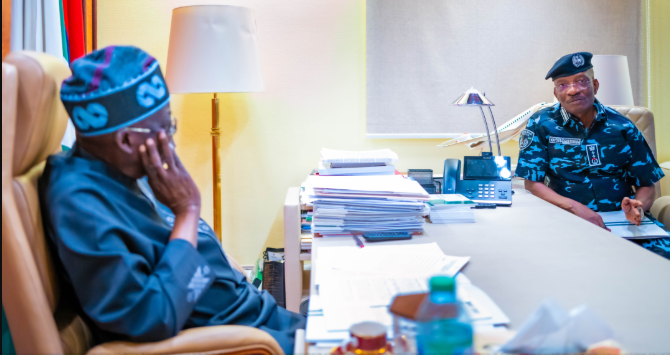
The latest directive, issued by President Bola Tinubu, transfers responsibility for VIP protection from the police to the Nigeria Security and Civil Defence Corps (NSCDC).
The presidency stated that VIPs who still require armed protection should source it from the NSCDC, while redeploying thousands of officers to understaffed stations, particularly in rural and high-risk areas.
Officials described the move as an effort to break the cycle of resistance that has consistently undermined prior withdrawal attempts.
The transfer to NSCDC aims to maintain VIP security while freeing police personnel for operational duties across the country.