By Babafemi Ojudu
Revisiting “Gun Smuggling in the Niger Delta” (2004)
IN MARCH 2004, I wrote an article for World Press Review titled “Gun Smuggling” in the Niger Delta. At the time, my concern was simple: too many guns were finding their way into the creeks of the Niger Delta, and too few people seemed alarmed by the implications.
I warned that Warri had become a major hub in an expanding network of illicit arms trafficking, fed by international smugglers, local militants, criminal syndicates, and a state that appeared either overwhelmed or indifferent. Nearly twenty two years later, I return to that article with mixed feelings. There is no satisfaction in being proven right.

The tragedy is that what was then largely a regional problem has since metastasized into a national crisis. In 2004, the concern was the Niger Delta. Today, every region of Nigeria wrestles with the consequences of uncontrolled weapons proliferation. The guns that once echoed in the creeks now thunder across forests, highways, farms, schools, and communities from Zamfara to Benue, from Kaduna to Plateau, from Ondo to Kogi, from Ekiti to Rivers.
What was once a whisper has become a roar. The warning signs were there.
The proliferation of arms was never merely about weapons. Guns do not walk into a society by themselves. They travel through corridors of corruption, weak borders, compromised institutions, unemployment, political violence, and the collapse of public trust. Back then, the prevailing assumption was that the violence in the Niger Delta was exceptional—a product of agitation over oil, environmental degradation, and resource control. Many believed that if those grievances were addressed, the guns would disappear.
But guns have a way of outliving the conflicts that introduced them. Weapons rarely return home after a conflict. They circulate. They change hands. They migrate from militants to criminals, from political thugs to kidnappers, from one region to another. Once a society becomes saturated with weapons, insecurity develops a life of its own. That is precisely what happened.
Today, kidnapping has become an industry. Rural communities are deserted. Farmers abandon their lands. Schools live under the shadow of attack. Highways have become corridors of fear. Entire local governments occasionally fall under the influence of armed groups that challenge the authority of the state. The cost is not merely economic. It is psychological. A nation cannot develop when fear becomes a permanent resident in the minds of its citizens.
When I travel today, I often remember journeys I undertook across Nigeria as a young reporter. We moved freely from one corner of the country to another. We worried about bad roads, not armed ambushes. We feared vehicle breakdowns, not kidnappers. Today, before embarking on even a short trip, many Nigerians first calculate the security risks. That is not normal. And yet, we are gradually normalizing it.
Perhaps the greatest lesson of the last two decades is that security challenges ignored in one corner of a nation rarely remain there. The tendency of political leaders to dismiss early warning signs because they appear geographically distant is one of the enduring weaknesses of governance. When the Niger Delta burned, many outside the region viewed it as someone else’s problem. When cattle rustling emerged in parts of the North-West, others said the same. When communal violence escalated in the Middle Belt, it was again treated as a localized issue. Today, the consequences have become national.
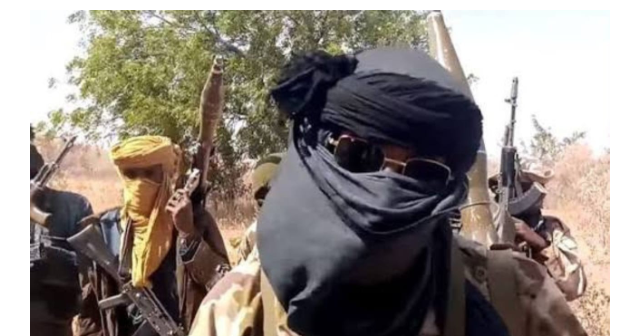
The lesson is clear: insecurity is contagious. What then should we do? First, we must acknowledge that there can be no purely military solution to a problem that has social, economic, political, and institutional roots. Security forces are necessary, but they cannot substitute for governance.
Second, our borders must cease to be mere lines on maps. A nation that cannot control what enters its territory cannot effectively control what happens within it.
Third, political leaders must stop recruiting, financing, and arming young men during elections. Many of the weapons that later terrorize communities often begin their journey as instruments of political ambition.
Fourth, communities themselves must become active participants in security. Intelligence gathering, vigilance, social cohesion, and local cooperation remain among the most effective weapons against criminality.
Finally, we must invest in the young. Idle hands remain the most fertile recruitment ground for violence. Every unemployed youth is a potential target for those who trade in chaos.
Looking back at that 2004 article, I am reminded of a simple truth: societies are often warned before they are overwhelmed. The challenge is that warnings are usually inconvenient. They demand action, resources, and political courage. It is easier to postpone difficult decisions until the consequences become impossible to ignore.
Nigeria has now reached that point. The guns that were once hidden in the mangrove creeks have spread across the land. The cost is visible in the tears of grieving families, abandoned farms, deserted schools, and communities living under constant fear.
Twenty years ago, the guns were still whispering. Today, they are speaking loudly.
The question before us is whether we are finally ready to listen.
—