By Ajibola Olaide, JKNewsMedia Reporter
FALSE DATA and manipulated statistics have continued to dominate campaigns by local and international non-governmental organisations (NGOs) seeking to influence the United States to designate Nigeria as a Country of Particular Concern (CPC), the Independent Media and Policy Initiative (IMPI) has said.
The organisation stated that despite repeated reviews by the United States Department of State affirming that Nigeria does not meet the legal threshold for such a designation under the International Religious Freedom Act of 1998, a sustained lobby of foreign and local actors has persisted in circulating fictitious data to undermine Nigeria’s global reputation.
According to IMPI, the US Department of State’s most recent statement on 7 February 2023 reaffirmed that after a careful review, the Secretary of State concluded that Nigeria did not meet the criteria for designation as a CPC.
The group explained that this has been the standard position of the US government since 2009, following several petitions and campaigns that sought to portray Nigeria as a country that tolerates religious persecution.
The Initiative said its investigation revealed the use of falsified figures and exaggerated claims by groups profiling terrorist attacks as religiously motivated killings of Christians, a tactic it described as “a deliberate attempt to call a dog a bad name to hang it.”
The American government, it noted, had in earlier years subjected such data to verification, exposing the falsification of figures circulated by certain advocacy organisations.
IMPI stated that the US State Department officials had seen through what it termed a campaign of misinformation intended to justify placing Nigeria on the CPC list.
However, the group recalled that in December 2020, former US President Donald Trump diverged from the position of the State Department and designated Nigeria as a Country of Particular Concern.
It cited the clarification by the then US Ambassador to Nigeria, Mary Beth Leonard, who denied claims of genocide against Christians in Nigeria and explained that most of the conflicts in the Middle Belt region were linked to resource control, banditry, and inter-communal disputes.
During her July 17, 2019, confirmation hearing, the Ambassador referred to the violence as “escalating farmer-herder and inter-communal conflict frequently based on resource competition,” rather than religious persecution.
The Initiative noted that the Global Terrorism Index (GTI) of 2019 reported a 39.1 per cent decline in terrorism-related deaths in Nigeria, from 2,043 in 2018 to 1,245 in 2019.
This trend, corroborated by Statista.com (Sasu, 2024), was attributed largely to the reduction in violence linked to Fulani extremists.
However, IMPI drew attention to the data released by the International Society for Civil Liberties and Rule of Law (Intersociety), an Onitsha-based NGO, which claimed between 1,000 and 1,200 Christian deaths in 2019 alone.
The group said the claim conflicted with multiple independent reports, including the ‘Ninth Annual Report on Lethal Violence in Nigeria’ compiled by researchers at the University of Ibadan, which documented 11,277 violent deaths from all causes that year, not exclusively faith-related.
According to IMPI, Inter-society’s practice of attributing nearly all fatalities to “Christian deaths” illustrated the deliberate inflation of data to inflame religious tensions and justify the CPC designation.
Despite the evidence of declining terrorism figures, the Initiative said former President Trump designated Nigeria as a Country of Particular Concern in December 2020, describing the move as “questionable” given the available data.
It recalled that Nigeria’s terrorism-related fatalities had fallen significantly, dropping from 2,043 in 2018 to 1,245 in 2019 and continuing downward through 2020.
Citing the Global Terrorism Index of 2020, the Initiative noted that Nigeria recorded the most significant reduction in deaths from terrorism after Afghanistan, largely due to decreased fatalities attributed to Fulani extremists.
The group expressed concern about what it termed the “fallacy of jaundiced data,” stating that the campaign to label Nigeria as a CPC had become an industry of falsehood driven by both domestic and foreign interests.
It reaffirmed that it benchmarked its findings using verifiable data from the Institute for Economics and Peace, the producer of the Global Terrorism Index.
IMPI stated that the GTI, which ranks 163 countries on the impact of terrorism, recorded that deaths in Nigeria continued to decline until 2022, when only 392 fatalities were recorded — the lowest since 2011.
The Initiative pointed out that some NGOs and advocacy groups circulated exaggerated figures through the media, claiming thousands of Christian deaths each year.
It referenced Intersociety’s report of 5,068 deaths in 2022 and Open Doors’ claim of 5,014 faith-based killings that year, while the GTI reported only 392 terrorism-related deaths.
It noted that even though fatalities rose slightly to 533 in 2023 and 565 in 2024, the figures were still far below the inflated claims of 8,222 and 7,087 deaths, respectively, reported by advocacy groups.
IMPI said the pattern of inflated data pointed to a persistent campaign to pressure the US government to reimpose the CPC status on Nigeria.
The Initiative explained that the CPC designation in December 2020 was short-lived, as the succeeding Biden administration removed Nigeria from the list in November 2021, following a review that found no justification for the earlier action.
It noted that attempts to restore the designation continued through a resolution introduced by Congressman Chris Smith on 31 January 2023, but this was dismissed by the State Department, which reaffirmed on 7 February 2023 that Nigeria did not meet the criteria for CPC status.
IMPI stated that the insistence on data verification remains critical, adding that the US should always validate any information presented by advocacy groups before using it to influence foreign policy decisions.
The Initiative further alleged that former President Trump’s decision may have been influenced by transactional considerations linked to security and military cooperation.
It highlighted that during his tenure, Nigeria had intensified efforts to modernise its military capability through substantial purchases of American-made defence equipment.
According to IMPI, Nigeria acquired 12 AH-1Z Viper attack helicopters from the US in a $455 million deal to strengthen counterinsurgency operations, alongside a $346 million arms contract concluded in August 2025 for bombs, precision-guided weapons, and logistical support.
The Initiative said the transactions represented a clear demonstration of Nigeria’s commitment to fighting terrorism and safeguarding citizens’ lives, according to a statement signed by Omoniyi M. Akinsiju, Chairman, Independent Media and Policy Initiative (IMPI).
It added that the US Commerce Department had acknowledged Nigeria’s growing demand for advanced security and surveillance equipment, cybersecurity solutions, and specialised training, identifying US companies as preferred suppliers in these sectors.
According to the Commerce Department, Nigeria’s rising security investments, particularly in digital surveillance, border monitoring, and data protection, present expanding opportunities for American firms to supply sophisticated equipment such as unmanned aerial vehicles, detection systems, and covert surveillance technology.
IMPI also cited a report by Foreignlobby.com linking former Trump Chief of Staff Susie Wiles to lobbying efforts by the Indigenous People of Biafra (IPOB) through her firm Mercury Public Affairs, which was reportedly contracted to lobby the US Congress and the State Department on human rights and democracy in Nigeria.
The Initiative stated that the jubilation that followed Nigeria’s 2020 CPC designation among certain diaspora groups with connections to IPOB highlighted the political undercurrents behind the campaign.
Concluding, IMPI said the renewed pressure to redesignate Nigeria as a Country of Particular Concern was not a constructive response to the country’s security challenges.
It urged a balanced approach, stressing that Nigeria and the United States remain strategic partners in counterterrorism efforts across the Sahel region.
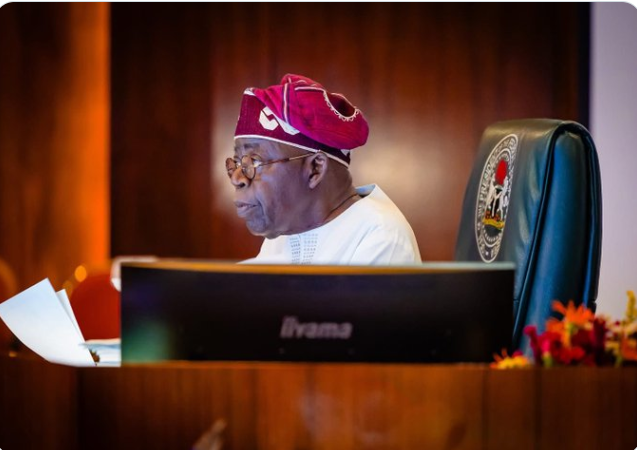
The Initiative maintained that Nigeria’s federal government, under President Bola Ahmed Tinubu, had demonstrated political will through an $801 million investment in US-manufactured military hardware within 24 months to combat terrorism, ensure religious freedom, and protect citizens.
It emphasised that both countries must continue their cooperation in combating terrorism, noting that mutual partnership and data accuracy are essential to maintaining credible international relations.