By Joke Kujenya
TRAGEDY OFTEN comes quietly, but sometimes it crashes through the headlines and leaves the public groping for answers that never come.
The death of Arise News anchor Somtochukwu Christelle Maduagwu is one of those moments that demand not just sympathy, but scrutiny.
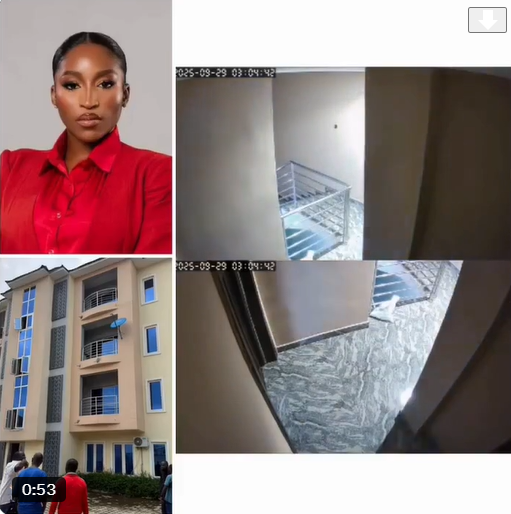
Reports say the 29-year-old journalist and lawyer died during an armed robbery at her Abuja residence on 29 September.
Accounts from various media suggest she may have jumped from her apartment in a desperate attempt to escape the robbers.
A security guard, Barnabas Danlami, also lost his life that night reportedly after resisting the attackers.
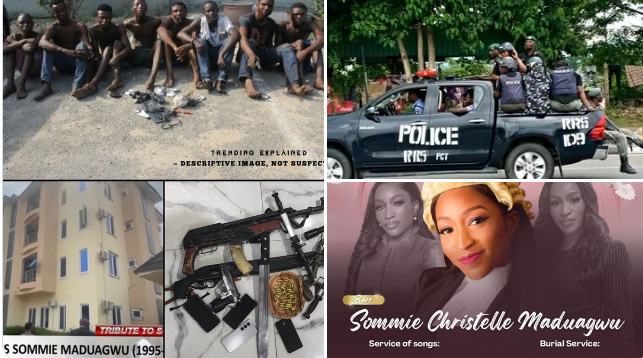
The Federal Capital Territory Police Command later announced that 12 suspects had been arrested, describing them as part of a syndicate allegedly armed with locally fabricated weapons procured through illegal cross-border channels.
Yet, beyond that official update, the public has heard little about the deeper circumstances surrounding Somtochukwu’s final moments.
And that silence is troubling.
Was she alone in her flat when the robbers struck? Who was the last person to see her alive, a neighbour, a friend, or a colleague?
Where exactly was she when the robbers gained entry?
How close did they get to her floor before she allegedly jumped?
These are not prying questions into a private life. They are legitimate questions for due justice.
The narrative that a young woman, educated, accomplished, and visibly composed on screen, simply jumped to her death from fear alone leaves gaps that responsible authorities should fill with evidence, not speculation.
Did investigators find any physical struggle marks or evidence of forced entry in her apartment?
What about her personal belongings – phones, laptop, or valuables? Were any missing?
We also know that robbery was reported, but how extensive was the attack within the building?
Were there other residents targeted? Were surveillance cameras working that night? If not, why?
Somtochukwu’s death should not end in a brief police statement and a few social media tributes.
She was not only a journalist; she was a public figure – a face of truth-telling and calm professionalism on national television.
Her safety, like that of any Nigerian, is a matter of national concern.
Another question worth asking is about the timeline of her day.
Who did she see after work?
Was she dropped off at home by colleagues or friends?
Did she raise any concerns about threats or unusual movements around her residence in the days before her death?
There is also the issue of how the robbers operated.
The police said their weapons came from the Niger Republic, implying a larger organised network.
If so, was this attack random, or were they acting on specific intelligence about the building or about her?
These questions do not seek to cast shadows on her character. They seek truth.
Shockingly, one of the arrested suspects reportedly claimed he tried to stop Somtochukwu from jumping but couldn’t because of her weight.
That raises serious questions: how did he enter her apartment in the first place?
Did she open the door for him or them all, or did he or they break in? Reports didn’t tell us they got close to her private apartment. So, what happened here? Nigerians, and the world need to be told.
How many suspects were actually inside her home that night, and what exactly happened before her fatal fall?
Aside armed robberies, “one-chance” operations, and bandit attacks escalating across the FCT, what specific preventive measures are security agencies deploying, beyond routine patrols, to protect residents?
Are these measures working, or are we only reacting after tragedies occur?
Gwarimpa is touted as the largest estate in West Africa, a planned community for the middle class.
Yet, it’s fast turning into a crime zone.
Why haven’t the authorities moved to demolish or seal off buildings found to shelter criminal activity?
What’s stalling enforcement?
When Nasir El-Rufai served as FCT Minister, he restricted tricycles and motorcycles in key areas to curb insecurity.
Should the FCT administration revisit that policy, given the current spike in violent crime?
And beyond this immediate tragedy, what safety nets exist for journalists in Nigeria?
Does the Nigerian Union of Journalists (NUJ) offer any form of insurance or compensation scheme for reporters who die or are injured in the line of duty?
With public distrust in insurance still widespread, what’s being done to rebuild confidence and protect professionals who risk their lives for the news?
Because when a young woman working so hard in journalism – an industry that thrives on questioning power – dies violently in her own home, the nation must not settle for silence.
In many such cases, the pattern is familiar: arrests are announced, a few suspects are paraded, and then the story fades from the public eye.
But behind the fading headlines lies a grieving family and a growing fear among young professionals that security, even in supposedly safe neighbourhoods, remains fragile.
The police have done well to make early arrests, but Nigerians deserve to know what happens next.
Why aren’t many of her neighbours spoken to or quizzed?
What about those that took her to the hospital?
Will there be a transparent prosecution?
Will the investigations be made public?
Was her death simply an accident amid chaos or was it something more targeted?
These are the questions that honour her memory far more than any condolence message.
To ask them is not to sensationalise her death, but to insist that justice must not be shallow.
Somtochukwu Maduagwu’s story should not close with a burial date.
Rather, it should open a national conversation about urban safety, about how we protect citizens, especially women living alone in cities where security often feels like an illusion.
If we fail to demand answers now, we risk allowing yet another tragedy to slip quietly into the archives of unsolved Nigerian deaths.
And that would be the final injustice to a young woman who spent her short life bringing stories to light. And that would soothe our unseen tears.