By Ajibola Olaide, JKNewsMedia Reporter
QUALITY REMAINS the test African universities must confront if their research is to command greater global relevance, and a West African universities forum has challenged institutions to rethink how they produce, assess and apply knowledge.
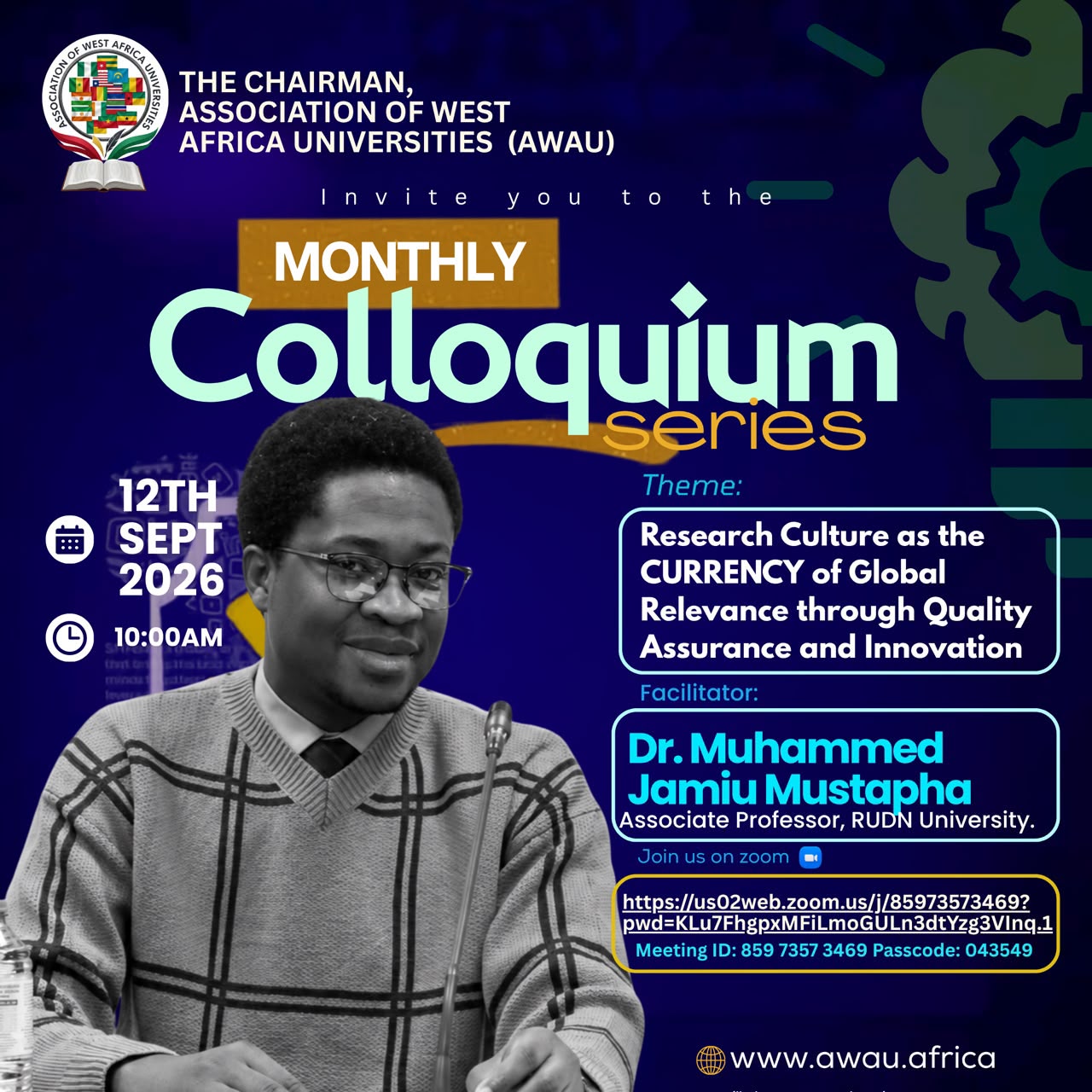
JKNewsMedia.com reports that the charge came during the September edition of the Association of West Africa Universities (AWAWU) monthly colloquium, where researchers and higher education stakeholders examined how research culture can become a form of currency through quality assurance and innovation.
The session, titled “Research Culture as the Currency of Global Relevance through Quality Assurance and Innovation”, placed a difficult question at the centre of the discussion: is a university’s research culture appreciating or depreciating in value?
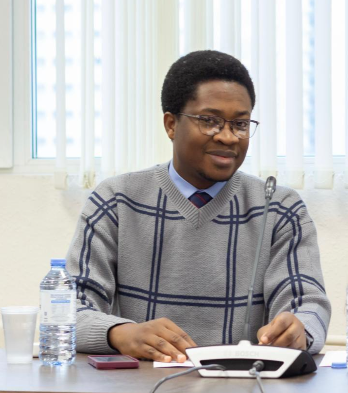
Dr Muhammad Jamiu Mustapha, who delivered the presentation, argued that universities must look beyond the volume of research they produce and pay greater attention to the influence that research generates through citations, international partnerships and policy impact.
Also, his argument placed research quality at the heart of the debate about global relevance.
Rather than depending heavily on external academic systems, he urged African institutions to build research cultures capable of generating knowledge that speaks to the continent’s own development needs.
The scale of the challenge was made clear during the presentation. Sub-Saharan Africa contributes less than one per cent of global scientific output despite accounting for 14 per cent of the world’s population.
Mustapha also linked the gap to fragmented research ecosystems, heavy dependence on Western frameworks and journals, and insufficient integration of indigenous knowledge into academic research.
For African universities, Dr Mustapha argued, the response should begin with greater ownership of their research agendas.
Institutions need to identify clear research clusters and develop focused areas of enquiry capable of producing more coherent and impactful knowledge.
He said the emphasis is not simply on producing more research, but on creating research with a clear purpose and stronger connection to the societies universities serve.
That argument also brought the question of decolonisation into the discussion. Mustapha based his presentation on African research works and positioned the approach as part of a wider effort to strengthen the voice of African scholarship.
The conversation then moved to quality assurance, an area Mustapha said must evolve beyond compliance.
With the African Union Decade of Education and Skill Development 2025 to 2034 in view, he called for quality assurance to become a strategic enabler of innovation rather than a process focused mainly on meeting requirements.
He pointed to the DORA Framework, which assesses research on its merits rather than relying on the prestige of the publication in which it appears.
He also proposed an 80 to 20 model in which 80 per cent of research would align with institutional priorities while 20 per cent would remain open to individual intellectual curiosity.
For Mustapha, the balance would allow universities to pursue research that serves strategic institutional objectives without shutting down the freedom to explore new ideas.
He also called for hybrid knowledge systems that bring together Indigenous African knowledge, Western academic frameworks and global best practices. Such an approach, he argued, could help create a more inclusive intellectual ecosystem.
His presentation also turned towards what universities can do practically.
Mustapha then outlined a five-step roadmap for West African universities centred on faculty-led research agendas, thematic research hubs and stronger collaboration between universities, industry and government.
The proposed collaboration reflects a triple helix model in which academic institutions, industry and government work together to move research beyond university walls and towards wider application.
Thereafter, questions from participants showed that the challenges facing African research are not limited to funding or infrastructure.
Rather, concerns were also raised about journal rankings and the place of locally developed theories in global scholarship.
Responding, Mustapha encouraged researchers to maintain a consistent research focus while pursuing publication in high-impact journals, suggesting that stronger and more sustained research programmes could help African scholars build greater visibility.
The discussion began with the question of whether research culture is gaining or losing value.
By the end of the session, the emphasis had shifted towards what universities can do to make that value visible through stronger scholarship, meaningful partnerships, innovation and research connected to local realities.
Professor Wahab Olasupo Ekbewole, chairman of the Association of West Africa Universities, delivered the opening remarks after being introduced by Dr Alex.
He later closed the session by addressing concerns around academic specialisation and encouraging participants to consider how their areas of expertise could be connected more deliberately to local contexts.
—