By Ajibola Olaide, JKNewsMedia Reporter
IN AFRICA, the problem is not a shortage of achievers. It is the failure to consistently recognise, document and celebrate their contributions.
As a matter of fact, daily across the continent and its diaspora, countless people are making a difference in their communities and professions, yet their stories often struggle to gain the attention they deserve.
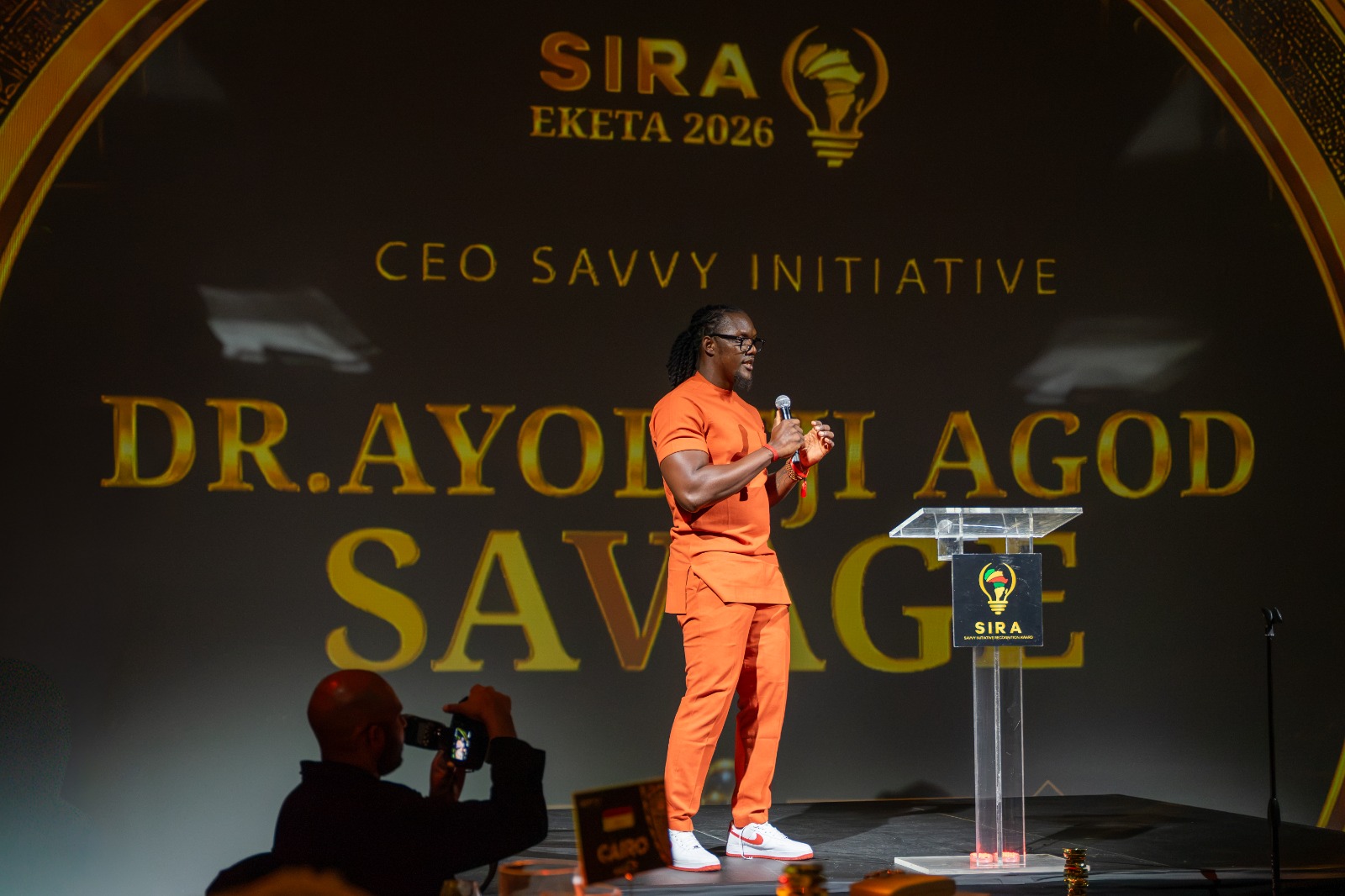
JKNewsMedia.com reports that this gap in recognition lies at the heart of the Savvy Initiative Recognition Awards (SIRA), a United States-based nonprofit organisation founded by its Chief Executive Officer (CEO), Ayodeji Agod Savage, fondly called “AGOD.”
He said it is through its international platform; the organisation seeks to identify, recognise and celebrate Africans and people of African descent whose work makes significant contributions to society.
Across the continent and its global diaspora, Savage notes that people are building businesses, advancing scientific knowledge, creating jobs, transforming communities and making contributions that reach far beyond their immediate environments.
Yet many of these stories remain largely unknown, sometimes receiving recognition only after they have been acknowledged elsewhere, Savage laments.
He also said it is against this backdrop that his central argument remains straightforward: “Africans should take a more active role in recognising their own achievers rather than waiting for external institutions to determine whose contributions deserve attention.”
Savage added that this is what informs SIRA’s guiding philosophy: “We See You” and it is intended to communicate recognition to people whose work may not always attract public attention, but particularly those whose contributions have lasting value.
Challenging The Need For External Validation
For Savage, the concern is not that African excellence is absent, but that the systems for identifying, documenting and celebrating it are not always strong enough.
“Just like my name suggests, I seek to savage situations and things. Too often, I realise we often wait for external institutions to validate African excellence before we acknowledge it ourselves,” he says.
“But this has got to stop and it is the observation that informs SIRA’s purpose as he explains why its awards seek to create a platform through which the achievements of Africans and people of African descent can be recognised on their merit, while encouraging communities to take ownership of the stories that represent their history and progress.
Savage also puts the argument more directly: “We should not have to wait for the world to tell us which Africans are extraordinary. We must learn to recognise and celebrate our own.”
This issue has implications beyond the individuals who receive awards. Giving them due recognitions can also influence how younger generations understand their possibilities. When young people encounter stories of Africans making meaningful contributions in different fields, they are presented with examples of achievement within their own heritage, SIRA founded stressed.
“At SIRA, we seek to make those stories more visible and preserve them for audiences beyond the immediate occasion of an award ceremony. It’s as simple as that.”
Merit, Not Money Or Popularity
“Before we venture into this, we knew that recognition programmes can face questions about credibility, particularly where awards are perceived to favour wealth, celebrity, influence or personal connections. SIRA says it has designed its selection process to avoid those considerations. And we duly prepared ahead to counter such notions.
“SIRA awards are not for sale,” Savage states. “At SIRA, you do not pay to be seen. Your impact speaks for you. Our records speak for us since we started this initiative.”
According to Savage, “our recipients are never required to make payments in exchange for honours. Financial status, social media following, celebrity and personal connections are not intended to determine who receives an award,” he stressed with emphasis to JKNewsMedia.com.
He said SIRA simply identifies potential candidates through public nominations, community recommendations, professional networks and independent research.
Savage further explains that the pool of candidates may include educators, scientists, innovators, philanthropists, entertainers, community organisers and young changemakers, as well as allies who have demonstrated a commitment to advancing African communities.
Candidates, however, are assessed by a network of more than 30 trained professionals drawn from different industries and backgrounds. Evaluators work independently and do not know the identities of their fellow assessors, Savage reveals.
He added that their assessments are based on six stated criteria: achievement and impact; leadership; innovation and creativity; community engagement; advocacy and representation; and resilience. Individual rankings are subsequently aggregated to determine the final honourees.
The process, as described by the SIRA CEO, is intended to place emphasis on a candidate’s contributions and record of impact rather than public profile.

More Than A Night Of Awards
Savage also disclosed that SIRA’s annual gala is designed to combine recognition with cultural expression and conversations about Africa’s identity and future given that the event, he explained, is intended to be more than a conventional awards ceremony.
He said that the first edition was held in Las Vegas, Nevada, in 2024, followed by the second in Chicago, Illinois, in 2025 and the third edition, themed EKETA (The Third), took place on October 17, 2026, at The Luxtrium in Houston, Texas, USA.
A very catchy attraction is that the awards’ categories draw their names from African landmarks, natural features and concepts, including Kilimanjaro, Nile, Giza, Serengeti, Baobab, Iroko, Kalahari and Umoja.
These names, he explained, are intended to connect the recognition of individual achievements with the continent’s cultural and historical identity.
Another feature is the use of documentary-style films to tell the stories of honourees. Through these films, Savage said, SIRA seeks to preserve accounts of their journeys, challenges, work and accomplishments beyond the gala itself.
He disclosed that the Houston edition brought intellectual discussion into the programme, with a featured panel examining the question: “Who Owns Our History in the Age of AI? Preserving African Truth, Memory & Identity in a Digital World.”
“For us, the subject raises questions about who documents African experiences, whose accounts are preserved and how technology may shape the way future generations encounter their history. For an initiative built around recognition and storytelling, the discussion reflected a concern that extends beyond awards: the importance of preserving African experiences and perspectives,” Savage reasons.
“And that is why we continue to express our philosophy: ‘Africa is not merely the theme of our event. Africa is the reason the event exists,'” Savage reiterates.
Lagos 2027: Bringing The Recognition Home
Gleefully, Savage said the next stage of SIRA’s development is taking the awards to Nigeria, his eyes lighting up as he spoke about the planned move.
He told JKNewsMedia.com that the fourth edition is planned for Lagos in 2027 under the theme ÀPÉJỌ in Yoruba meaning “The Convergence.”
For a man, whose country of origin is Nigeria, Savage said this move carries personal significance.
However, the proposed Lagos gathering is intended to reach beyond national boundaries, bringing together Africans on the continent and in the diaspora across generations, professional fields and countries, he said.
“It’s Africa’s turn to celebrate Africans in Africa,” he says, you know, something like a continental carnival,” smiling richly.
He said the planned edition is particularly meant to present an opportunity to connect people whose achievements and experiences are often discussed in separate geographical or professional spaces.
This is why its theme points to a wider gathering of the global African community, with the intention of strengthening relationships between continental and diaspora networks.
Savage’s broader vision also identifies areas he believes are important to Africa’s global influence as he stressed: “One is narrative ownership: greater investment in African-owned media, documentaries and storytelling platforms capable of presenting the continent’s achievements and experiences in its own voice.
Another is institutional excellence, including credible recognition platforms, research bodies and professional networks that can operate to high standards, he adds, pointing to cultural diplomacy through the global reach of African music, film, fashion, literature and languages.
A further priority is stronger cooperation between the continent and its diaspora. Conferences, exhibitions and investment forums, he argues, would create opportunities for knowledge transfer, tourism, economic development and practical collaboration, among others.
He said it is these priorities place SIRA within a wider conversation about how African achievement is recognised, recorded and connected to opportunities for future development.
Recognition Linked To Opportunity
“One fact I need to enumerate is that SIRA operates under the wider umbrella of Savvy Initiative, whose work also includes youth-focused programmes such as EmpowHER, Youth Tech Connect and eMentor,” Savage said.
“Also, our programmes are dubbed as efforts to equip young people with digital skills, mentorship and confidence and their inclusion reflects the organisation’s stated interest in linking recognition with practical empowerment, particularly for younger generations.”
For Savage, celebrating achievement should not end with presenting an award; he said it is the stories of those being recognised that can also provide lessons, encouragement and examples for people who are still developing their own paths.
“Africa does not lack extraordinary people,” he stressed. “What we need are stronger systems to identify them, connect them, celebrate them and preserve their stories.”
“That’s the challenge that is central to the ambition behind SIRA. I believe in its long-term significance that will depend not only on the visibility of its gala or the number of people it honours, but also on the credibility of its selection process, the quality of the stories it preserves and the relationships it helps build,” Savage echoes.
Furthermoe, he said “as SIRA prepares for the planned Lagos awards’ edition, our message is clear: African achievement should be recognised, documented and celebrated by Africans ourselves.
“And strongly, I posit that the task is not simply to applaud exceptional individuals. It is to ensure their contributions are seen, their stories are preserved and the generations coming after them know what is possible,” Savage said with an assuring tone.
—

Share Your Story with us!
Advertise with us!
Publicity for a product, service, or event!
Contact: WhatsApp Only: +2348039560647
Email: jkmediapress@gmail.com