By Olajide Okunola
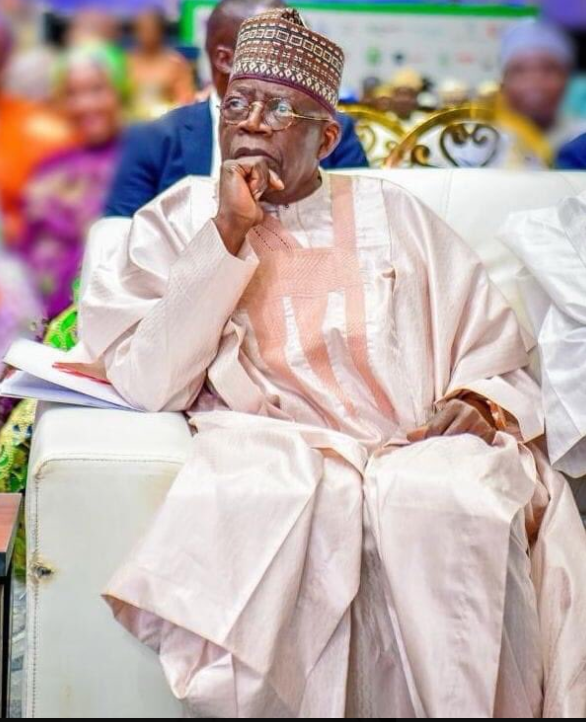
PRESIDENT BOLA Tinubu may still have more than a year before the next major electoral cycle fully unfolds, but inside the All Progressives Congress (APC), the struggle for political positioning has already begun with unusual intensity.
Across Nigeria, APC primaries are no longer just routine party exercises. They are becoming deeply personal battles over succession, loyalty, survival and influence.
Behind the public endorsements and carefully managed appearances lies a tense political atmosphere where governors, ministers, lawmakers and party loyalists are all fighting to protect their futures.
At the centre of it all stands Tinubu himself.
The President remains the single most powerful political force within the APC, and nearly every major calculation inside the party now revolves around proximity to him, access to him or perceived loyalty to his political direction.
That influence has strengthened the hands of some politicians while weakening others who were once considered untouchable.
APC National Chairman Abdullahi Ganduje also finds himself in a delicate position.
As party chairman, he is expected to manage competing interests across the country, but many within the party understand that neutrality in Nigerian politics is often more theoretical than practical.
In Kano, Ganduje’s home state, the internal calculations are especially complicated. The lingering rivalry involving Rabiu Musa Kwankwaso continues to shape political alignments in the North-West, even outside formal party boundaries. APC figures in the state are already quietly positioning themselves for relevance ahead of future contests, aware that Kano remains too politically important to mismanage.
In Lagos, the political atmosphere remains tense beneath the surface calm. Babajide Sanwo-Olu may publicly enjoy support within the APC structure, but succession conversations are already happening quietly among influential blocs loyal to Tinubu. Ambitious younger politicians within the state are carefully watching for openings while established political interests attempt to maintain control of the structure that has defined Lagos politics for decades.
The fear among many aspirants is simple: in Lagos APC politics, visibility does not always equal influence.
In Rivers State, the conflict surrounding Siminalayi Fubara and Nyesom Wike has transformed into one of the most closely watched political dramas in the country. Although Wike now serves in Tinubu’s administration as Minister of the Federal Capital Territory, his influence in Rivers politics continues to generate tension across party lines.
Many APC stakeholders in Rivers are watching carefully to see how the power struggle eventually reshapes the state’s political structure ahead of future primaries. Loyalists on different sides are already calculating where power may finally settle.
In Kaduna, Uba Sani continues the difficult task of balancing political blocs inherited from the Nasir El-Rufai era while trying to establish his own authority. El-Rufai himself remains a major political factor nationally despite his complicated relationship with parts of the APC establishment after leaving office.
Many within the party still see him as influential, outspoken and unpredictable.
In Kogi, Usman Ododo’s emergence after Yahaya Bello’s tenure remains a reminder of how strongly governors still influence succession politics within the APC. Across several states, outgoing governors are already trying quietly to determine who controls structures after their exit from office.
The pattern is repeating itself nationwide.
In Kwara, AbdulRahman AbdulRazaq’s political calculations are under scrutiny. In Ogun, Dapo Abiodun faces pressures from competing interests seeking future positioning. In Imo, Hope Uzodimma continues consolidating influence while managing internal rivalries within the party.
Meanwhile, former governors and political heavyweights who lost influence after leaving office are attempting to re-enter the conversation before 2027 calculations fully harden.
Rotimi Amaechi remains politically relevant despite periods of relative silence. Kayode Fayemi continues to attract strategic interest within intellectual and reform-minded blocs of the APC. Former Senate President Ahmad Lawan and former Speaker Femi Gbajabiamila still command important networks within the party establishment.
Behind the scenes, many of these figures are engaged in constant consultations.
What makes the APC primaries particularly sensitive this time is the growing fear of exclusion.
Lawmakers fear losing tickets to newcomers with stronger connections. Longtime party loyalists worry that recent defectors may suddenly become favourites because of their usefulness to the ruling structure. Younger aspirants complain privately that internal democracy still struggles against godfatherism and financial influence.
Women within the APC continue facing structural barriers despite repeated promises about inclusion.
The language of “consensus” has again become controversial across several states. Party leaders describe it as necessary for unity. Aspirants often describe it differently – as a polite method of imposition.
That tension is quietly fuelling resentment inside many state chapters.
Even among APC governors, there is visible caution. Some are trying to protect their political legacies. Others are trying to avoid becoming politically vulnerable after office. In Nigerian politics, former governors without strong successors can lose influence with astonishing speed.
That fear explains many of the silent battles already unfolding.
Inside hotels, private residences and late-night meetings across Abuja, Lagos, Kano and Port Harcourt, alliances are shifting constantly. Politicians smile together publicly while negotiating against one another privately.
The APC today is not lacking in power. What it faces instead is the complicated burden of managing too many ambitions under one roof.
For ordinary Nigerians dealing with economic hardship, inflation and insecurity, these internal party battles may appear distant from daily reality. Yet the outcomes of these primaries will shape future governors, lawmakers and national decision-makers.
And within the APC, everybody understands something important:
In Nigerian politics, losing relevance can happen faster than losing an election.
That is why the primaries are already tense.
That is why loyalty is being tested.
And that is why, behind the loud chants at party gatherings, many of the most powerful figures in the APC are quietly fighting the political battle of their lives.
Okunola writes from Lagos, and the entire article is his personal perspective, not that of JKNewsMedia.com.
—