By Joke Kujenya, Fellow, 2026 Naija Cancer Watch Fellowship
THE ROOM went quiet when a question suddenly appeared on the screen.
“Imagine two people receive the exact same cancer diagnosis today. One begins treatment immediately. The other waits for months because they are afraid. What made the difference?”
JKNewsMedia.com reports that for several seconds, no one spoke.
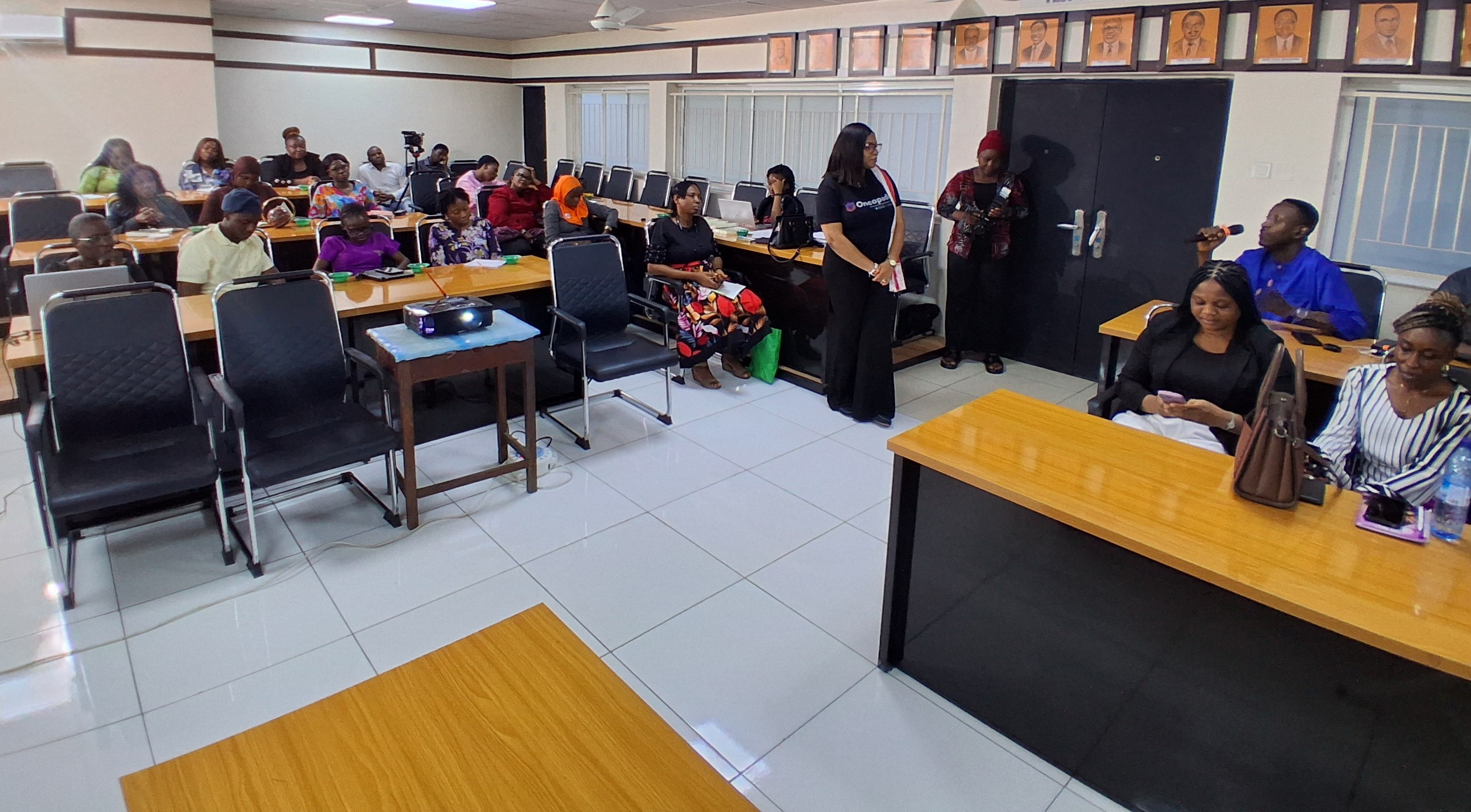
The setting was inside the College of Medicine, University of Lagos (CMLU) New Board Room, Administrative Block, Idi-Araba, Surulere, Lagos.
Dateline was Wednesday, July 29, 2026. The event itself, billed to have started as early as 8.30am commenced few hours later.
As the pause lingered; then the answer came: it was often not the diagnosis itself, but the story people had been told about cancer.
That moment captured the central argument of the 2026 Naija Cancer Watch Fellowship Boot Camp in Lagos: “cancer is not fought only in hospitals and laboratories.
“It is also fought in newsrooms, communities and conversations where fear, misinformation and stigma can determine whether someone seeks help early or waits until treatment becomes more difficult.”
For all-day long, journalists, oncologists, researchers and health communication experts sat together in an intense exchange designed to change how cancer is reported in Nigeria.
And the message was direct: “journalism is not merely about telling people what happened”.
In public health, the way a story is told can influence what people do next, said Dr Omolola Salako, at the Department of Radiotherapy and Oncology, who is also a leading oncology advocate popularly known as “The People’s Oncologist”, delivered that challenge firmly.
Inside the conference hall, presentations moved between science, policy and personal experiences.
Screens displayed statistics.
Experts explained complex cancer biology.
Spicing the session, survivors shared deeply personal accounts of diagnosis and recovery.
But beneath every lecture was one urgent question: how can information become action?
It was simply a medley but not music. It touched hearts.
Dr Salako, who also does research in breast cancer, openly challenged journalists to rethink the purpose of cancer awareness campaigns.
She said: “Actually, this is the essence of this second cohort of the fellowship. We knew there are more stories to be told so those in governments and the larger society can know and feel the impacts of what we intend to pass across.”
She could see she meant what she was saying in her eyes and demeanor in general.
“We don’t know why many Nigerians still present at advanced stages of their cancers despite all we had done to douse myths, fear and misinformation; but still, they continue to delay in seeking diagnosis.
“Up till now, about 70 per cent of cancer patients present late,” explaining that many patients postpone medical attention because they are afraid of the disease, fear social judgment or believe myths about cancer treatment.
She described cancer progression in simple terms: many cancers begin as small changes like ‘peanuts;’ gesturing with her fingers, “before developing into more complicated conditions when detection and treatment are delayed.
The implication for journalists, she argued, is significant.
Stories should not only announce that cancer exists; they must help people understand when to seek care and where to find support.
“Awareness is not enough,” she emphasised. “We need stories that move people to action.”
That message challenged a familiar pattern in health reporting: publishing alarming statistics without explaining what people can do with the information.
“We design this fellowship to encourage reporters to move beyond headlines describing cancer as a “killer” or a “death sentence,” these are languages the experts warned could deepen public fear.
Instead, journalists were encouraged to report cancer through the realities of prevention, screening, treatment and survival.
Words matter, speakers explained.
Describing someone as a “cancer victim” can reinforce helplessness. Saying a person is “living with cancer” or “undergoing treatment” recognises their dignity and avoids defining them only by illness.
For cancer survivors who attended the programme, the difference was not theoretical. It reflected how society responds to them after diagnosis.
A female survivor told participants that cancer changed the way they viewed everyday life.
Each morning, the survivor said, became a reminder not to take life for granted.
The comment created one of the most reflective moments of the fellowship, at least, for this reporter.
Beyond medical treatment, cancer patients often carry emotional, social and financial burdens.
They explained that they need not only hospitals and drugs but also understanding, encouragement and communities willing to stand beside them.
Then, the scientific sessions added another layer to the discussion.
Prof. Solomon O. Rotimi, a cancer researcher at Covenant University, took journalists into the biology behind the disease, explaining how cancer develops when the deoxyribonucleic acid (DNA) damage accumulates and the body’s repair mechanisms fail.
Although the science was complex, the public health message was clear: understanding cancer biology helps researchers develop better prevention strategies, identify risks earlier and design treatments that work for different populations.
Prof. Rotimi, highlighted in particular, prostate cancer as a major example of why African-led research matters.
He reiterated that research has shown that prostate cancer among men of African ancestry can behave more aggressively compared with some other populations.
He also cited findings showing that nearly 30 per cent of patients in one study progressed to castration-resistant prostate cancer, with more than half of those patients dying during follow-up.
For Nigerian patients, the issue goes beyond statistics, Prof. Rotimi further affirmed.
He noted that it raises questions about whether treatments and screening approaches developed elsewhere fully reflect the realities of African populations.
It actually pointed to the limited participation of Africans in global cancer research, Prof. Rotimi stressed.
He also revealed that the landmark PROfound trial, which evaluated the targeted prostate cancer treatment olaparib, included only three Black participants among about 200 volunteers.
For us as researchers, that gap highlights the danger of relying heavily on international evidence without sufficient African representation, he said.
He added that without stronger local participation in clinical research, experts warned, important differences in genetics, disease patterns and treatment responses may remain poorly understood.
Another major theme throughout the boot camp was the power of early detection.
Speakers repeatedly returned to the same message: cancer is not automatically a death sentence.
Many cancers have significantly better outcomes when detected and treated early, but late presentation remains one of Nigeria’s biggest challenges.
Prof. Ademola Ayodele Oremosun, Provost, CMLU, linked the challenge to weaknesses within the healthcare system.
He raised concerns about the shortage and migration of oncology specialists, noting that many doctors leave cancer care because of poor working conditions, inadequate remuneration and limited support.
The result, he said, is an overstretched system where too few specialists serve a rapidly growing number of patients.
“When one oncologist is attending to hundreds or thousands of patients, the quality of care becomes difficult to sustain,” he said.
The crisis, he added, is made worse when patients encounter high treatment costs and limited access to early screening.
But amid the challenges, the fellowship highlighted examples of progress.
Ijeoma Ezenwere, communications lead at the Aspire Coronation Trust (ACT) Foundation, demonstrated how targeted storytelling and community programmes can influence cancer outcomes.
She said the foundation’s initiatives have reached more than 1.1 million people through cancer awareness campaigns, provided screening for more than 51,500 individuals, supported the training of over 460 oncology professionals and assisted hundreds of cancer survivors through post-treatment programmes.
She further referenced Sebeccly Cancer Care’s TimeToScreen’s initiative, which has expanded access to breast and cervical cancer screening while providing patient navigation support.
For journalists in the room, those examples reinforced a critical lesson: behind every statistic is a person whose outcome can change because someone received the right information at the right time.
As the session continued, the role of the journalists appeared clearer.
Researchers discover. Doctors treat. Policymakers create programmes. Journalists project the findings.
At the same time, journalists determine how millions of Nigerians as well as their global audience understand those developments.
The next cancer story, speakers argued, should do more than describe the problem. It should answer the questions people quietly ask after reading it:
. Where can I get screened?
. What symptoms should I not ignore?
. Can cancer be treated?
. Where can I find help?
In a country where misinformation continues to influence health decisions, the fellowship delivered a message that extended beyond the newsroom.
A well-reported cancer story may not replace a hospital visit or a medical breakthrough.
But it can encourage someone to make that visit.
And sometimes, that decision can determine whether a diagnosis becomes a crisis or a chance for survival.
As workforce shortages, survivor stories and misinformation collide, reporters are urged to become partners in Nigeria’s cancer response.
The science was compelling.
The statistics were sobering.
But it was the stories that lingered long after the presentations ended.
As the Boot Camp entered its final sessions in Lagos, discussions shifted from genetics and communication strategies to an uncomfortable reality confronting Nigeria’s healthcare system: even when people overcome fear and seek medical help early, many still encounter formidable barriers to diagnosis and treatment.
Those obstacles are measured not only in naira, but in time, distance and the scarcity of specialists.
For many Nigerians diagnosed with cancer, the journey begins with uncertainty and too often continues through delayed referrals, overcrowded clinics and mounting financial hardship.
The fellowship challenged journalists to report those systemic failures with the same rigour applied to politics, the economy or corruption—not as isolated tragedies, but as recurring public health issues demanding sustained attention.
As a matter of fact, one of the clearest warnings came from Prof. Ademola Ayodele Oremosun, who painted a troubling picture of Nigeria’s oncology workforce.
Cancer specialists, he explained, are leaving clinical practice at an alarming rate—not always by emigrating overseas, but through what he described as an “internal japa.”
Poor remuneration, difficult working conditions and inadequate institutional support have driven many highly trained professionals into private business, administration or entirely different careers.
The consequences are visible inside oncology clinics.
“When one specialist is expected to care for an overwhelming number of patients every day, quality inevitably suffers,” he told participants.
The pressure extends beyond doctors.
Pathologists, oncology nurses, radiotherapists, pharmacists and laboratory scientists are all stretched by a healthcare system struggling to keep pace with rising cancer cases.
For patients, the shortage often translates into longer waiting times, delayed treatment decisions and emotional exhaustion at a moment when speed can make the difference between cure and progression.
Those conversations reframed cancer as more than a medical diagnosis.
It is also a test of the health system itself.
That broader perspective was reinforced throughout the fellowship by experts who urged journalists to investigate not only diseases but also the policies, budgets and institutions shaping health outcomes.
Why are screening services still inaccessible to many rural communities?
Why do patients travel hundreds of kilometres before seeing an oncologist?
Why do some hospitals still lack functional radiotherapy equipment?
And why do families continue selling property or organising public fundraisers to finance treatment?
These, speakers suggested, are not simply health stories.
They are governance stories.
They are accountability stories.
They are stories about equity.
Yet amid those institutional challenges, the fellowship repeatedly returned to individuals whose experiences refuse to be reduced to statistics.
Among the most memorable moments were the testimonies of cancer survivors.
Their stories did not dwell solely on chemotherapy, surgery or hospital admissions.
Instead, they described quieter battles that rarely make headlines—the fear of disclosing a diagnosis, the isolation that follows treatment, the financial strain on families and the emotional burden of confronting widespread misconceptions.
One survivor gently dismantled perhaps the most persistent myth still circulating in some communities.
“Cancer is not infectious,” the survivor said.
The statement was simple.
Its significance was enormous.
For many participants, it illustrated how misinformation continues to shape public behaviour long after scientific evidence has settled the debate.
Some patients, survivors explained, still experience social isolation because neighbours, relatives or colleagues wrongly fear they might “catch” cancer through ordinary contact.
Others delay seeking care because they believe cancer is caused by spiritual attacks or is inevitably fatal.
Such misconceptions are not harmless.
They can delay diagnosis, discourage treatment and deepen stigma for people already confronting one of the most difficult periods of their lives.
The fellowship therefore challenged journalists to regard myths not merely as misinformation, but as public health risks requiring evidence-based reporting.
That responsibility extends beyond correcting false claims.
It involves replacing fear with credible information, explaining scientific advances in accessible language and showing audiences that early detection can dramatically improve outcomes.
Returning to Dr. Omolola Salako, the challenge is as much about communication as medicine.
She reminded participants that many cancers begin quietly, often with subtle warning signs that people ignore or misunderstand.
By the time symptoms become impossible to overlook, treatment options may already be more limited.
That reality makes responsible journalism an essential part of prevention.
A carefully reported feature explaining breast self-awareness, cervical screening or prostate cancer risk factors may encourage someone to seek medical advice before a disease reaches an advanced stage.
In that sense, a newspaper article can become an unexpected public health intervention.
The fellowship also showcased organisations attempting to bridge gaps left by overstretched public services.
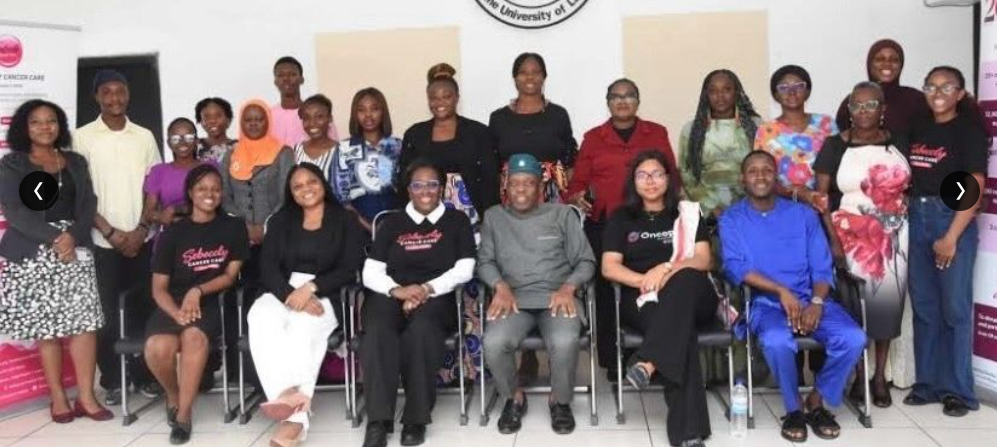
The Aspire Coronation Trust (ACT) Foundation highlighted the impact of sustained investment in community-based cancer programmes.
According to figures presented during the fellowship, its interventions have reached more than 1.1 million Nigerians through awareness campaigns, screened over 51,500 women and men for breast, cervical and prostate cancers, trained more than 460 oncology professionals and supported hundreds of cancer survivors after treatment.
Equally notable is the work of Sebeccly Cancer Care, whose TimeToScreen initiative has expanded access to breast and cervical cancer screening for more than 30,000 women and girls while helping eligible patients receive prompt treatment for precancerous cervical abnormalities.
Those programmes illustrate what becomes possible when awareness is linked directly to accessible services.
Information alone does not save lives.
Information connected to screening, diagnosis and treatment often does.
That distinction became one of the fellowship’s defining lessons.
Throughout the boot camp, speakers repeatedly reminded participants that journalism occupies a unique position between science and society.
Researchers generate evidence.
Clinicians translate that evidence into patient care.
Governments formulate policies.
Civil society organisations build community programmes.
Journalists connect all of them to the public.
That connection carries enormous influence.
A sensational headline suggesting cancer is always fatal can reinforce fear and discourage screening.
A poorly verified report promoting unproven remedies can divert desperate families from effective treatment.
Conversely, a balanced, evidence-based story can reassure frightened readers, expose weaknesses in healthcare delivery and amplify proven interventions that improve survival.
For many fellows, the training ultimately became less about learning cancer terminology than about redefining journalism itself.
Reporting on cancer is not simply about counting new cases or covering awareness events every October.
It requires sustained scrutiny of public policy, careful interpretation of scientific research and compassionate storytelling that reflects the dignity of those living with the disease.
It also demands persistence.
The most important cancer stories may never become breaking news.
They unfold gradually in underfunded oncology wards, research laboratories seeking African-led solutions, rural communities without screening centres and homes where families quietly struggle to finance treatment.
Those are the stories capable of changing national conversations.
As the fellowship concluded, the assignment left with participants was neither abstract nor optional.
Tell stories that replace myths with facts.
Interrogate policies that fail patients.
Explain science without distortion.
Give survivors space to speak.
Hold institutions accountable.
And remind readers, again and again, that early detection remains one of the strongest defences against cancer.
Because somewhere beyond every carefully reported story is a woman deciding whether to book her first cervical screening.
A father wondering whether to investigate persistent symptoms.
A family choosing evidence-based treatment over misinformation.
Or a policymaker confronted with evidence that can no longer be ignored.
In the end, the fellowship argued, journalism alone cannot cure cancer.
But it can influence when people seek help, how communities respond to those living with the disease and whether policymakers feel compelled to strengthen a healthcare system under growing strain.
In that mission lies one of journalism’s highest callings: not merely to chronicle events, but to equip citizens with truthful information that can protect health, preserve dignity and, sometimes, save lives.
—