By Ajibola Olaide, JKNewsMedia Reporter
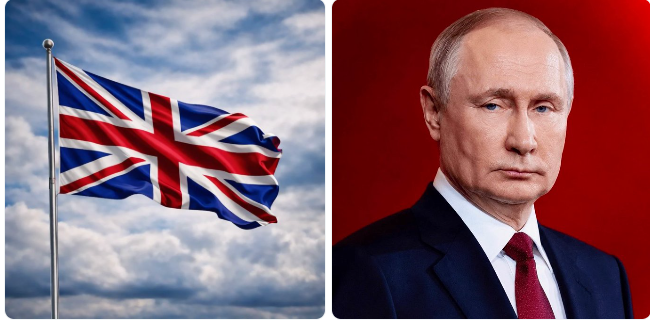
BRITAIN IS urging households to keep supplies of food and drinking water at home as part of preparations for severe national disruption, including war, cyberattacks and extreme weather.
JKNewsMedia.com reports that the preparedness campaign is intended to help households cope with major emergencies, while the UK government has also begun work on a new version of its so-called “war book”, a contingency planning document that had not been substantially updated for decades.
The move comes amid growing concerns across Europe over Russia’s confrontation with the West and warnings from European officials about military activity, cyber operations, sabotage and potential attacks on the North Atlantic Treaty Organization (NATO) territory.
Poland’s Prime Minister, Donald Tusk, told lawmakers that intelligence from NATO allies, Ukraine and Polish sources indicated Russia could attempt hybrid drone and missile attacks against countries supporting Ukraine.
Tusk said such attacks could deliberately be presented as accidents to test NATO’s response and weaken support for invoking the alliance’s collective-defence mechanism.
“There is a real risk that the territory of one or several NATO countries on the eastern flank may be entered by drones or other types of missiles, which may even cause destruction,” Tusk told parliament.
“And the official narrative will be that this is an accident and that there is no reason for anyone to contemplate any response from NATO.”
Tusk also said late autumn, and winter could be the war’s most critical period and warned that Russia was using new jet-powered drones capable of operating at greater speed and altitude.
He said Russia was seeking to undermine NATO’s cohesion and the credibility of Article 5, which commits members to collective defence.
“Russia does not need to cross our border. It is already waging a hybrid war against us using drones, acts of sabotage and disinformation on the internet,” Tusk said.
He added: “We are not seeking war, but if anyone dares to attack us, they will face a resolute response from us and our allies.”
Tusk also warned against domestic political narratives that could weaken European unity.
“Whipping up hostility towards the European Union, towards our allies, towards Ukrainians, is directly implementing Russia’s strategy. Everyone must finally understand this,” he said.
Britain’s Chief of the Defence Staff, Sir Richard Knighton, reportedly described the current security environment as the “most dangerous” period of his 35-year military career.
The British government has not said that war with Russia is imminent. Instead, its preparedness campaign covers a range of emergencies, with conflict listed alongside cyberattacks and hostile-state activity.
The British Ministry of Defence said London’s position remained defensive.
“The UK is not seeking confrontation, but alongside our allies, we are ready to defend every inch of NATO territory,” the ministry said.
Britain has increased its military involvement in NATO’s eastern-flank defence, including deploying Royal Air Force Typhoon fighters for air-defence duties alongside allied forces.
The UK has also continued military support for Ukraine, including assistance involving Storm Shadow cruise missiles. Russia has repeatedly condemned Western military aid to Kyiv and warned that countries supplying weapons could face consequences.
The preparedness drive follows a warning by Western intelligence officials that Russia could be laying administrative groundwork for a new troop mobilisation following its parliamentary elections.
Russia’s three-day parliamentary election began on Friday and is scheduled to conclude today, Sunday. Ukrainian President Volodymyr Zelenskyy had previously claimed that Russia could seek to add hundreds of thousands of troops to its military after the election.
Russian President Vladimir Putin dismissed speculation about a new mobilisation as “nonsense”.
JKNewsMedia.com also reports that the Western officials have also expressed concern that any additional Russian manpower could eventually be deployed beyond Ukraine, including along Russia’s western frontier with NATO.
The concerns have been compounded by alleged Russian-linked cyber, sabotage and other hybrid operations across Europe.
The widening confrontation has also increased attention on the vulnerability of critical infrastructure, including cables, energy networks, transport systems, communications and digital infrastructure.
Germany said it is reassessing its own preparedness, with civil defence and emergency planning strengthened following Russia’s invasion of Ukraine and a series of security incidents involving critical infrastructure.
Also, German authorities have also investigated suspected sabotage incidents involving power infrastructure.
Two incidents targeting Germany’s electricity network occurred within 24 hours earlier this month, amid growing concerns about hybrid warfare.
In addition, Germany said it has been developing broader contingency planning for scenarios ranging from hybrid attacks to a potential NATO conflict, reflecting its role as a major logistical hub for allied forces.
Other European countries have also expanded preparations for possible emergencies. Sweden has strengthened its civil and military preparedness since Russia’s full-scale invasion of Ukraine, while Finland maintains a large, trained reserve alongside universal male conscription.
The emerging European approach extends beyond preparations for a conventional ground war, with cyberattacks, sabotage, disinformation, attacks on energy infrastructure and disruption of communications increasingly regarded as potential components of modern conflict.
For Britain, the immediate government message remains one of resilience rather than an announcement that war is imminent. Households are being encouraged to keep basic supplies on hand and consider how they would cope with major disruption.
—