By Zainab Adewale
Introduction: Thirty-eight researchers recognised by the L’Oréal-UNESCO For Women in Science programme are developing solutions to challenges in health, agriculture, water and energy across the continent.
FROM TURNING cassava peels into materials for water filtration to developing artificial intelligence tools for disease detection, women scientists across Africa are exploring ways to address some of the continent’s pressing challenges through research.
Their work includes developing batteries from agricultural waste, investigating medicinal plants for potential use against drug-resistant bacteria and using wastewater to monitor tuberculosis.
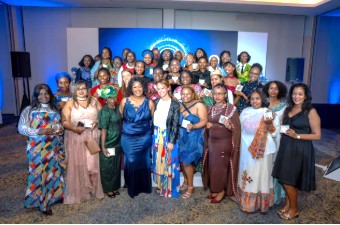
These are among the research projects being undertaken by 38 women scientists from across Sub-Saharan Africa recognised at the 2026 L’Oréal-UNESCO For Women in Science Awards.
The awardees, comprising 30 doctoral and eight postdoctoral researchers, were selected from more than 1,000 applications. They represent countries including Nigeria, Botswana, Tanzania, Guinea, Cameroon and South Africa.
Their research spans health, agriculture, energy, water, environmental sciences and technology, with potential applications in addressing challenges affecting communities across the continent.
Research addressing local challenges
The projects recognised this year reflect the range of scientific approaches being explored to tackle development challenges in Africa.
In water and environmental research, some scientists are investigating the use of locally available materials, including clay and cassava peel, to develop low-cost water filters.
Others are exploring ways to convert agricultural waste into materials for batteries and supercapacitors, potentially creating new applications for resources that would otherwise be discarded.
In healthcare, researchers are investigating medicinal plants for potential applications against drug-resistant bacteria, while others are exploring wastewater monitoring as a means of tracking tuberculosis.
Artificial intelligence is also featured in the research, with scientists developing tools to support disease diagnosis in humans and crops.
The projects highlight the potential of scientific research to provide solutions that respond to local needs while contributing to broader scientific knowledge.
Scientists urged to ensure research benefits communities
Beyond recognising their scientific contributions, programme representatives urged the awardees to ensure that their work has practical benefits for the communities they come from.
Speaking during a media engagement with the laureates in Johannesburg, South Africa, Priscilla Baker, co-president of the 2026 programme, said scientific recognition should not be measured solely by financial rewards or public visibility.
Ms. Baker said the recognition should also encourage scientists to use their achievements to create opportunities and contribute to their communities.
A previous international laureate for Africa and the Arab States, she encouraged the researchers to ensure that their work benefits future generations.
“May the science that we do always serve those who walk alongside us and may the glory that we gain in this journey always be of benefit for another generation, towards building something that can last,” she said.
Women remain underrepresented in science
The recognition comes amid persistent gender disparities in scientific research across Sub-Saharan Africa.
According to UNESCO’s 2025 publication, ‘Status and Trends of Women in Science: New Insights and Sectoral Perspectives’, women account for approximately one in three researchers globally and 35 per cent of STEM graduates.
In Sub-Saharan Africa, women make up 33.6 per cent of researchers, based on 2022 data.
The figures vary across countries as women account for 30.6 per cent of researchers in Nigeria (2019 data), 26.1 per cent in Ghana (2015), 9.8 per cent in Guinea (2013) and 47.6 per cent in South Africa (2022).
The challenges also extend to the workplace. An Ipsos study conducted for Foundation L’Oréal across 117 countries found that 81 per cent of women scientists had personally experienced sexism during their careers, while 49 per cent had experienced sexual harassment.
Also speaking at the engagement, Professor Patience Mutunzi-Gufa, co-president of the programme, encouraged the awardees to see their recognition as a steppingstone to greater opportunities, both for themselves and other women in science.
She challenged the notion that success in leadership should be isolating, urging the scientists to build supportive professional networks and maintain a sense of solidarity as they advance in their careers.
“But I would like us to come up with a different top to change the quality and the character of the top. Let us be women who, as scientists, one of my principles, my favourite and exciting principles in physics is that of magnetism,” she said.
Programme offers grants and professional development
Under the L’Oréal-UNESCO For Women in Science programme, doctoral researchers receive grants of €10,000, while postdoctoral researchers receive €15,000.
The awardees also receive training in leadership, science communication and career development.
Michelle Gololo, Corporate Affairs and Engagement Lead at L’Oréal Sub-Saharan Africa, said sustained visibility and funding were important to improving women’s participation and leadership in scientific research.
“Visibility is part of the answer. When African women’s research is seen, funded and cited, it changes who gets to lead and who believes they can,” she said.
“Our responsibility is to sustain that visibility beyond this ceremony, so these 38 women and the young women who follow them can shape the future of science.”
The programme, established in 1998 by Fondation L’Oréal in partnership with UNESCO, has supported more than 5,000 researchers from over 140 countries.
UNESCO also confirmed a renewed six-year partnership agreement with Fondation L’Oréal, which is expected to support further initiatives and improvements to the programme.
—

Share Your Story with us!
Advertise with us!
Publicity for a product, service, or event!
Contact: WhatsApp Only: +2348039560647
Email: jkmediapress@gmail.com