By Ajibola Olaide, JKNewsMedia Reporter
AN ESTIMATED
An estimated 33.5 million people in 26 states and the Federal Capital Territory (FCT) are projected to face crisis-level food insecurity or worse between June and August 2027, according to the October 2026 Cadre Harmonisé Food and Nutrition Insecurity Analysis (CHFNIA).
JKNewsMedia.com reports that the projection is 6.7 million higher than the 26.8 million people expected to face similar conditions between October and December 2026 given that the assessments cover different agricultural seasons.
Figures from the October 2026 CHFNIA also show that 26.8 million people are expected to face comparable conditions between October and December 2026.
Its assessment further places the projected figure for June to August 2027 at 33.5 million, although the two periods represent different agricultural seasons.
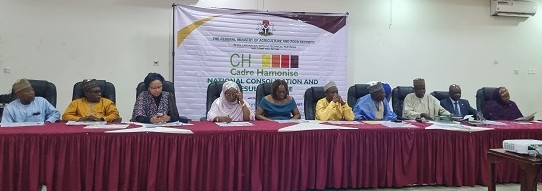
CHFNIA findings, presented in Abuja on Friday by the Federal Ministry of Agriculture and Food Security alongside the Food and Agriculture Organisation (FAO), participating states and development partners, identify insecurity and declining household purchasing power as major threats to food access.
The impact, according to the presentation, is particularly acute in conflict-affected northern communities, where armed attacks have driven farmers from their homes and farms, interrupted production and restricted access to markets.
Borno, Yobe, Adamawa, Katsina, Zamfara and Sokoto feature among the states facing the most serious food consumption difficulties.
Displacement is adding another dimension to the emergency, CHFNIA says; adding that in Borno, Sokoto and Zamfara, another estimated 756,815 internally displaced people are projected to experience crisis-level food insecurity or worse during the final quarter of 2026.
The assessment warns that their circumstances could deteriorate further, with the affected population expected to reach 891,228 during the June to August 2027 period.
For households already struggling to maintain their livelihoods, dwindling food stocks and reduced purchasing power could make adequate meals increasingly difficult to afford, CHFNIA report also identifies reduced meal portions, poorer dietary quality and harmful survival strategies as potential consequences.
The nutritional implications extend beyond food availability as CHFNIA projected that children under five, pregnant women and breastfeeding mothers face particular exposure to acute malnutrition, inadequate diets and disease outbreaks, especially where healthcare, clean water and sanitation services remain limited.
To ameliorate this, the assessment recommends immediate food assistance, targeted cash transfers, improved nutrition surveillance and wider access to treatment for acute malnutrition.
Presenting the findings, FAO Representative in Nigeria and the Economic Community of West African States, Hussein Gadain, urged governments and development partners to use the assessment to identify vulnerable populations and direct assistance towards communities facing the greatest risks.
Gadain emphasised early intervention, stronger monitoring systems and investment in resilient agricultural livelihoods as essential responses.
Meanwhile, the Federal Government (FG) pointed to ongoing agricultural interventions intended to improve domestic production.
Permanent Secretary of the Federal Ministry of Agriculture and Food Security, Marcus Ogunbiyi, said government programmes were targeting improved agricultural inputs, financing, mechanisation, irrigation and climate-smart farming.
He named the Renewed Hope Farm Input Support Programme, Renewed Hope Agricultural Mechanisation Programme and Special Agro-Industrial Processing Zones among the initiatives intended to strengthen agricultural productivity.
However, the government’s monitoring capacity faces a significant coverage gap. Ogunbiyi disclosed that 10 states had yet to become fully integrated into the Cadre Harmonisé assessment, raising concerns about the completeness of nationwide food security monitoring.
High transportation and energy costs also continue to burden food production and distribution, adding to the difficulties confronting farmers and households.
JKNewsMedia.com also reports that the latest warning follows successive assessments that have highlighted the scale of Nigeria’s food insecurity.
It cited a March 2025 Cadre Harmonisé analysis which projected that 30.6 million people could face crisis-level food insecurity or worse during the June to August 2025 lean season.
An October 2025 assessment projected 34.7 million people at risk during the corresponding period in 2026.
The FAO subsequently estimated that approximately 36.3 million people experienced severe acute food insecurity during the 2026 lean season with the figures cover different reporting periods and geographical populations and should not be treated as directly comparable measurements.
—

Share Your Story with us!
Advertise with us!
Publicity for a product, service, or event!
Contact: WhatsApp Only: +2348039560647
Email: jkmediapress@gmail.com