By Fredros Okumu
MOSQUITOES ARE evolving to survive insecticides, and countries are burning through health budgets just to hold the line. Here is why Africa must rigorously evaluate engineered mosquitoes.
The debate over genetically modified mosquitoes is growing louder across Africa. Too often, these conversations start with the technology. They should start with the disease.
Malaria is not an abstract scientific problem waiting for a clever tool. It is a daily catastrophe that kills children, drains family incomes, and quietly steals Africa’s future. According to the World Health Organization (WHO), there were 282 million malaria cases and 610,000 deaths in 2024, an increase of 9 million cases from the previous year.
Most of these deaths occur in children aged under 5 in Africa. Going by these estimates, the disease killed 1,670 people yesterday, and it will kill the same number today and tomorrow until we act with greater resolve. If a disease were killing this many children in wealthy countries, any delay would be called what it is: a despicable moral failure.
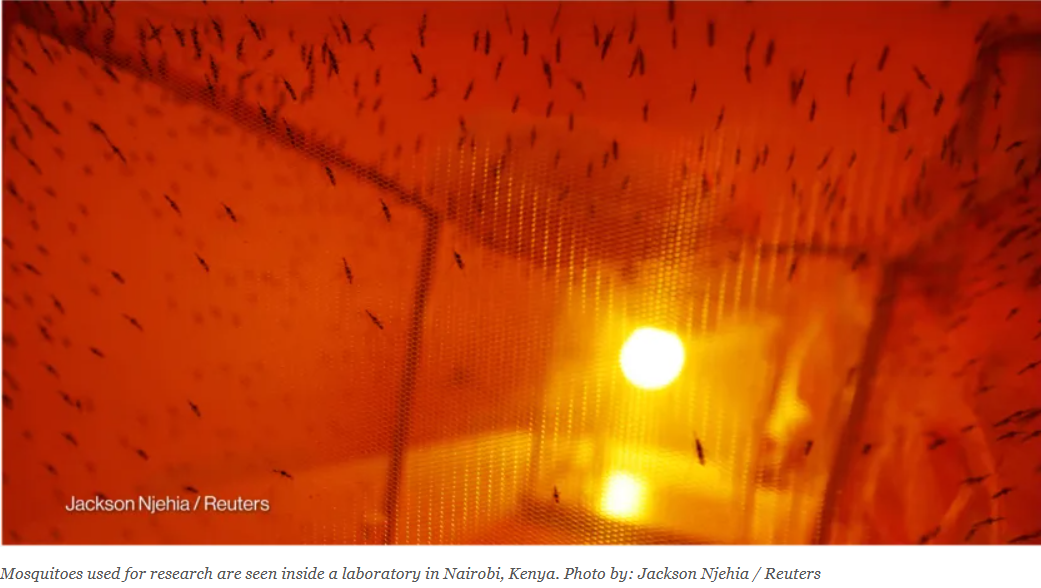
With gene drives, if they work as intended, engineered mosquitoes could spread genetic traits that selectively suppress populations of the most dangerous malaria mosquitoes or make them unable to transmit the parasite.
For decades, Africa has fought malaria with bed nets, insecticides, medicines, and more recently, vaccines. These tools have delivered extraordinary gains and remain indispensable. Since 2000, they have averted an estimated 2.3 billion malaria cases and 14 million deaths worldwide. But malaria has not disappeared. In some places, it is returning with force.
In 2024, WHO reported that eight African countries had seen substantial increases in caseloads between 2019 and 2023. In part, these difficulties are because mosquitoes are evolving to survive insecticides, and parasites are tolerating some medicines. Poverty, fragile health systems, climate instability, and chronic underfunding are worsening the situation.
The existing control measures are no longer sufficient on their own.
Gene drives have emerged from this insufficiency. Not as a replacement for proven tools, and not as a shiny technology to be rushed, but as a potentially transformative addition to a fight we have allowed to last far too long.
We often describe malaria simply, in statistics and charts. But the real arithmetic is found in mothers sitting through the night beside feverish children, in school days lost, harvests missed and clinics overwhelmed. It is counted in blood transfusions required, hospital beds occupied, and funeral expenses incurred. Above all, it is counted in children who might have become engineers, teachers, scientists, or presidents, but never had the chance.
The malaria math also shows up in national budgets and health care costs. Take Tanzania, for instance. With a gross domestic product per capita of only $1,200, the country estimated that its 2021-2025 malaria strategic plan would cost about $953.3 million, nearly $200 million annually. Kenya’s 2023-2027 malaria strategy was costed at about 86.2 billion Kenyan shillings ($665 million). That is the price of simply trying to keep malaria under control: bed nets, medicines, diagnostics, spraying, surveillance, supply chains, additional health workers, and public campaigns.
Recent budgetary allocations show just how tight the margins are for these countries. In Tanzania’s proposed 1.8 trillion shillings ($685.7 million) health budget for FY 2026/2027, about TZS 652.2 billion was set aside just for recurrent costs such as salaries and operations. Kenya faces the same squeeze. Its latest health budget is about Ksh 175.5 billion ($1.37 billion) of which the majority is allocated to keeping the existing health system running
In other words, countries are spending enormous sums just to hold the line. Yet malaria keeps coming back.
Gene drives are one possible answer. They are not a silver bullet, and they are not ready for use. But their potential is hard to ignore. In small laboratory cages and large indoor enclosures, even modest releases of gene-drive mosquitoes have eliminated captive populations of Africa’s leading malaria vectors, often with striking speed.
Other gene-drive designs have been shown to rapidly spread malaria-blocking traits or sharply reduce parasite development inside mosquitoes.
But what succeeds in a laboratory does not automatically succeed in the world. So far, no gene-drive mosquitoes have been released or field-tested anywhere in Africa. That is why the next question should be whether Africa can afford to ignore a technology with this much potential before gathering the field data needed to judge it honestly.
Any real-world testing must be careful and transparent. Communities must be involved from the beginning. Independent experts must be able to scrutinize the work. And there must be clear plans to monitor what happens to people, mosquitoes, and the environment.
The foundations for responsible evaluation of gene drives already exist. WHO has issued guidance for testing genetically modified mosquitoes, the U.S. National Academies has called for phased testing, ecological risk assessment, and attention to public values.
The Cartagena Protocol on biosafety, to which 173 countries are parties, also includes guidance for living modified organisms containing engineered gene drives. Even the African Union, through its AUDA-NEPAD agency, has published guidelines for risk analysis relevant for evaluating genetically modified mosquitoes.
Caution should not become an excuse for drift. Malaria is urgent, and we should be cautious, not complacent
When COVID-19 arrived, the world understood speed as a moral obligation. In the U.S., Operation Warp Speed accelerated the development, testing, and manufacturing of multiple vaccine candidates without abandoning safety. It meant that delay itself was recognized as a risk. Malaria deserves the same seriousness.
Without this, our people will continue to see technologies such as gene drives simply for their potential dangers, and not for the many lives we could save.
Editor’s note: The views expressed here are the author’s own.
—