By Babafemi Ojudu
I WAS sixteen when I left secondary school. My father believed that education should be followed immediately by responsibility. A young man, in his view, had to begin to work, earn something and learn to fend for himself. He therefore found me a job in the old Ondo State Civil Service, and I was posted to Ikare-Akoko, about ninety kilometres from our home in Ado-Ekiti.
Until then, I had never really lived beyond the sight and protection of my parents. The farthest I had ventured on my own was Ibadan, where I occasionally spent the holidays with my aunt, Ayaba Adejoke Adewuyi, and her husband, Prince Adewuyi. May God bless his soul. Those visits were adventures in themselves. Ibadan offered Kingsway Stores, with its glittering, almost foreign atmosphere. There was also the wonder of riding an elevator up and down, an experience sufficiently grand to provide stories for my classmates when school resumed.
Then, suddenly, at sixteen, I was to live alone.
My father rented a room for me in Ikare. He bought me a small mattress, which I spread on the floor; two pots—one for soup and the other for rice; a few packets of Uncle Ben’s rice; and some basic utensils. Having installed me in my new kingdom, he said goodbye and returned to Ado-Ekiti. I cried after he left. But the tears did not last. Very quickly, fear gave way to adjustment, and adjustment to freedom. I learnt to cook, budget my modest earnings, report for duty, manage my time and take responsibility for my decisions. I was still a boy, but life had begun to treat me as a man.
That was a Nigeria in which a secondary-school leaver could find work, rent a room and begin an independent life. Today, university graduates search for employment for five years or more. Many remain dependent on their parents well into adulthood, not because they are lazy or unwilling, but because the economy offers them no foothold. The ladder by which my generation climbed into adulthood has been pulled away. The freedom of that era did not end with work. It extended to travel, friendship and discovery.
I had barely settled at the University of Ife when some classmates and I decided that we wanted to know our country. None of us was yet nineteen. We contributed money, hired two buses and set out for northern Nigeria. May God bless the memories of Debo Adeleke, Segun Olayemi and Demola Adeyemo, all three of whom have since passed on. Though young, they possessed the organisational ability of men twice their age. We remained friends for the rest of their lives. Yinka Adeyefa, Foluke Labinjo and the rest of us were impressionable young people, eager to see, learn and absorb. Two American exchange students travelled with us, one of them named Anita.
We were not wealthy. We had no elaborate security arrangements, no mobile telephones and no digital maps. What we had was curiosity, trust and the conviction that every part of Nigeria belonged to us. We drove into unfamiliar terrain simply because we wanted to know our country.
Whenever night overtook us, we looked for a Federal Government College where we could lay our heads, and the following morning, we continued our journey. Along the way, we bought akara—kose, long before akara entered the storms of contemporary political controversy; fried yam, doya, and whatever else ordinary people were eating. We entered local markets; bought the clothes of the communities we visited and wore them with delight.
At the universities in Zaria and Kano, we made friends easily. We found people willing to share their beds and homes with us, and some of those encounters grew into lifelong friendships. For two weeks, we travelled across northern Nigeria, watching the vegetation change from the lush greenery to which we were accustomed in the South-West to the wide, open landscapes of the North. At Yankari Game Reserve, we saw animals we had previously encountered only in books, jumped into the warm spring and enjoyed ourselves without fear.
In Jos, we entered the market, scattered in different directions and disappeared happily into the anonymity of that magnificent trading city. During those two weeks, many of us began to pick up Hausa words, phrases and sentences. Ina sonki? Ina sonka?—I love you—have remained with me, along with the everyday greetings of that beautiful language.
We did not experience the North as hostile or foreign territory. We experienced it as part of our inheritance. Its food, languages, landscapes and people enlarged our idea of Nigeria. We returned to Ife more Nigerian than when we left.
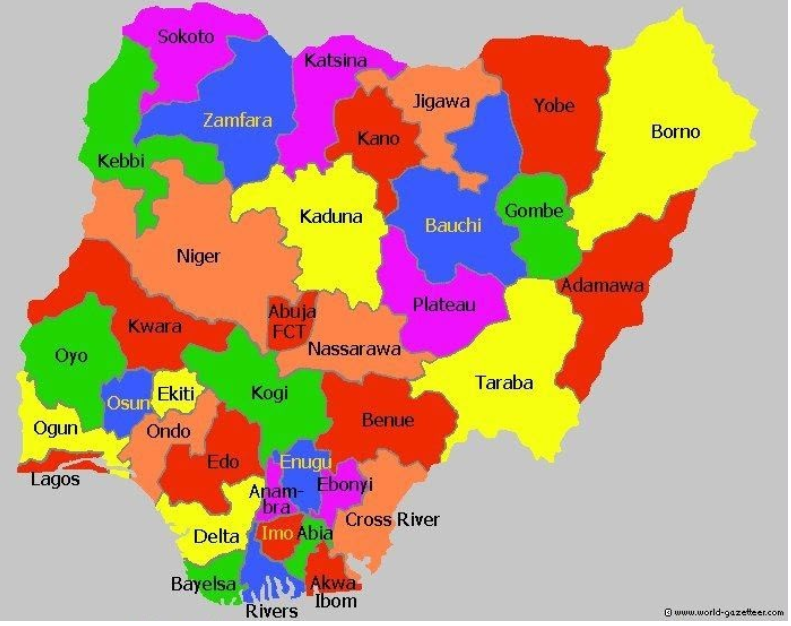
After university and the National Youth Service Corps, I found a job within days. Before long, I rented an apartment in Lagos. Friends from different ethnic groups gathered there, and our conversations ranged endlessly over Nigeria and its possibilities. We argued about politics, literature, justice, the future and our favourite local football teams, Enugu Rangers and IICC Shooting Stars. We did not always agree, but we recognised one another as fellow travellers in a common national enterprise. With a Lada car in my possession, I began making weekly trips from Lagos to Abraka to visit my girlfriend—an Edo lady, not an Ekiti woman—who was studying there. A hotel beside the scenic Ethiope River received us with open arms. The long drive, alone in my car, was a breeze. I travelled with the confidence that the road was a public space, not a battlefield, and that an unknown Nigerian encountered along the way was more likely to help me than harm me.
At another time, I drove alone from Lagos towards Maiduguri, stopping along the way in Ilorin, Jebba, Bida, Suleja, Abuja, Jos and Bauchi. My principal companion was the music of Fela Anikulapo Kuti. I feared neither armed robbers nor bandits, kidnappers or terrorists.
Not even for a billion naira would I contemplate such a journey today.
My work as a journalist took me even farther into the unusual corners of the country. I once travelled across the West, East and North, seeking out strange men and women who claimed to possess powers beyond those of ordinary mortals—to see the future, cure mysterious ailments or perform extraordinary feats. I entered their groves without fear and ate from the same plates with them.
I slept in the home of Chief Asoga, along what is now known as Airport Road in Akure. I watched him wake in the morning and flog people living with mental illness, claiming that the beating would drive out evil spirits and restore their sanity. It was disturbing, but I was there because a journalist had to see for himself before he could tell the story.
In the course of my work, I entered palaces, brothels and prisons across the country, searching for information that would keep our publications alive, relevant and solvent. I met the powerful and the forgotten, the orthodox and the eccentric, the saintly and the dangerous. Each encounter added another layer to my understanding of Nigeria.
When I look back, what I miss is not merely the cheaper food, the available jobs or the less congested roads. I miss the freedom to be curious. I miss the confidence with which a young Nigerian could leave home, cross several states, sleep among strangers and return with stories rather than scars. I am not romanticising the past. The Nigeria of my youth had poverty, military coups, injustice and its own forms of violence. But it also gave many of us room to roam. It allowed us to encounter one another before politicians taught us to fear one another. It gave us the chance to discover that, beyond the accents, clothing and food, Nigerians were often more alike than different.
How many students can now organise an excursion to the North without their parents first calculating the risk of kidnapping? How many young northerners can travel freely through the South without hearing warnings about ritual killers? How many sixteen-year-olds can find work, rent a room and begin learning the disciplines of adulthood? How many young journalists can enter distant communities, knock on a stranger’s door and expect hospitality rather than suspicion?
We speak endlessly about national unity, yet we have destroyed many of the conditions that once made unity a lived experience. A nation is not built only by an anthem, a flag, constitutional provisions or speeches from political leaders. It is built when citizens meet one another, eat together, argue together, travel through one another’s regions, learn one another’s languages and discover one another’s humanity.
My generation had opportunities to do this. We attended federal schools and universities and participated in the NYSC alongside Nigerians from every part of the country. We travelled across regions with little money and even less fear. We built friendships that ignored the boundaries drawn by ethnicity and religion. Those experiences did not make us blind to our differences; they made the differences less frightening.
Today, insecurity, unemployment and social distrust are imprisoning many young Nigerians within the narrow territories of their birth. A young person who never leaves his ethnic environment, except through the distorted theatre of social media, is easily persuaded that everyone outside it is an enemy. Algorithms then reinforce the prejudice. Politicians exploit it. Ethnic champions give it a vocabulary. Before long, the country becomes an abstraction, and the ethnic cocoon becomes the only refuge that feels real.
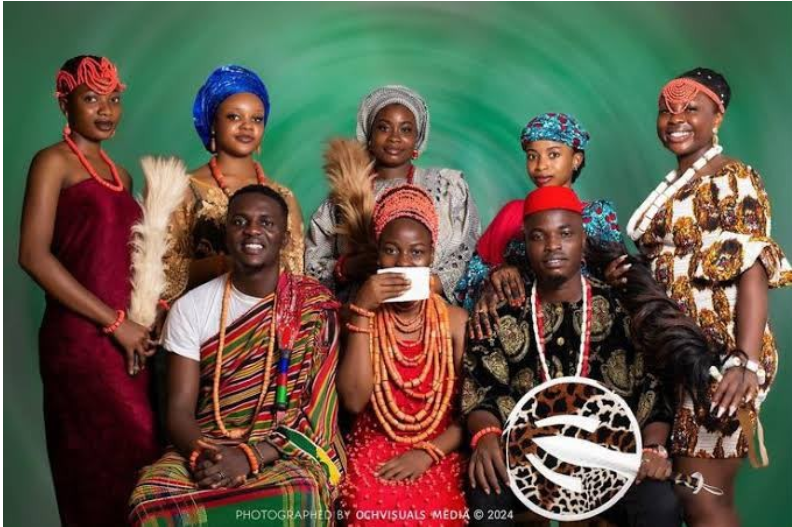
This is one reason many young Nigerians no longer believe in one Nigeria: they have scarcely been allowed to experience it. You cannot love a country you are too frightened to explore. You cannot feel kinship with people you encounter only through inflammatory posts, manipulated videos and the rhetoric of desperate politicians. And you cannot build a national identity among young people whose principal experience of the state is unemployment, insecurity, extortion and abandonment.
The task before us is therefore larger than preaching unity. We must rebuild the material and social conditions that make unity possible. We must make the roads safe again. We must restore affordable education, revive meaningful student excursions and exchanges, strengthen the NYSC as a genuine instrument of national encounter, and create jobs that allow young people to step into adulthood with dignity. We must provide spaces where Nigerians from different backgrounds can meet without fear and discover one another without political interpreters.
The Nigeria I miss was not perfect. But it gave a sixteen-year-old a room of his own, two cooking pots and an apprenticeship in independence. It allowed teenagers to board two buses and travel into unfamiliar regions in search of their country. It permitted a young man, accompanied only by Fela’s music, to drive across vast distances and feel at home.
That freedom made us adventurous. Those adventures made us knowledgeable. That knowledge made it harder for anyone to teach us to hate.
If we want the next generation to believe again in Nigeria, we must give them a Nigeria they can safely experience, not merely one they are repeatedly commanded to love.
—