By Joke Kujenya, 2026 Naija Watch Cancer Fellow
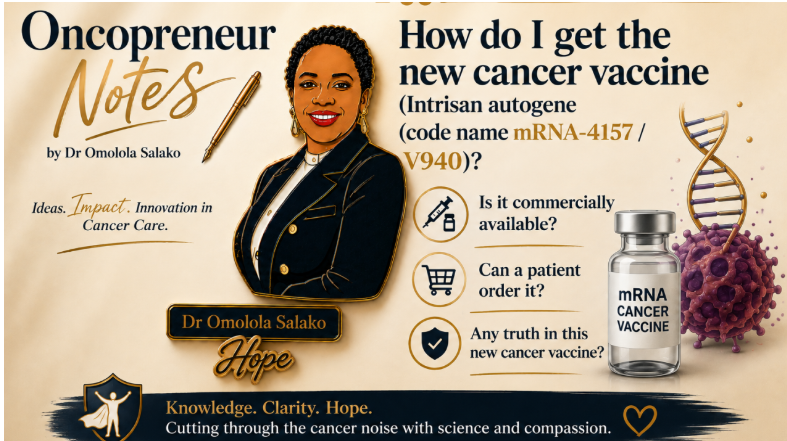
QUESTIONS ABOUT a new personalised cancer vaccine have intensified following clinical trial results involving Merck and Moderna’s intismeran autogene, also known by the code names mRNA-4157 and V940.
JKNewsMedia.com writes that Dr. Omolola Salako, an Oncologist at the College of Medicine, Idi-Araba, Lagos, explains the growing interest that have prompted questions about whether the treatment is a genuine medical breakthrough and who can access it as well as whether patients can obtain it commercially.
Also known as the People’s Oncologist, Dr Salako explained that the intismeran autogene is a legitimate medical breakthrough but stressed that the treatment must be understood within the context of the available clinical evidence.
On her LinkedIn Oncopreneur Notes, a new kind of blog, she explained that the clinical study involved 1,100 people with melanoma, a type of skin cancer, and that the vaccine is not a universal cancer cure. Rather, it can reduce the risk of cancer recurrence.
According to Salako, the treatment does not prevent cancer from developing in healthy people and is not a one-size-fits-all injection. She described it as largely experimental, adding that the people who participated in the clinical trial would continue to be monitored.
She further enlightens on the difference between conventional vaccines and cancer vaccines.
Dr Salako said traditional vaccines prevent infectious diseases such as polio, tuberculosis, meningitis and pneumonia, while personalised mRNA cancer vaccines are therapeutic and treat cancer in a highly individualised way.
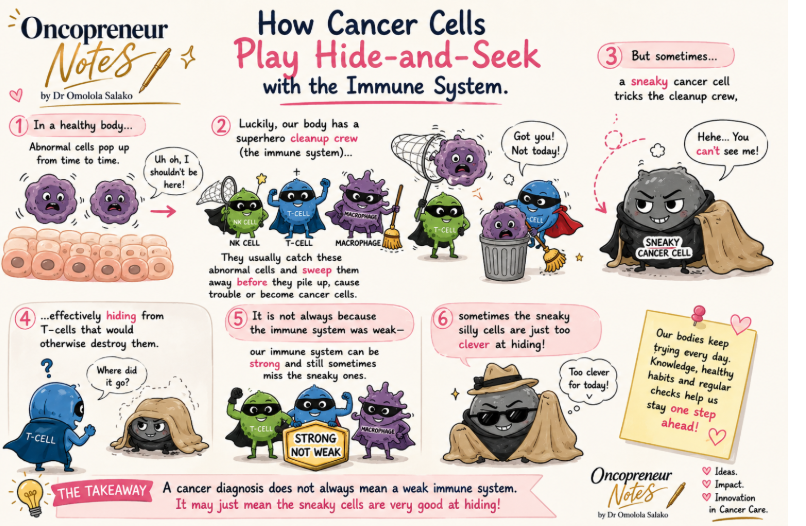
She said cancer cells can use normal proteins such as PD-1 to switch off parts of the immune system, including T-cells, allowing them to hide from the body’s defences.
She also addressed questions from patients about whether the new vaccine could be purchased or ordered.
She said the drug is not commercially available and that patients and cancer specialists cannot simply order it because the US Food and Drug Administration has not yet granted full commercial approval for intismeran.
Access, she further emphasised, is currently strictly limited to patients enrolled in clinical trials.
The vaccine cannot also be bought off the shelf because each one is custom manufactured using the specific genetic mutations of an individual patient’s surgically removed tumour. The process may take a few months for each patient.
Salako explained that once a tumour is removed during surgery, a sample is sent to a laboratory, where scientists analyse it and sequence its unique genetic mutations through genetic tests.
The mRNA technology then trains the patient’s immune system to recognise and hunt down specific microscopic cancer cells if they return.
She noted that the technology does not work alone but is paired with immunotherapy such as Pembrolizumab.
According to Salako, immunotherapy is already used to treat breast cancer, lung cancer, melanoma and more than 30 cancer types. It may be administered alongside chemotherapy or given alone as an infusion.
She said clinical data indicates that the vaccine has a manageable safety and tolerable side effect profile consistent with what is typically seen with immunotherapies.
Most reported side effects, she added, are mild to moderate and include injection-site pain, fatigue, chills, hormone changes, inflammation and muscle aches.
Salako explained that the personalised nature of the vaccine stems from differences in the genetic fingerprints and mutations found in cancers. Even two patients with the same cancer stage, age and cancer histology can have entirely different genetic errors.
For that reason, she said each vaccine is uniquely custom-built to target the specific faults identified in an individual patient’s cancer.
Salako emphasised that, unlike traditional vaccines and conventional cancer therapies, no two of these personalised cancer vaccines will ever be the same.
—